


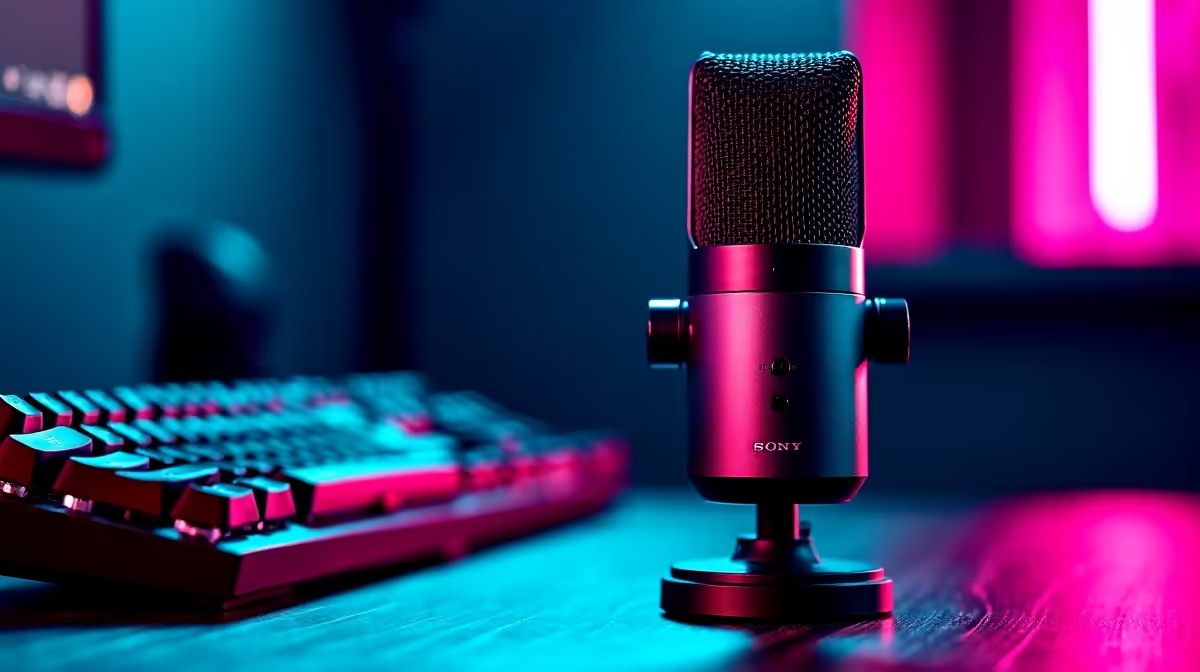
The polar pattern on a microphone is not just a diagram on the box. It is a physical description of which directions the capsule listens to and, equally important, which it ignores. A supercardioid pickup pattern pulls that listening zone into a tight forward cone, and for a gamer dealing with keyboard noise that physical narrowing does real work before any software gets involved.
Quick Answer
A supercardioid pattern cuts mechanical keyboard noise by narrowing the sensitive zone to a tight front lobe. Keys off to the sides of the mic drop substantially. Keys directly below the mic are still picked up, so combine the pattern with a boom arm to push those keys off-axis, then add AI suppression for any remaining transients.
🔆 What the Pattern Rejects
Every polar pattern diagram shows where sensitivity drops. On a standard cardioid the sides fall off gradually, giving about 6 decibels of rejection at 90 degrees. A supercardioid tightens the front lobe considerably, reaching its deepest nulls at roughly 127 degrees off-axis on each side. Anything arriving from those angles, including the keyboard beside your gaming station, is attenuated sharply.
The practical result is 15 to 20 decibels of separation between a sound the mic is pointed at and one arriving from a null angle. That is a large margin before any noise processing applies.
The tradeoff is a small rear lobe. Unlike a cardioid with near-zero sensitivity directly behind, a supercardioid picks up a little sound from straight back. For most gaming setups this is not an issue, but it means pointing the rear of the mic away from speakers.
🎙️ The Problem With Keys Directly Below
The pattern cuts what is to the sides. It does not cut what is directly in front of or below the capsule. A keyboard sitting flat under a stand-mount mic is within the front lobe, not in the null zone. The supercardioid reduces that noise far less than it reduces off-axis noise.
The fix is physical. A boom arm repositions the mic so it approaches your mouth from the side or from above rather than pointing straight down at the keyboard. Even rotating from pointing-down to pointing-forward at a 30 to 45 degree angle can shift the keyboard from near-full sensitivity into the edge of the pickup zone.
✨ Combining Pattern and AI Suppression
The pattern physically reduces the energy reaching the capsule from the keyboard. AI suppression handles what remains. Less energy arriving at the capsule gives the AI an easier separation task, and the residual is smaller.
Gamers who layer both approaches typically find keyboard noise becomes essentially inaudible to callers even during fast typing sequences. Neither approach alone achieves the same result as cleanly as both working together.
Frequently Asked Questions
Where exactly are the quietest spots on a supercardioid pattern?
The deepest nulls sit at roughly 127 degrees off each side of the main axis. Sounds arriving from those angles experience the most rejection. At 90 degrees the rejection is significant but not maximum. Knowing the actual null position lets you orient the mic so the keyboard falls into it.
Will the pattern silence a keyboard directly below the mic?
Not effectively. Keys inside the main front lobe register at near-full sensitivity regardless of how narrow the pattern is. Lifting the mic on a boom arm and angling it toward your face moves the keyboard toward the side rejection zones where the pattern can actually reduce it.
How is supercardioid different from cardioid for gaming use?
Both reject sides and rear, but the supercardioid's front lobe is narrower and off-axis rejection is deeper. The cost is a small rear lobe that can pick up sounds directly behind the capsule. For a gaming desk with the computer behind the seating position, pointing that rear away from the machine avoids rear-lobe pickup.
Can I use a desktop stand and still get the pattern benefits?
A low desktop stand pointing upward places the keyboard within the sensitive front lobe. A taller stand or boom arm is needed to orient the mic so the keyboard falls off-axis. The pattern benefits only materialise when noise sources sit in the null zones.
Is pairing this pattern with silent switches worth doing?
Definitely. Silent linear switches reduce source noise before any polar rejection or AI processing applies. A quieter source arriving at the null zone of a supercardioid gets cut further still, and AI suppression finishes off whatever trace remains. Each layer reduces the problem so the next layer has less work to do.
Ready to put the right mic pattern to work for your gaming setup? Browse the USB and XLR microphone range to find a supercardioid model built for the desk distances and positioning a gaming station requires.










