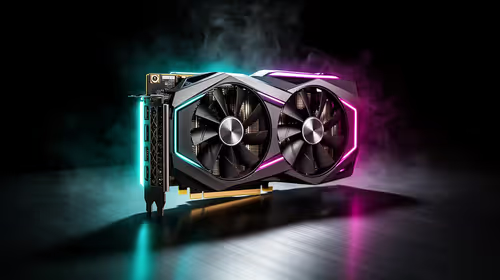
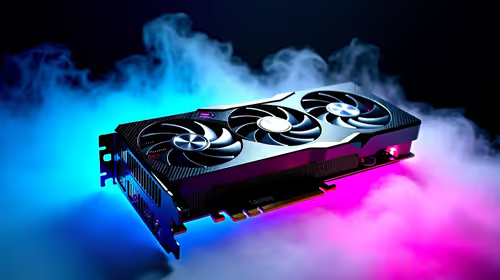
PC VR is one of the most demanding things you can ask a graphics card to do. It renders two high-resolution views, one per eye, and has to hold 90 frames per second to keep the experience smooth and comfortable. That bar is why the new GPUs worth buying for PC VR start higher than most gamers expect, with RTX 5070-class cards sitting at the practical entry point for 2026.
Quick Answer
For PC VR in 2026, an RTX 5070-class card is the realistic minimum to sustain 90 FPS at high per-eye resolutions, with RTX 5080-tier cards giving comfortable headroom for demanding titles. Match the card to your headset and library rather than overbuying, because GPU prices carry a steep rand premium in South Africa.
Why VR is so GPU-hungry
A flat monitor renders one image. A VR headset renders two, each at a high resolution, and must do so fast enough to track your head without lag. Drop below 90 FPS and the experience turns stuttery and uncomfortable quickly. That doubled, high-framerate workload is what pushes VR onto stronger cards than the same person would need for regular gaming.
This is why a card that handles 1440p gaming comfortably can still struggle in VR. The per-eye resolution and the hard 90 FPS floor change the maths entirely.
Matching the GPU tier to your headset
The right card depends heavily on which headset you own. A lower-resolution headset is far more forgiving and can run well on an RTX 5070, while a high-resolution flagship headset pushes far more pixels and rewards an RTX 5080 or higher.
Be honest about your library too. Lighter, stylised VR titles are far easier to drive than graphically heavy simulators and AAA VR experiences. If your games lean simple, paying for top-tier headroom you will never touch is wasted money. If you live in demanding sims, that headroom is exactly what keeps frame rates locked.
For buyers also exploring lightweight VR and AR formats, the AR glasses category at Evetech is worth a look alongside your GPU decision, since the display you choose shapes how much GPU power you actually need.
The rand premium changes the calculation
GPUs carry a meaningful rand premium in South Africa, so overbuying costs more here than it would elsewhere. That makes matching the card to your real needs more important, not less. Spending a tier up "just in case" can mean a few thousand rand you did not need to part with.
The smarter move is to size the GPU to your headset's resolution and the games you genuinely play, leaving a little headroom for future titles without paying for two tiers of overkill. If you want a sense of what other South African buyers are pairing for high-frame-rate setups, the popular picks in the accessories best sellers round out a VR-ready build.
Frequently Asked Questions
What is the minimum GPU for PC VR in 2026?
An RTX 5070-class card is the practical entry point, able to sustain 90 FPS at high per-eye resolutions on most headsets. Anything weaker risks dropping below the comfortable framerate floor in demanding titles.
Why does VR need a stronger GPU than normal gaming?
VR renders two high-resolution images, one per eye, and must hold 90 FPS to stay smooth and comfortable. That doubled, high-framerate workload is far heavier than driving a single flat monitor.
Should I buy an RTX 5080 for VR?
Only if you own a high-resolution headset or play demanding VR titles. For lighter headsets and simpler games, an RTX 5070 is enough, and the extra spend on a 5080 may go unused.
Does the rand price affect which GPU I should buy?
Yes. The steep rand premium on GPUs in South Africa makes overbuying more costly, so it pays to match the card precisely to your headset and game library rather than buying extra headroom you will not use.