Quick Answer
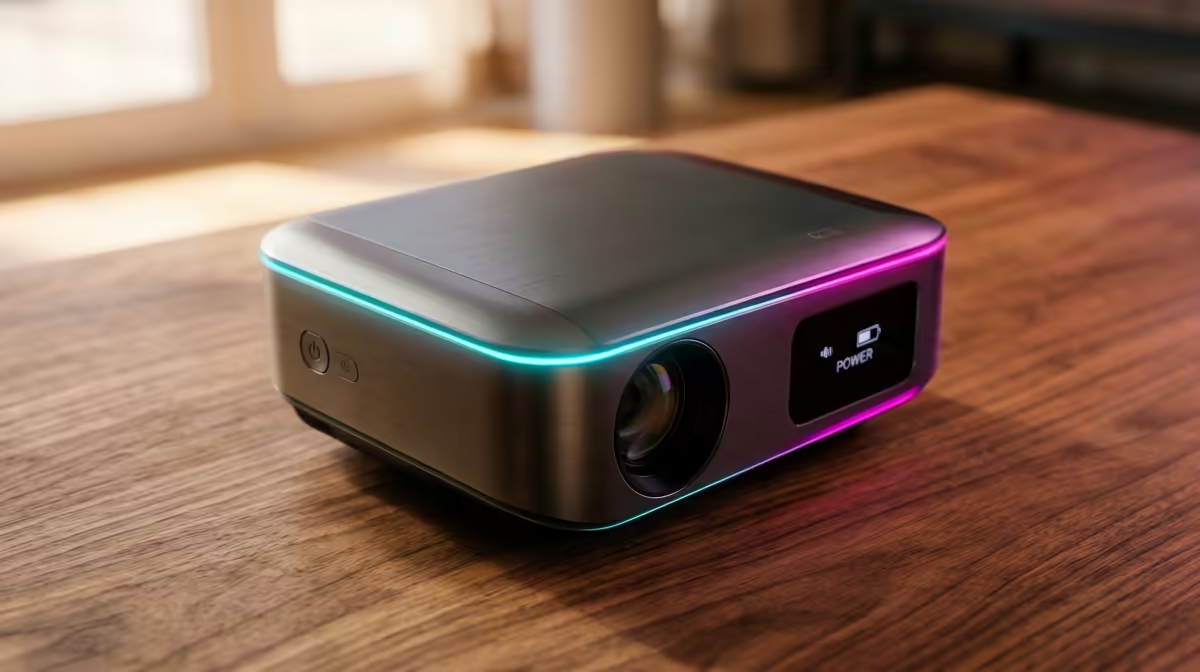
For SA family gaming rooms, the practical projector spec floor is 1080p native resolution, 700+ ANSI lumens, and a low-latency gaming mode. Below this, the image is dim and laggy. Capable family projectors start around R5,500 at Evetech.
The Real Spec Floor For Family Rooms
Family gaming rooms are rarely pitch dark, so brightness is the first floor. Aim for at least 700 ANSI lumens so the image stays watchable with some ambient light from windows or lamps; cheaper sub-300-lumen units wash out the moment anyone opens a curtain. Native 1080p is the resolution floor, since interpolated 4K claims on cheap projectors do not deliver real detail.
The third non-negotiable for gaming is a low-latency or gaming mode. Without it, input lag makes controllers feel disconnected, frustrating fast family co-op and party games on the big screen.
Why These Floors Matter Together
Brightness, real resolution, and low latency work as a set. A bright but laggy projector ruins gaming; a low-lag but dim one is unwatchable by day. Meeting all three is what separates a genuine family gaming display from a disappointing cheap unit. Add decent built-in speakers or an audio output, since a family room rarely has a dedicated sound system ready.
FAQ
How bright should a family gaming projector be?
At least 700 ANSI lumens so the image holds up in a room with some ambient light, which most family rooms have. Brighter is better for daytime use.
Is 1080p enough for a gaming projector?
Native 1080p is the practical floor and looks sharp on a big screen. Be wary of cheap projectors claiming 4K through interpolation, which does not add real detail.
Why does a gaming mode matter?
A low-latency gaming mode cuts input lag so controllers feel responsive. Without it, fast party and co-op games feel sluggish and frustrating on the big screen.
projector in your actual room's lighting and with a fast game in gaming mode; brightness and low lag together decide if it suits family play.