Quick Answer
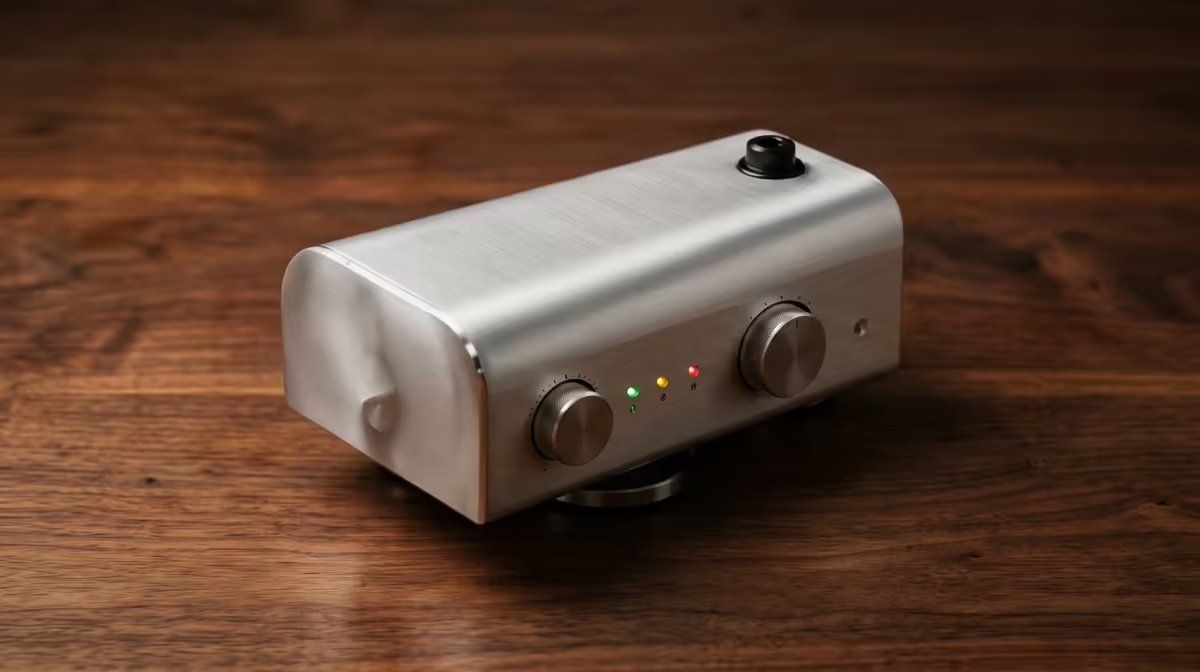
THX Achromatic Audio Amplifier (AAA) technology eliminates a specific type of audio distortion called intermodulation distortion, delivering measurably cleaner amplification than traditional Class AB circuits. For headset buyers, this means the amp stage in your DAC or headset dongle adds virtually no colouration to the sound.
What AAA Technology Actually Does 🔊
Conventional amplifier designs generate harmonic and intermodulation distortion when multiple audio frequencies are amplified simultaneously. AAA solves this with a patented feed-forward error correction circuit that detects distortion artifacts as they are created and cancels them before they reach the output. THX claims total harmonic distortion below 0.0001% at normal listening levels, which is significantly lower than most standard op-amp designs. The practical result is that the amp stage becomes sonically neutral: what comes in goes to your headphones without the warmth, edge, or fatigue associated with cheaper amplification. This matters most for open-back headphones and audiophile-tier gaming headsets where the driver quality is already high enough to reveal amplifier colouration.
Where AAA Appears in Gaming Audio Hardware 🎮
THX licensed AAA to several peripheral makers. The Razer BlackShark V2 range popularised AAA in the gaming headset space by including a THX-certified USB sound card in the box. The Razer Kaira Pro and higher-end SteelSeries headsets with DAC dongles also carry THX certification. At Evetech, these headsets typically sit between R2,000 and R4,500 depending on whether they add wireless connectivity. The AAA circuit lives in the external dongle or inline DAC rather than in the headset cups themselves, which is why the same headset without the dongle sounds noticeably different through a basic 3.5 mm port on a budget motherboard. If you care about AAA, confirm the bundle includes the USB dongle or that the sound card you are buying separately carries THX certification.
Is AAA Worth the Premium Over Standard Audio? 💡
For competitive FPS play, where directional audio cues and footstep clarity directly affect performance, the distortion reduction from AAA provides a practical edge. Intermodulation distortion can smear transient sounds, making positional cues slightly ambiguous. AAA removes that smearing. For casual music listening, the difference between AAA and a well-designed standard amp is subtle and most listeners would not identify it in a blind test. The bigger gains come when pairing AAA with a high-impedance headset above 80 ohms, where underpowered amps distort more. Budget USB sound cards from generic brands producing around 30 mW output show far more distortion than an AAA dongle producing 130 mW cleanly.
Set Windows Audio Output to 24-bit 96kHz ⚡
If you are using a THX AAA dongle, right-click the audio icon in Windows, open Sound Settings, and set the AAA device to 24-bit 96,000 Hz. This passes full-resolution audio to the AAA circuit and avoids Windows resampling, which can reintroduce harmonic artifacts the AAA stage was designed to eliminate.
FAQ
Does THX AAA work for console gaming?
Most AAA dongles connect via USB-A and are PC-focused. Some work on PlayStation via USB, but Xbox requires a USB-to-headset adapter. Check compatibility with your console before purchasing the dongle separately.
Is AAA the same as THX Spatial Audio?
No. AAA is an amplification technology that reduces distortion. THX Spatial Audio is a separate surround-sound processing algorithm. Some products include both, but they address entirely different parts of the signal chain.
Do I need a high-end headset to hear the difference?
AAA shows the most improvement with headsets above R1,800 with 40 mm or larger drivers. With a budget bundled gaming headset, the driver is the limiting factor. Budget at least R1,500 to R2,000 for the headset to make a THX dongle worthwhile.
Looking for genuinely cleaner gaming audio? Check out the THX-certified headset and DAC dongle options available at Evetech to hear what distortion-free amplification sounds like.