The word "uncapped" gets stuck on plenty of 5G home plans that quietly slow you down once you have used a set amount, so the line between truly uncapped and merely capped matters before you sign up. Uncapped versus capped 5G home internet is the difference between a flat monthly fee with no data ceiling and a plan that throttles or cuts off once you cross a gigabyte limit. In South Africa the cleanest fully uncapped option is still Rain, while Vodacom and similar plans lean on fair-use thresholds.
Quick Answer
Uncapped 5G home internet charges a flat monthly fee with no data limit, while capped plans throttle or hardlock your connection once you pass a set amount of gigabytes. In South Africa, Rain offers genuinely uncapped 5G home Wi-Fi from around R679 per month with no contract, whereas Vodacom-style plans apply fair-use thresholds that slow you down after a stated allowance.
What "uncapped" really means
A truly uncapped plan never charges you for data and never stops you for using too much of it. You pay the same each month whether you stream all evening or barely log on. Rain's 5G home plans fall into this camp: no soft caps and no peak-hour throttling at typical household usage, billed as a flat monthly fee with no contract tying you in.
The word becomes slippery when a plan is sold as "unlimited" but carries a Fair Usage Policy in the fine print. Under an FUP, you get full speed up to a stated amount, after which the provider throttles you to a much slower tier, and sometimes a second threshold hardlocks you until the next billing cycle. That is a capped plan wearing an uncapped label.
What "capped" means in practice
A capped plan gives you a defined data allowance, and how the provider handles the moment you reach it varies. Some throttle the connection to a crawl, some stop it entirely until you buy more, and FUP-based plans do a bit of both, dropping you to a lower speed tier at the first threshold and locking data at the second. Vodacom's home 5G plans, for example, pair a speed tier with an FUP allowance, so a 50Mbps plan might run at full speed up to around 1TB before the policy kicks in.
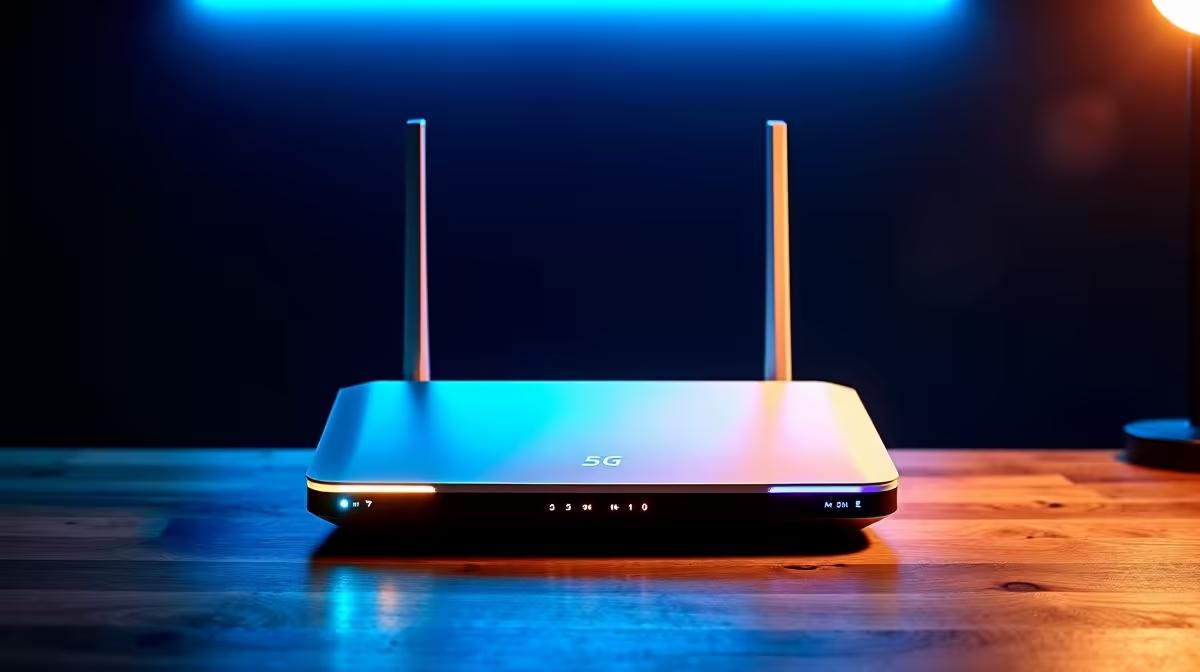
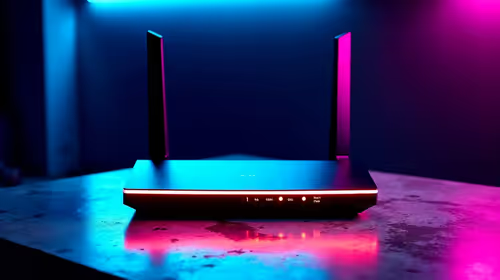
The right call depends on how your household actually uses data. Heavy streaming, large game downloads, cloud backups and several people online at once burn through a capped allowance quickly, and that is where an uncapped flat fee pays off. A light household that mostly browses and watches the occasional video may never reach a generous cap, in which case a capped plan can cost less. Whichever you choose, the router and signal placement matter as much as the plan, and the home networking gear at Evetech covers routers and signal boosters that help a 5G connection reach the whole house.
Choosing between them
Start by estimating your monthly usage. If you regularly stream in high definition, work from home, game online or share the connection across a family, lean uncapped so you never hit a wall mid-month. If your usage is modest and predictable, a capped plan with a comfortable allowance can be cheaper, just make sure the cap sits well above your typical month so you are not throttled in the last week. Check coverage at your exact address too, since 5G performance varies street by street, and confirm whether a plan is contract-free if you want the flexibility to switch. A good mesh setup or signal extender often does more for real-world speed than jumping to a pricier plan, and the popular networking accessories at Evetech cover the kit that helps.
Frequently Asked Questions
Is Rain 5G genuinely uncapped?
Yes. Rain's 5G home plans bill a flat monthly fee with no data limit and no contract, and they do not apply peak-hour throttling at typical household usage, so they are uncapped in the real sense.
What is a Fair Usage Policy?
An FUP is a threshold on an "unlimited" plan. You get full speed up to a stated amount, then the provider throttles you to a slower tier, and some plans hardlock data entirely once you pass a second threshold.
Which is cheaper, capped or uncapped?
It depends on usage. A capped plan can cost less for a light household that never reaches the limit, while a flat-fee uncapped plan is better value for heavy streaming, gaming or work-from-home households.
How fast is 5G home internet in South Africa?
Speeds vary by location and signal strength, but 5G home plans commonly deliver tens of megabits per second, and stronger coverage areas can do considerably more. Always check coverage at your exact address.
Do I need a special router for 5G home internet?
Plans usually come with a compatible 5G router. Adding a mesh system or signal extender can improve coverage across a larger home, often more effectively than upgrading to a faster plan.
Getting the most from a 5G home connection takes the right hardware as well as the right plan. Browse the Evetech networking range for routers and signal boosters that spread your connection across the whole house.