Quick Answer
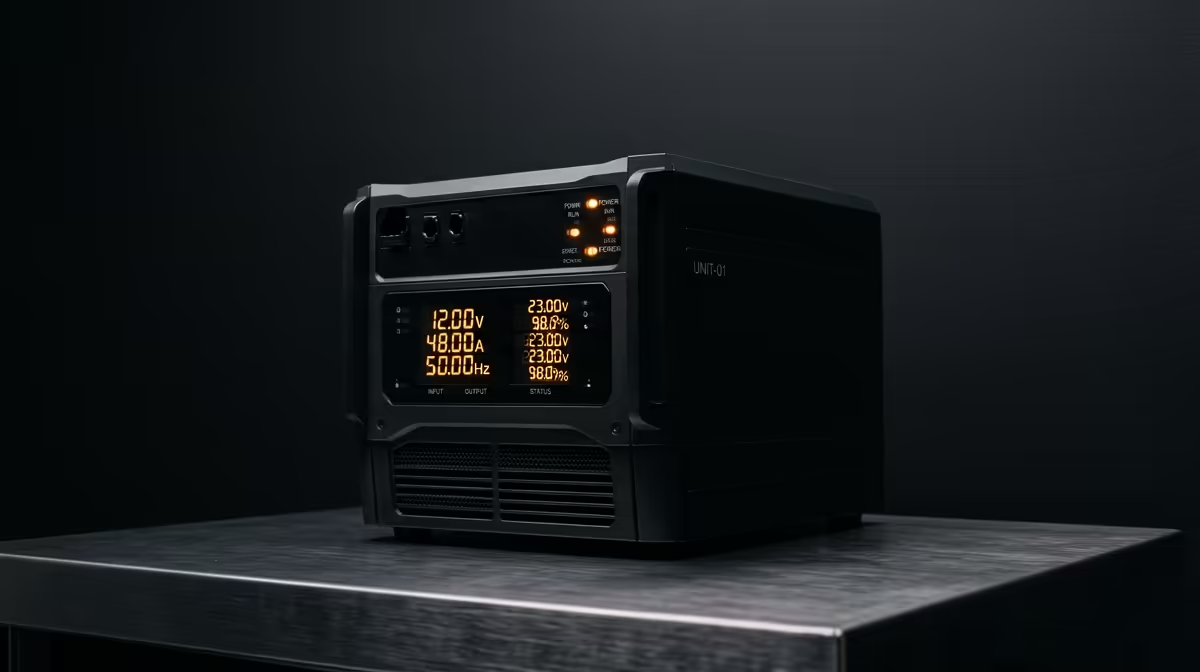
Pay for monitoring once a clean automatic shutdown matters more than a few rand saved. A unit with a USB link and bundled software can trigger Windows to hibernate at, say, 30% battery; that feature sits in the R2,400 to R3,800 band currently stocked at Evetech.
What Monitoring And Auto-Shutdown Buy You
A monitored UPS connects over USB or LAN and runs small software that watches battery level, load and temperature. The headline feature is unattended auto-shutdown: when the battery hits a set percentage, the PC saves and powers off cleanly. That protects an open editing project or a long file transfer. Basic surge UPS units skip this, which is fine if you are always at the desk to shut down by hand.
Matching The UPS To Deal Hunters: When Monitoring Is Worth Paying
For an SA buyer, the right call is to size around the load you actually run, not the biggest label on the shelf. Map your tower, monitor, router and any capture or audio gear, then choose the class that leaves about 30% headroom. In SA, mains voltage can sag or spike, so a line-interactive unit with AVR (automatic voltage regulation) is the practical floor; cheap standby units only switch to battery and skip AVR.
FAQ
Do I need a pure sine wave UPS?
For most ATX power supplies a simulated sine wave 1000VA unit is fine. If you run an active-PFC PSU that beeps or trips on battery, step up to a pure sine wave model; those sit roughly R3,500 to R6,000 currently stocked at Evetech.
How big a UPS for a gaming PC plus monitor?
A 1000VA/600W line-interactive unit covers a 300W tower plus a 30W monitor with headroom and gives 6 to 9 minutes for a calm shutdown. A 450W high-end rig wants the 1500VA/900W class.
Will a UPS protect against surges as well as dips?
Yes, line-interactive units add AVR and surge protection alongside the battery, so they clamp spikes and correct mild brownouts. Check the joule rating and that your gear is on the battery-backed outlets, not surge-only ones.
device that must survive a power dip, count only the battery-backed outlets, and pick the smallest unit that leaves about 30% spare wattage.