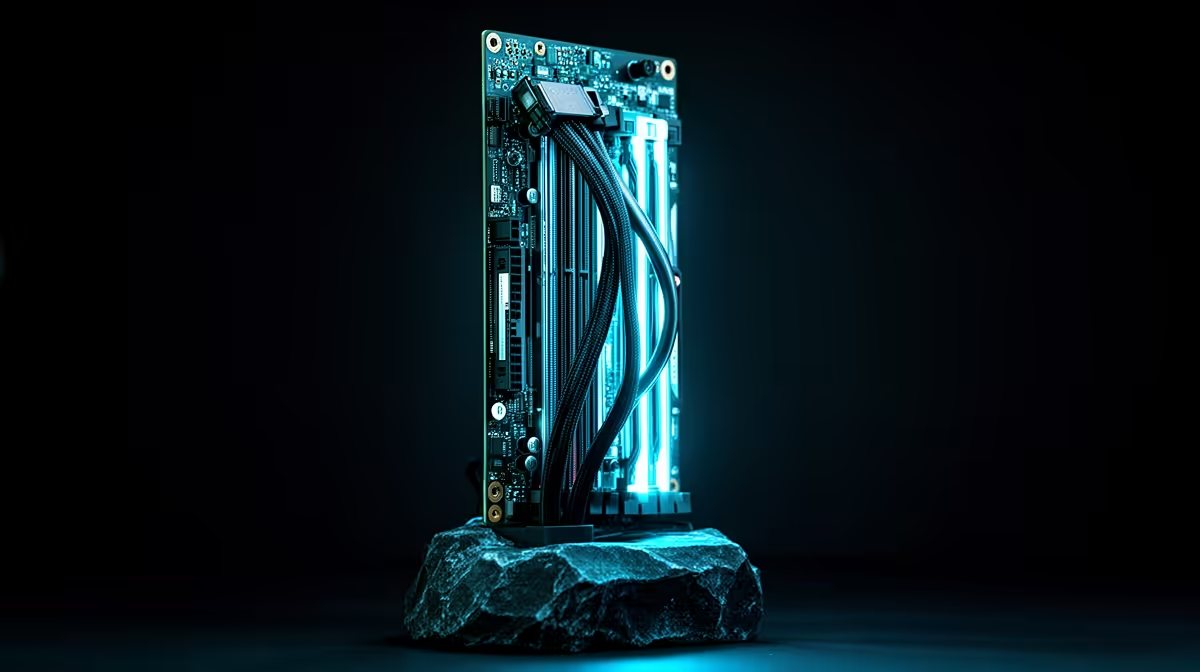
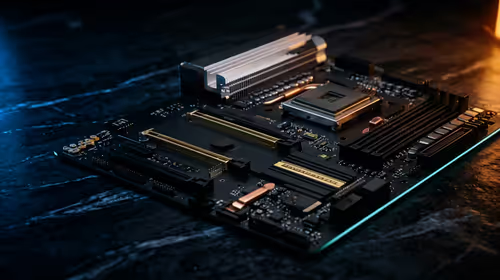
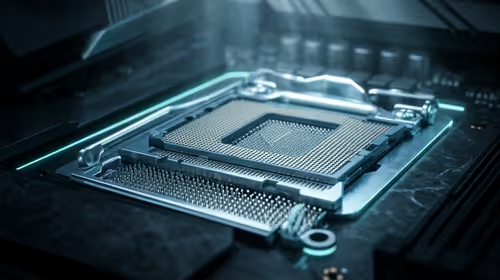
Turning the graphics card towards the glass can transform the view and starve its fans. Vertical GPU mounting succeeds when case clearance, fresh-air access and the riser cable match the card and PCIe generation.
Quick Answer
Vertical GPU mounting is worth doing for the look when the case provides a rigid mount, the fans sit far enough from the side panel and the PCIe riser matches the platform speed. It does not improve performance by orientation alone. A card close to glass can recycle hot air and run louder. Measure temperature, hotspot, clock and fan speed before and after, then keep the layout only when the visual change does not compromise cooling.
Case support comes first
Check whether the case has a native vertical bracket, optional kit or enough horizontal slots for an aftermarket mount. The bracket must support the card's length, thickness and weight without blocking fans or front radiators.
Measure from the GPU fan face to the side panel. There is no universal safe gap because fan design, panel vents and case airflow differ. More open space gives the cooler a better chance.
Tempered glass with no side vent is the hardest case. A mesh panel can feed the fans and adds dust exposure.
Match the riser generation
Use a riser rated and tested for the PCIe generation the motherboard and GPU negotiate. A Gen3 cable in a Gen4 Auto link can cause no boot, crashes or corrected bus errors.
Set the slot to the supported lower generation before installing an older riser when the platform guide recommends it. Keep a direct-slot path available so you can recover BIOS settings.
Do not fold the riser beyond its bend guidance or trap it behind the backplate. Route the cable clear of spinning fans, hot surfaces and unfinished metal edges.
Check the motherboard log for corrected PCIe errors after the move, even when the first game appears stable.
Build a horizontal baseline
Run one sustained game and log GPU temperature, hotspot, memory temperature when available, clock, power and fan RPM. Note room temperature.
Install the vertical mount, repeat the same route and compare after equal warm-up. A few degrees may be acceptable when clocks and noise remain sound. A large fan-speed or hotspot increase calls for more clearance or the horizontal position.
Support and warranty still matter
Use every bracket screw and any anti-sag support designed for the vertical kit. A heavy card can twist a weak mount.
Read GPU, case and riser warranty terms before modifying slot covers. Never drill near installed electronics or leave metal filings in a case.
Use the gaming PC deals to inspect complete case layouts, and check the PC best-seller page for another airflow design.
FAQ
Does vertical mounting reduce performance?
It can when restricted airflow raises temperature and lowers sustained boost. Measure the exact case and card.
Do I need a Gen4 riser?
Use a riser verified for the link speed you intend to run. Platform and GPU generation decide the requirement.
Can any case mount a vertical GPU?
No. The case needs compatible slots, bracket support, clearance and a safe riser route.
Measure fan-to-panel clearance, use a verified riser and compare the same warm game run before and after mounting.