Quick Answer
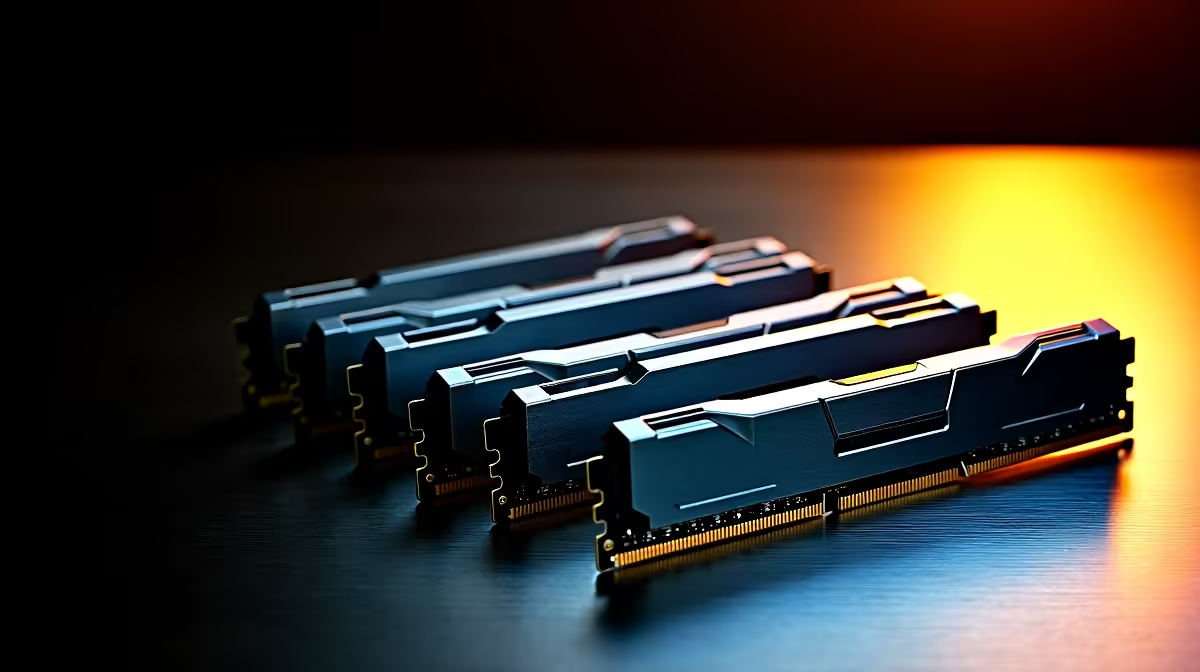
For a VR fitness build, DDR5 RAM matters most for capacity — 32GB of DDR5-6000 (around R2,800–R3,400 at Evetech) prevents the stutter that breaks VR immersion mid-workout. Beyond 32GB, RAM stops being the limiting factor; the GPU and a 90Hz-capable headset matter more. So spend on 32GB now and put further budget into the GPU, where VR frame rate is actually won.
When DDR5 Matters For VR Fitness
VR runs the headset runtime, the fitness app and Windows all in memory at once. On 16GB you risk hitting the ceiling, which causes disk swapping and hitches — and a stutter in VR is far more jarring than on a flat screen. 32GB of DDR5-6000 holds everything resident for smooth 90 fps play. This is the threshold where RAM clearly matters: get to 32GB.
When DDR5 Stops Mattering
Past 32GB, more RAM does almost nothing for VR fitness — 64GB only helps if you also edit video. Once capacity is sufficient, the GPU becomes the bottleneck for holding 90 fps at the headset's resolution, and the headset's own refresh rate caps the experience. So do not overspend on RAM; redirect that money to a stronger GPU.
Spend Order For VR Fitness
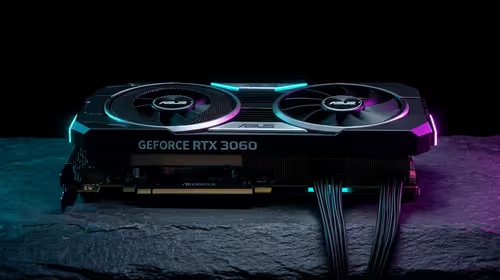
Get 32GB DDR5-6000 (enable EXPO/XMP for rated speed), then prioritise a GPU that sustains 90 fps at your headset's resolution — an RTX 4060 Ti or better for many standalone-linked setups. A capable CPU keeps frame times steady. RAM beyond 32GB is the last place to add money for VR fitness.
FAQ
How much RAM does a VR fitness PC need?
32GB of DDR5-6000. It holds the headset runtime, fitness app and Windows without hitting the ceiling that causes VR stutter. 16GB risks hitches; 64GB only helps if you also edit video.
Does more than 32GB RAM help VR fitness?
No. Past 32GB, RAM stops limiting VR fitness. The GPU sustaining 90 fps at the headset resolution and the headset's refresh rate matter far more, so redirect extra budget to the GPU.
What matters more than RAM for VR?
The GPU. After 32GB of DDR5-6000, a GPU that holds 90 fps at your headset's resolution — an RTX 4060 Ti or stronger for many setups — does more for smooth VR than any additional RAM.
DDR5-6000 with EXPO or XMP enabled for VR fitness, then stop adding RAM — put further budget into a GPU that sustains 90 fps, which is where VR smoothness is actually won.