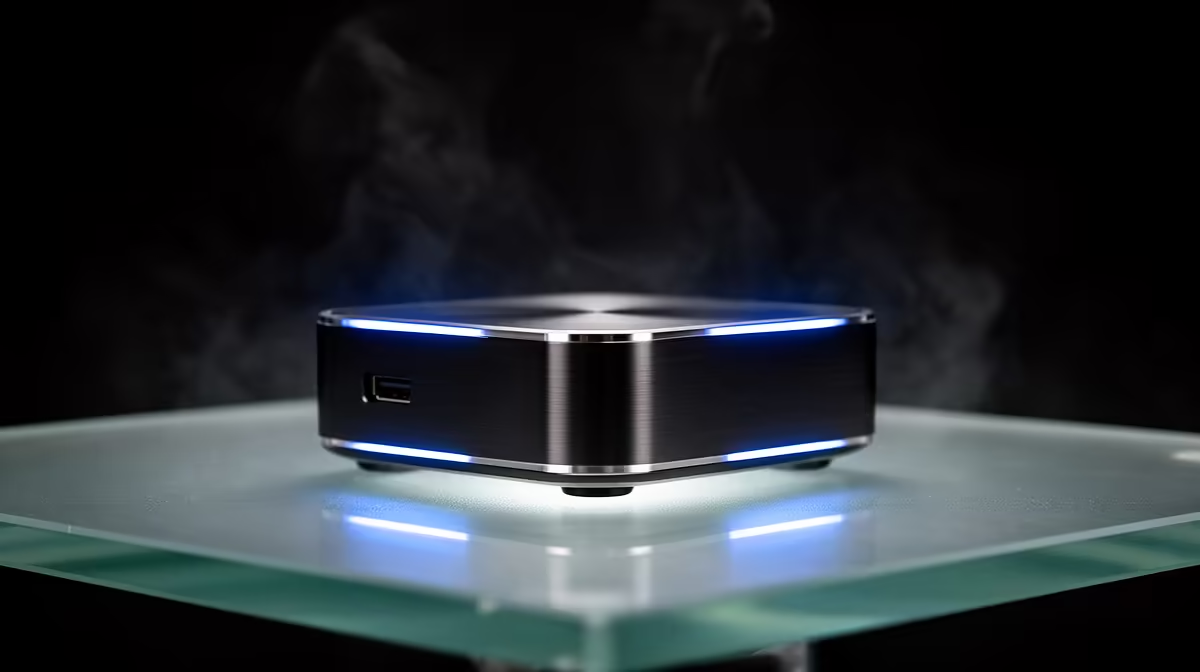
That tiny computer the size of a paperback book sitting next to a monitor is probably a NUC. The name stands for Next Unit of Computing, the mini-PC platform Intel created to prove a full desktop could shrink to a palm-sized box. Intel has since discontinued its own NUC line, and ASUS now develops and sells NUC-branded systems under a non-exclusive licence, so the format lives on under a new owner.
Quick Answer
NUC stands for Next Unit of Computing. It is a mini-PC platform Intel invented and later discontinued, now developed and sold by ASUS under a non-exclusive licence agreement. A NUC is a small, complete desktop computer in a compact chassis, suited to offices, media setups and any space where a full tower would be overkill.
What a NUC actually is
A NUC packs the core parts of a desktop, the processor, memory and storage, into a chassis often small enough to sit in your palm or mount behind a monitor. It is a real computer, not a stripped-down accessory: connect a screen, keyboard and mouse and it runs Windows or Linux like any desktop. The appeal is footprint. Where a tower demands desk or floor space, a NUC tucks away almost anywhere, runs quietly, and sips far less power than a full-size machine.
That makes it a natural fit for tidy office desks, point-of-sale counters, digital signage, home media boxes and anywhere a big PC would simply be in the way. To see the current local range of these compact machines, the mini-PC selection at Evetech gathers the small-form-factor options together with their specs.
From Intel to ASUS
Intel launched the NUC to show off what its processors could do in a tiny enclosure, and the platform built a loyal following among people who wanted desktop capability without the bulk. Intel later stepped back and discontinued its NUC business. Rather than letting the format die, ASUS took it on, signing a non-exclusive licence to develop and sell NUC-branded systems. Non-exclusive means Intel did not hand ASUS sole rights to the broader mini-PC idea, but ASUS now carries the NUC name and product line forward.
For a buyer, the practical takeaway is simple: NUC systems are still made, still supported, and still improving under ASUS, so the format is alive and current rather than abandoned.
Is a NUC right for you?
A NUC suits anyone who wants a capable computer that disappears into the room. Office workers, students with small desks, people building a living-room media machine, or businesses rolling out signage and kiosks all benefit from the small size and low power draw. The trade-off is expansion. A NUC is compact by design, so it offers less room to add cards or extra drives than a tower, and high-end gaming usually wants a larger machine with a full graphics card. For everyday computing, light creative work and tidy setups, though, a NUC delivers a lot in very little space. The PC best sellers are a handy way to weigh a mini-PC against compact towers if you are still deciding on form factor.
Frequently Asked Questions
What does NUC stand for?
NUC stands for Next Unit of Computing. It is the name Intel gave its mini-PC platform, now carried forward by ASUS under licence.
Did Intel stop making NUCs?
Yes. Intel discontinued its own NUC line, but ASUS took over development and now sells NUC-branded systems under a non-exclusive licence agreement, so the platform continues.
What is a NUC used for?
NUCs suit offices, digital signage, point-of-sale, home media setups and any space where a full tower is too big. They are complete desktops that run Windows or Linux in a very small chassis.
Can a NUC replace a desktop tower?
For everyday computing, office work and light creative tasks, yes. The trade-off is limited room for expansion and graphics, so demanding gaming or heavy workstation use is still better suited to a larger PC.
Curious whether a mini-PC fits your space? Browse the mini-PC selection at Evetech to compare NUC-style systems on size, power and specs, and find the compact machine that matches your setup.