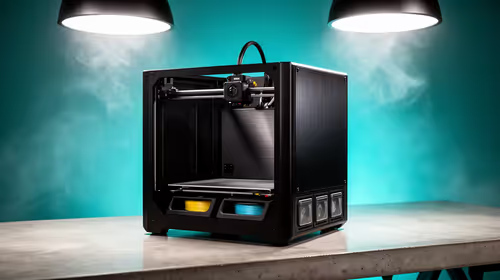
Watch a 3D printer at work and you are really watching hot plastic being drawn, one thin thread at a time, into a solid shape. FDM 3D printing, short for Fused Deposition Modelling, melts a thermoplastic filament and deposits it in stacked layers until a flat digital model becomes a physical object. It is the most common consumer printing method, and in South Africa entry-level FDM machines start from around R5,000.
Quick Answer
FDM works by feeding a plastic filament into a heated nozzle, melting it, and laying it down layer by layer to build an object from the bottom up. Each layer fuses to the one below as it cools. It is the cheapest and most beginner-friendly 3D printing method available locally.
How the Layers Build Up
The process starts with a digital 3D model sliced into hundreds or thousands of horizontal cross-sections by software. The printer then recreates each cross-section in plastic.
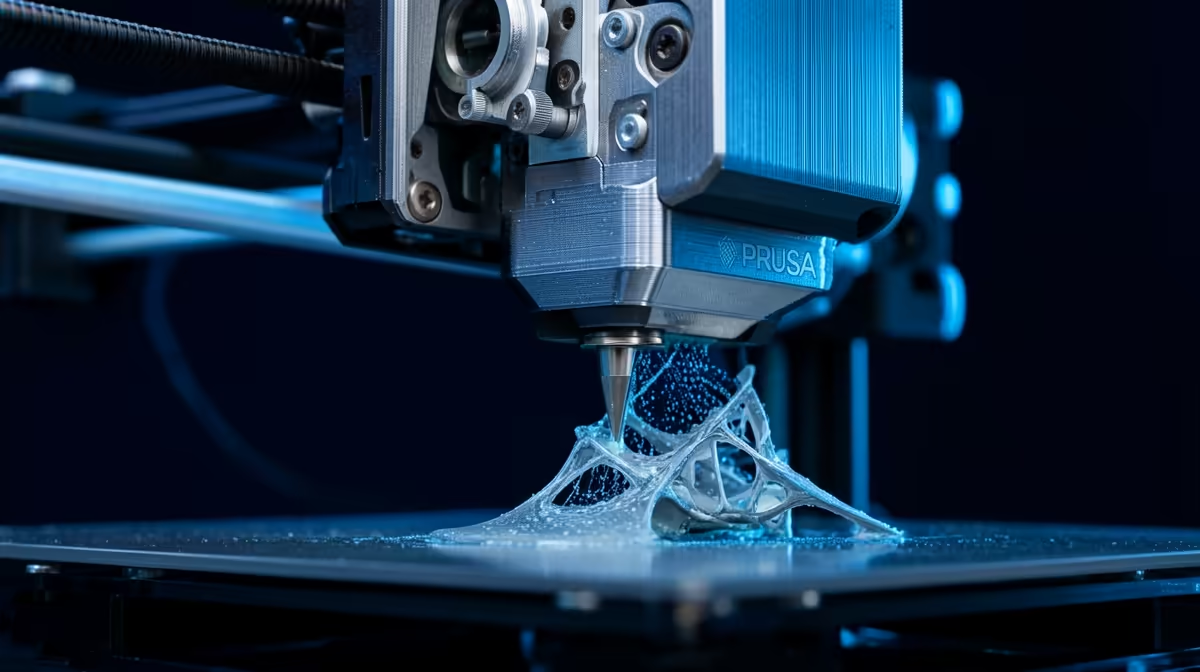
A motor pushes solid filament into a hot end, where the nozzle heats it past its melting point. The print head moves across the build plate, extruding a fine bead of molten plastic that traces the shape of the current layer. As that bead cools within seconds, it solidifies and bonds to the layer beneath it. The plate or the head then shifts by a fraction of a millimetre, and the next layer goes down on top. Repeat that a few thousand times and a finished part rises off the bed. You can see the kind of machines that do this in the current 3D printer range at Evetech.
Why FDM Became the Standard
FDM dominates consumer printing because the maths works in the buyer's favour. The hardware is mechanically simple, the filament is cheap and widely stocked, and the materials, mostly PLA and PETG, are easy to handle without protective gear or messy liquids. A roll of filament costs a fraction of what resin and its washing supplies add up to.
It is also forgiving. A failed FDM print wastes a little plastic and some time, not a tank of resin. That low cost of mistakes is exactly what a beginner needs. Stocking up on a spare nozzle and a fresh build sheet from the accessories best sellers keeps those early experiments running smoothly.
Frequently Asked Questions
What does FDM stand for?
FDM stands for Fused Deposition Modelling. The name describes the method exactly: thermoplastic is fused and deposited in layers to model a solid object.
Is FDM better than resin printing?
Neither is universally better. FDM is cheaper, cleaner and better for larger functional parts, while resin produces finer detail for miniatures and jewellery. For most beginners and general use, FDM is the more practical choice.
What materials does FDM use?
Most commonly PLA and PETG, with ABS for tougher, heat-resistant parts. PLA is the easiest to print and the usual starting point, costing roughly R250 to R400 per kilogram locally.
How much does an FDM printer cost in South Africa?
Entry-level FDM printers start from around R5,000, with more capable enclosed and multi-colour machines costing more. Filament and consumables add only a modest ongoing cost.
Now that the how is clear, the doing is easy. Browse the FDM printers at Evetech, grab a roll of PLA, and turn your first model into a real object.