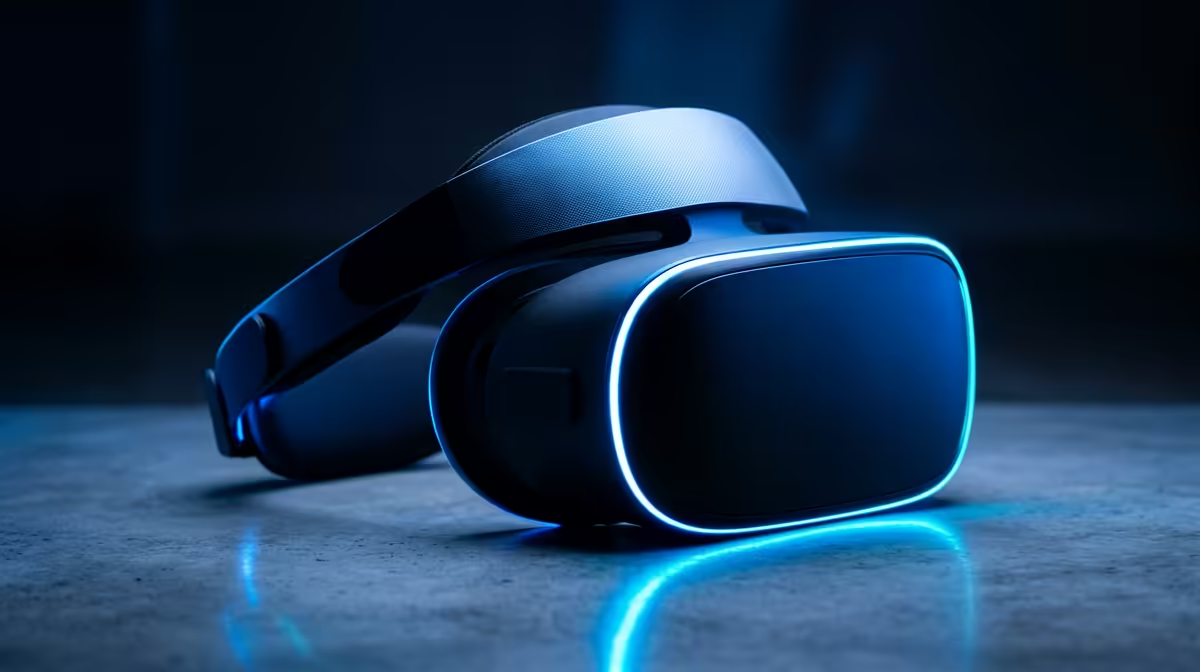
Strap on a VR headset and the first thing that either sells the illusion or breaks it is how much of your vision the virtual world fills. Field of view in VR is the number that decides whether you feel surrounded by another reality or like you are peering through a pair of ski goggles. It is one of the most under-discussed specs on a headset box, and it matters more to immersion than resolution does once you are actually inside.
Quick Answer
Field of view (FOV) in VR is how many degrees of your vision the rendered image covers, measured horizontally and vertically. A wider FOV fills more of your peripheral vision and reduces the tunnel effect that breaks immersion. The Meta Quest 3 delivers roughly 110 degrees horizontal, which most users find comfortable, while human vision spans closer to 200 degrees, so even good headsets show only part of what your eyes could see.
What FOV Actually Means
Your eyes take in a very wide arc of the world, well over 180 degrees horizontally when you count peripheral vision. A VR headset can only project image across a limited slice of that arc, defined by the lenses and panels inside. The portion it covers is the field of view, usually quoted as a horizontal degree figure, sometimes with a vertical figure too.
When the FOV is narrow, the edges of your vision fall into black nothingness, and your brain reads that as looking through binoculars or a diving mask. When the FOV is wide, the image reaches further into your periphery and the black borders fade from awareness, which is what makes a virtual space feel like somewhere you are standing rather than something you are watching.
How FOV Affects Immersion
Immersion is largely about removing the cues that remind you that you are wearing a device. A wider FOV removes the most obvious one: the dark frame around the image. With more of your peripheral vision filled, movement in the corner of your eye registers naturally, and turning your head reveals the world smoothly instead of dragging a visible border around with you.
There is a balance, though. Pushing FOV very wide demands more rendering power, because the headset has to draw image across a larger area at the same sharpness. It can also introduce distortion at the lens edges. This is why most mainstream headsets settle around 100 to 110 degrees, a sweet spot that feels open without crushing performance.
If you are exploring the wearable side of this category, the AR glasses selection at Evetech shows how the same field-of-view trade-offs play out in see-through eyewear as well as full VR headsets.
Numbers To Keep In Perspective
A 110-degree horizontal FOV, like the Quest 3, is comfortable for gaming and most experiences. Step up to a wider headset and you gain that surrounded feeling, but you pay for it in price and rendering load. Drop much below 100 degrees and the tunnel effect becomes noticeable. The figure alone does not tell the whole story either, because lens quality and how close the panels sit to your eyes both shape how the FOV actually feels once worn.
When you are matching accessories and cables to a headset, the accessories best sellers are a quick reference for the supporting kit that keeps a VR setup tidy.
Frequently Asked Questions
What is a good FOV for VR gaming?
Around 100 to 110 degrees horizontal is the comfortable mainstream standard and covers the Quest 3. Anything wider feels more immersive but costs more and demands more rendering power.
Does a wider FOV always mean a better headset?
Not on its own. Lens clarity, resolution, refresh rate and how the panels are positioned all matter too. A headset with a slightly narrower but sharper, distortion-free image can feel better than a wide one with soft edges.
Why can't a headset match my full natural vision?
Covering close to 200 degrees would require much larger lenses, far more rendering power and would introduce heavy edge distortion. Manufacturers target a practical slice that balances immersion against weight, cost and performance.
Does FOV affect motion sickness?
It can. A wider FOV increases the sense of presence, which suits some users but can intensify discomfort for those sensitive to motion. Comfort settings that temporarily narrow the FOV during movement are common for this reason.
Curious how field of view shapes the experience across headsets and smart eyewear? Browse the AR glasses range at Evetech and find a fit that matches how immersive you want your virtual world to feel.