


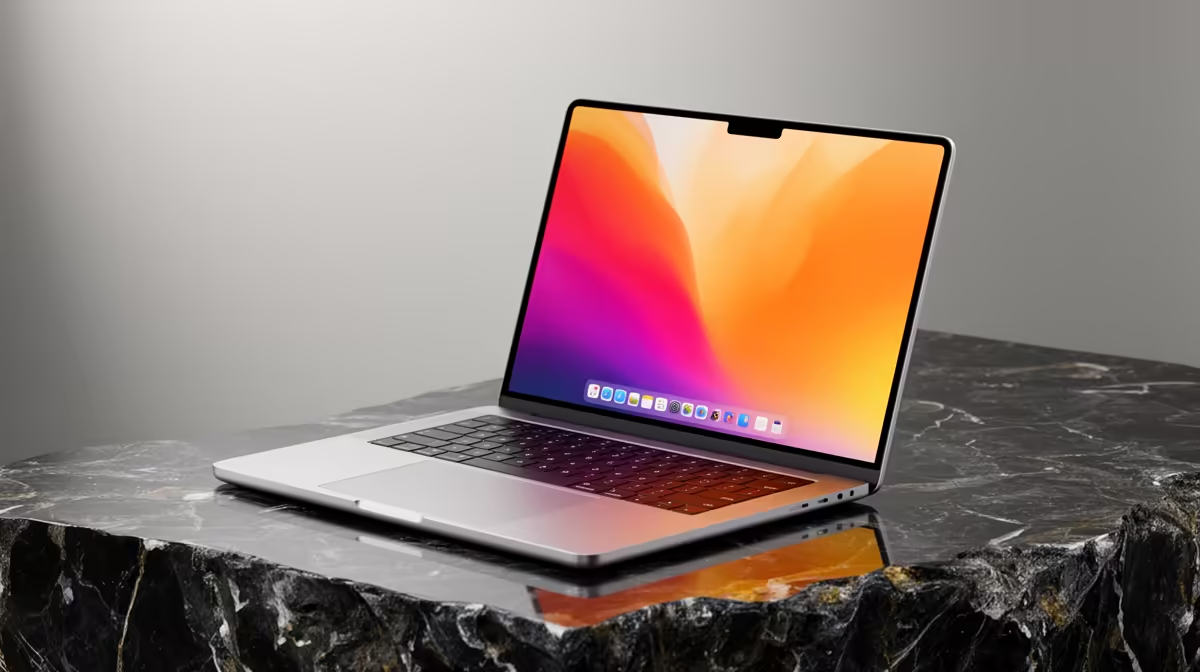
Apple has drawn the final line under the Intel era. macOS Golden Gate 27 is the first version of macOS that runs only on Apple silicon, dropping Intel support completely. Announced at WWDC 2026 and due to ship in the second half of the year, it means a Mac without an M-series chip will not install it. Tahoe 26 was the last stop for Intel; Golden Gate is the first chapter of an Apple-silicon-only Mac.
Quick Answer
macOS Golden Gate 27 is the first Apple-silicon-only macOS, arriving late 2026 and requiring an M1 chip or newer. Intel Macs cannot upgrade past macOS Tahoe 26. Golden Gate is named after the San Francisco strait, continuing Apple's California naming theme, and it is also expected to be the last release with full Rosetta 2 translation for older Intel apps.
Why This Release Matters
The 2020 to 2026 stretch was a transition: macOS kept a foot in both camps, running on Intel and Apple silicon side by side. Golden Gate ends that. By requiring Apple silicon, Apple can build features that assume the unified memory architecture, the Neural Engine, and the efficiency of M-series chips without writing a fallback path for Intel. That is what unlocks deeper on-device intelligence and tighter hardware integration. For users it is simpler to state: if your Mac has an M1, M2, M3, M4, or later chip, you are in. If it has an Intel processor, your macOS journey ended at Tahoe.
What Apple Silicon Owners Gain
Golden Gate is built for the chips you already have if you bought a Mac in the last few years. Expect the newest Apple Intelligence features, performance work tuned for the Neural Engine, and the usual annual refinements to the interface and core apps. Because Apple no longer has to support Intel, optimisation can go further. The release is also flagged as the last to carry full Rosetta 2, the translation layer that lets old Intel-only apps run on Apple silicon, so developers still shipping Intel-only builds are on notice to ship native versions.
What Intel Owners Should Do
If you are still on Intel, Golden Gate is not for you, and that is fine for now. A Tahoe machine keeps working and should receive security updates for a window after the cutoff. The practical moment to move is when an app you need requires Golden Gate or later, or when Rosetta apps you rely on stop being maintained. When you upgrade, the gains are real: Apple silicon MacBooks run cooler, last far longer on battery, and sustain performance the Intel models could not. The MacBook range at Evetech is entirely M-series, and the best-selling laptops with South African buyers show where the sweet spot for value currently lands.
Frequently Asked Questions
When does macOS Golden Gate 27 release?
Apple announced Golden Gate at WWDC 2026 in June and plans a public release in the second half of 2026, following the usual autumn cadence in the northern hemisphere.
Can any Intel Mac run Golden Gate 27?
No. Golden Gate requires Apple silicon, meaning an M1 chip or newer. Every Intel Mac is capped at macOS Tahoe 26 and cannot install Golden Gate.
What chips does Golden Gate support?
Macs with M1, M2, M3, M4, and later Apple silicon are supported. Exact model eligibility narrows with each release, but the broad rule is any Apple-silicon Mac qualifies.
Is Rosetta 2 going away?
Golden Gate is expected to be the last macOS with full Rosetta 2 support. After it, translation for Intel-only apps is set to be wound down, so apps without native Apple-silicon builds may stop running on future releases.
Golden Gate 27 makes Apple silicon the only path forward for macOS, so Intel owners should plan an eventual move rather than rush one. When you are ready, compare the M-series options in the MacBook lineup at Evetech and step into the platform Apple is now building exclusively for.










