Proxmox VE is a free, open-source platform that lets one physical machine run many virtual computers at once. Built on Debian Linux, it manages both full virtual machines and lightweight containers from a single web dashboard you open in a browser. It became the go-to free hypervisor for home labs after VMware ended its free ESXi licence in 2024, and it runs happily on hardware as modest as a capable mini PC.
Quick Answer
Proxmox VE is a free, Debian-based type-1 hypervisor that runs both KVM virtual machines and LXC containers, all managed from one web interface. It is the default free choice for home labs since VMware retired its free ESXi tier in 2024, and it installs on a single mini PC or small server.
What a Hypervisor Actually Does
A hypervisor is software that lets one physical computer pretend to be several. Each virtual machine gets its own slice of CPU, memory and storage, and behaves like a separate computer with its own operating system. Proxmox is a type-1 hypervisor, which means it installs directly onto the hardware rather than sitting inside another operating system, giving it efficient, direct access to your machine's resources.
That efficiency is why hobbyists and small businesses use it to consolidate. Instead of three separate boxes running three jobs, you run one machine hosting three virtual servers, with each isolated from the others.
VMs and Containers in One Place
Proxmox handles two kinds of workload. Full KVM virtual machines emulate complete hardware and can run almost any operating system, including Windows and various Linux distributions. LXC containers are lighter, sharing the host's kernel to run isolated Linux environments with far less overhead, which makes them perfect for small always-on services.
The convenience is having both under one roof. You manage them from the same web dashboard, where you can create, start, stop, back up and monitor everything without touching a command line if you prefer not to.
Why It Replaced Free ESXi
For years VMware ESXi was the popular free hypervisor for tinkerers. When VMware ended its free licence in 2024, home labbers needed an alternative, and Proxmox was ready. Being genuinely free and open-source with no feature paywall for the basics, it absorbed that audience quickly and is now the default recommendation for a new home lab.
It also helps that Proxmox is built on Debian, a well-understood and stable Linux base. That gives experienced users a familiar foundation while newcomers can lean on the web interface.
What You Need to Get Started
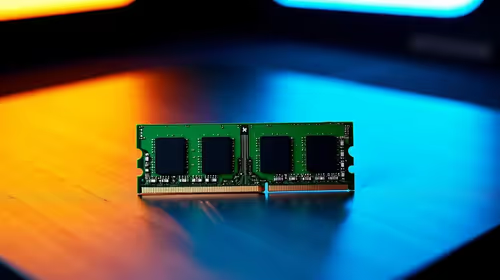
You do not need a server rack. A small machine with a modern multi-core CPU, a decent amount of RAM and an SSD is enough to run several light workloads at once. More RAM is the single most useful upgrade, because each virtual machine and container reserves its own memory.
A quiet, power-efficient mini PC is a popular Proxmox host for exactly this reason: it can run day and night without much electricity. If you are sizing up hardware, the mini PC range at Evetech shows compact machines that suit the job, and the current best-selling systems give you a sense of the popular specs.
Frequently Asked Questions
Is Proxmox VE really free?
Yes. The core platform is free and open-source with no feature paywall for home use. There is an optional paid support subscription for businesses, but you do not need it to run a full home lab.
Do I need a powerful server to run Proxmox?
No. A capable mini PC with a modern CPU, enough RAM and an SSD runs several light workloads comfortably. RAM is the resource that matters most, since each VM and container reserves its own memory.
What is the difference between a VM and an LXC container?
A KVM virtual machine emulates full hardware and can run almost any operating system, including Windows. An LXC container is lighter, shares the host kernel and runs isolated Linux environments with less overhead, which suits small always-on services.
Why did people move from VMware ESXi to Proxmox?
VMware ended its free ESXi licence in 2024, leaving home labbers without a free option from that vendor. Proxmox is free, open-source and capable, so it quickly became the default replacement.
Can I manage Proxmox without using the command line?
Yes. Proxmox provides a full web dashboard for creating, starting, backing up and monitoring VMs and containers. You can do most everyday tasks entirely through the browser.
Ready to build your first home lab? Pick a quiet, efficient host from the mini PC range at Evetech and get Proxmox running this weekend.