


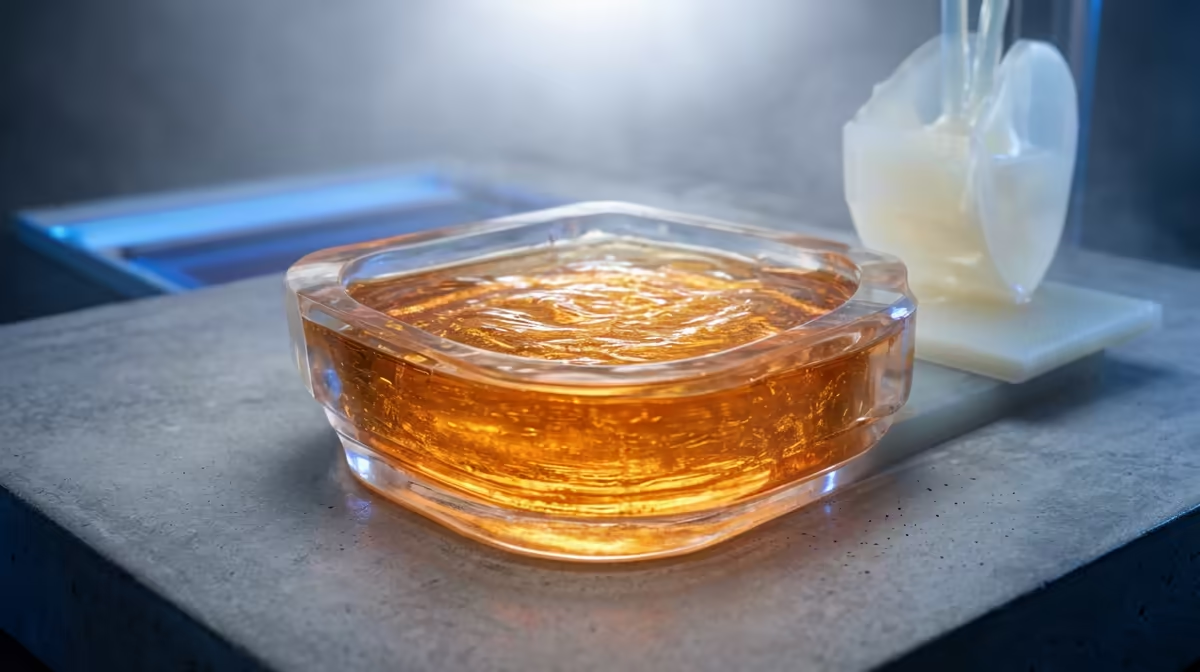
Liquid that hardens under a precise pattern of light sounds like science fiction, yet resin 3D printing turns it into finished miniatures, dental models and jewellery masters every day. Instead of squeezing melted plastic through a nozzle, a resin printer shines ultraviolet light through a sharp LCD mask, hardening one wafer-thin layer of photopolymer at a time. The result is detail an extrusion printer simply cannot reach.
Quick Answer
Resin 3D printing cures liquid photopolymer with UV light projected through an LCD mask, a process called MSLA. Each layer can resolve features finer than a human hair, and entry-level MSLA printers start from around R4,000 in South Africa. You will need decent ventilation, because uncured resin gives off fumes.
How MSLA Actually Builds an Object
The build plate lowers into a shallow vat of resin until only a fraction of a millimetre separates it from a transparent film at the bottom. Below that film sits a monochrome LCD screen and a UV light source. The screen blacks out everything except the cross-section of your current layer, so UV passes through only where plastic should solidify. That patch of resin cures, the plate lifts, fresh resin flows underneath, and the cycle repeats. Because the whole layer hardens in one flash, print time depends on object height rather than how much you are printing across the plate.
SLA, DLP and MSLA: The Three Cousins
SLA is the original technique, tracing each layer with a single steered laser. DLP swaps the laser for a digital projector that flashes the full layer at once. MSLA, the most common consumer approach, uses that LCD mask described above and tends to be the most affordable per print. All three cure photopolymer with light, so the chemistry of the resin is similar across them. The practical differences come down to speed, screen or laser lifespan, and how crisp the edges look at small scales.
Resin vs FDM: When the Vat Wins
Filament printers excel at large, sturdy, functional parts and cost very little to run. Resin wins when surface finish and tiny detail matter more than raw size or toughness. A tabletop wargaming figure, a ring prototype or a model train fitting shows off resin's strength, while a bracket or a tool handle is usually happier coming off an FDM machine. Many makers eventually keep both and pick the tool to suit the job, which is why our full 3D printer range covers extrusion and resin side by side.
What You Need Beyond the Printer
Resin is sticky, smells strong and stains, so plan for nitrile gloves, paper towel, isopropyl alcohol for washing prints, and a ventilated spot to work. Cured parts also need a short blast under UV to fully harden, which a cheap UV lamp or even strong sunlight handles. A flexible build surface, a spare FEP film and a few funnels with filters round out a sensible starter kit. Stock up on the consumables in our accessories best sellers so your first print is not delayed by a missing glove or filter.
Frequently Asked Questions
Is resin printing dangerous to use indoors?
Uncured resin and its fumes are irritants, so you should always print in a ventilated room and wear gloves. Once a part is washed and fully cured, it is inert and safe to handle. Treat the liquid resin with the same care you would give paint thinner or strong cleaning chemicals.
How small a detail can an MSLA printer resolve?
Detail is set by the LCD pixel size, often in the region of a few microns per pixel on modern monochrome screens. That is fine enough to capture chainmail texture on a miniature or thread detail on a tiny bolt. Layer height, usually 0.02 to 0.05mm, controls how smooth the vertical surfaces appear.
Why is my whole print failing to stick to the plate?
The most common causes are an unlevelled build plate, too short an initial exposure, or a cloudy FEP film scattering the UV. Re-level carefully, lengthen the bottom-layer exposure, and inspect the film for wear. A quick test print of a small calibration model saves wasting a full vat.
Can I print functional engineering parts in resin?
You can, especially with tough or ABS-like resins, but standard resin is more brittle than FDM filament. For parts that flex or take impact, choose a resin formulated for durability and expect to do a controlled cure. For purely load-bearing brackets, an FDM print is often the more practical choice.
Ready to start curing your first layer? Browse the full lineup of MSLA and entry-level options in our 3D printer collection and get printing detail you can feel.










