Watch a 3D print produce thin hairs of plastic strung between separate towers and you are looking at the classic symptom that retraction exists to solve. As the nozzle travels across empty space, molten filament keeps leaking from the tip unless the extruder briefly pulls it back. Get the pull-back distance and speed right and those wispy strings disappear, leaving clean travel moves and crisp surfaces.
Quick Answer
Retraction reverses the extruder to pull filament back during travel moves so it stops oozing. Direct-drive printers need only 0.5mm to 2mm of pull-back; Bowden setups need 4mm to 7mm because of the long PTFE tube. Both run well at 25mm/s to 45mm/s.
What Retraction Actually Does
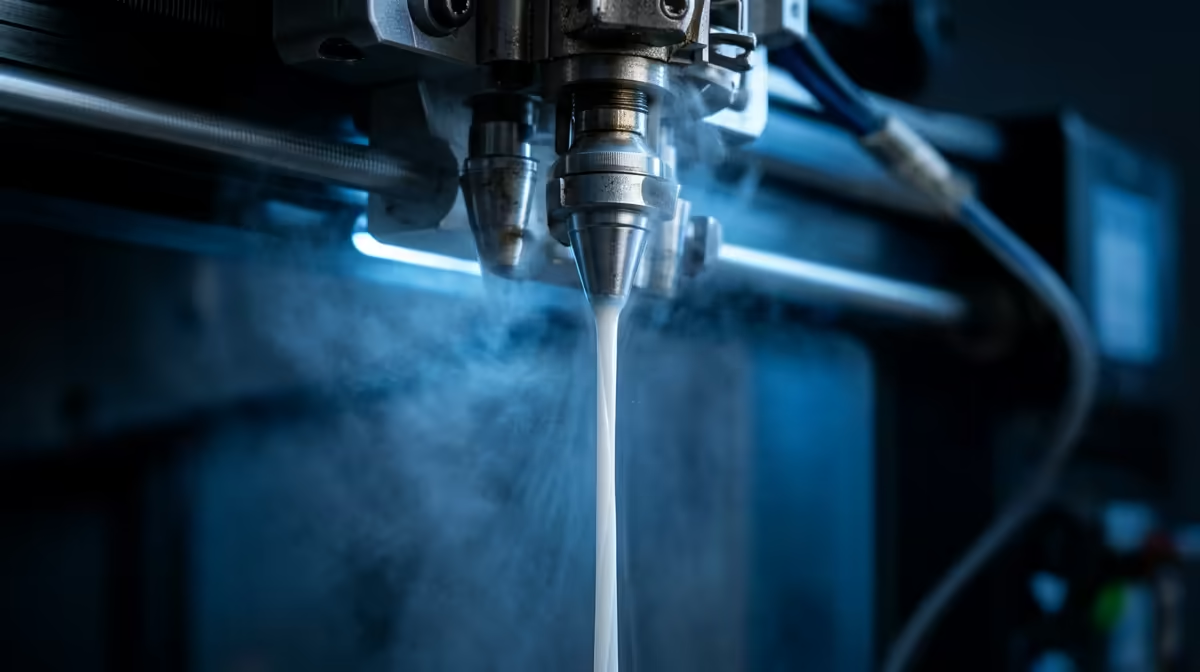
Inside the hotend, plastic sits in a melt pool under slight pressure. The moment the nozzle lifts to cross a gap, that pressure keeps pushing melt out of the tip, which is where stringing comes from. Retraction tells the extruder motor to spin backward by a set distance just before a travel move, dropping the melt-zone pressure so nothing leaks. When printing resumes, the extruder pushes that distance forward again to prime the nozzle.
The two numbers that matter are distance, in millimetres of filament, and speed, in millimetres per second. Distance controls how much pressure you relieve; speed controls how quickly. Both depend heavily on how your extruder is built, which is the first thing to settle.
Direct Drive vs Bowden Distances
A direct-drive printer mounts the extruder motor right on top of the hotend, so the filament path from gear to nozzle is short and stiff. Pull back even a little and the pressure drops almost instantly, which is why 0.5mm to 2mm is usually enough. Start at 1mm and adjust in 0.5mm steps.
A Bowden printer keeps the motor on the frame and pushes filament through a long PTFE tube to the hotend. That tube flexes and absorbs movement, so you need far more travel, typically 4mm to 7mm, to actually shift the melt pressure. Begin around 5mm and work outward. If you have moved past 7mm and still see strings, the problem is almost always temperature or a worn tube rather than distance.
Dialling In Speed and Temperature
Retraction speed of 25mm/s to 45mm/s suits most filaments. Too slow and the nozzle keeps oozing during the pull; too fast and the extruder gear can grind a flat spot into soft filament. PLA tolerates the upper end of that range comfortably; flexible filaments want the lower end.
Temperature has more influence on stringing than people expect. Printing PLA 10 degrees too hot makes the melt runnier and far more prone to leaking, no matter how aggressive your retraction is. Drop the hotend in 5 degree steps and reprint a stringing test tower between changes so you can see exactly which adjustment helped. Keeping good consumables on hand, from spare nozzles to PTFE tube, makes this kind of calibration painless, and you will find plenty in the Evetech accessories range.
A Simple Calibration Routine
Slice a two-tower stringing test, print it, judge the strings, change a single value, then reprint. Lock in distance first, then speed, then shave temperature. Once a clean tower comes off the bed, save that profile per filament, because PLA, PETG and TPU each behave differently. If you are buying a new machine, the printers in the Evetech 3D printer line-up ship with tested starter profiles that get you most of the way there.
Frequently Asked Questions
Why does my print still string after increasing retraction?
Past a sensible distance, extra retraction stops helping. Wet filament and a too-hot nozzle are the usual culprits. Dry the spool, drop the temperature in 5 degree steps, and retest before adding more distance.
Is more retraction always better?
No. Over-retraction can pull melt so far back that it grinds the filament, clogs the nozzle, or leaves gaps when printing resumes. Use the smallest distance that gives clean travel moves.
Does retraction slow down printing?
Slightly, because each travel move adds a pull-back and re-prime. The time cost is tiny next to the quality gain, and combing settings reduce unnecessary retractions over infill.
What retraction settings work for PETG?
PETG strings more than PLA, so start near the top of the distance range for your extruder type and keep speed around 25mm/s to 30mm/s. Lowering the nozzle temperature usually does more than raising distance.
Can a worn PTFE tube cause stringing?
Yes. On a Bowden setup a loose or worn tube absorbs the retraction movement, so the melt pressure never drops. Replacing the tube and tightening the couplers often fixes stringing that no setting could.
Ready to chase cleaner prints? Browse tested machines in the Evetech 3D printer range and stock up on spare nozzles and PTFE tube so your next calibration session goes smoothly.