


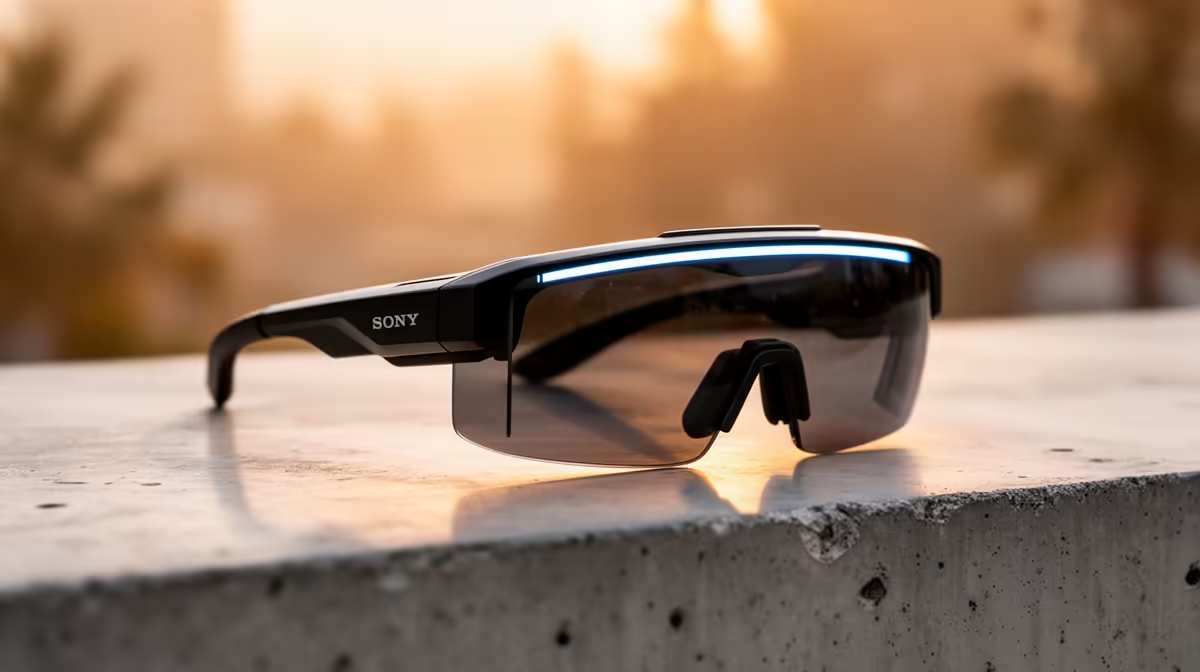
What matters most is the handful of features you touch every session, not the longest spec list. AR display glasses shine as a portable, cable-light second screen, not as a desktop monitor stand-in. If you travel between Joburg, Cape Town and Durban, weight and a single-cable pack-down save real hassle in the overhead bin.
Quick Answer
AR glasses are best as a portable virtual monitor for travel and tidy desks, not a gaming-monitor replacement. A pair of display glasses (around 1080p per eye, 120Hz, ~80g) runs roughly R6,000-R12,000 at Evetech and pairs to a handheld, phone or laptop over USB-C DisplayPort.
What AR glasses are good for
Display glasses give a large floating screen, typically a 1080p-per-eye Micro-OLED panel at up to 120Hz, weighing 75-85g. That suits a clean desk (no monitor stand) and travel, turning a handheld or phone into a big private screen. They are not a true AR overlay or an esports display.
Connectivity and what drives them
Most glasses use one USB-C cable carrying DisplayPort video; confirm your device supports USB-C video out, or use a small dongle. For gaming, pair them with a Steam Deck OLED or ROG Ally X. Entry glasses near R6,000 give a sharp 1080p image; premium models at R10,000-R12,000 add brightness (nits) and field of view.
What matters most
What matters most in AR glasses is the handful of features you touch every session, not the longest spec list. Rank your needs first, then match the model to them. Paying for capabilities you will not use is the most common way buyers overspend.
Packing it for travel
Weight and a single-cable pack-down decide whether you actually carry the gear. A 65W GaN charger and one USB-C cable keep the bag light, and a hard case protects the kit in the overhead bin. Favour models that wake and connect in seconds so you are not fiddling on a Gautrain or in a hotel.
FAQ
Is this good for travelling with?
Yes, if it is light and packs to a single cable. Favour AR glasses that wakes and connects in seconds and add a 65W GaN charger so the bag stays light on a Gautrain or flight.
Can AR glasses replace a gaming monitor?
For travel and tidy desks, yes as a 1080p 120Hz virtual screen; for competitive gaming, no. A 165Hz desktop monitor still wins on refresh rate and latency.
What do I need to connect AR glasses?
A device with USB-C DisplayPort video out: most modern laptops, many phones, and handhelds like the Steam Deck OLED. Some need a small adapter, so confirm USB-C video support first.
phone, laptop or handheld supports USB-C DisplayPort video before buying, and treat AR glasses as a portable second screen.










