Quick Answer
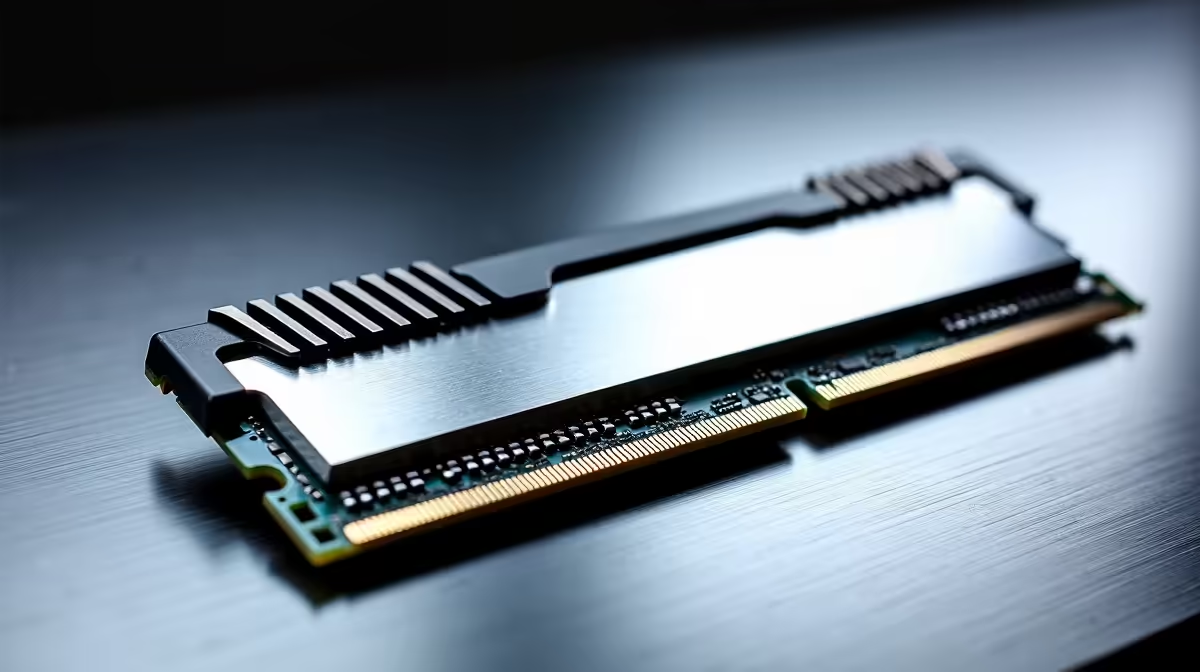
For a travel-friendly study setup, capacity beats raw frequency: 32GB (2x16GB) of DDR5-6000 CL30 is the sweet spot and costs roughly R1,400 to R2,200 at Evetech. Buy a matched dual-channel kit, enable EXPO or XMP in the BIOS, and only chase DDR5-6400 if your workload is genuinely bandwidth-bound.
Capacity First, Then Speed
A travel-friendly study setup relies on small footprint, low power draw and parts that survive being packed into a bag. 16GB is now the floor and 32GB the comfortable target; jumping from 16GB to 32GB removes far more stutter than moving from DDR5-5600 to DDR5-6400. A 2x16GB DDR5-6000 CL30 kit runs about R1,400 to R2,200 and leaves a clear path to 64GB later if you ever need it.
Why Dual-Channel And Timings Matter
Always buy two sticks, not one. A single 16GB stick runs in single-channel and can lose 10-15% in memory-heavy work. CL30 at DDR5-6000 gives lower real latency than CL40 at DDR5-6400 for most desktops, so the cheaper, tighter kit often wins. Match the kit to your motherboard's QVL to avoid posting headaches.
Enabling The Speed You Paid For
Out of the box, DDR5 runs at a slow JEDEC default near 4800MT/s. The rated speed only appears once you enable EXPO (AMD) or XMP (Intel) in BIOS, a 30-second change too many SA buyers skip. After enabling it, run a short stability pass; if the system is unstable, drop one EXPO grade rather than living with crashes.
FAQ
Is 16GB or 32GB DDR5 better for a travel-friendly study setup?
32GB is the safer buy for a travel-friendly study setup because it removes the swap-to-disk stutter that 16GB hits under load. The extra R700 to R1,000 is cheap insurance against a second upgrade.
Does DDR5 speed really matter?
Past DDR5-6000 the gains shrink quickly for most desktops. Capacity and enabling EXPO/XMP deliver bigger real-world wins than paying for DDR5-6400 or faster.
Can I mix DDR5 sticks?
Avoid it. Mixing kits can drop you to a slower shared speed or cause instability. Buy a single matched dual-channel kit sized for your needs from the start.
your DDR5 kit, enter the BIOS and enable EXPO or XMP, then run a short stability pass, because the rated speed only applies once the profile is switched on.