A spec sheet lists PCIe generation, DDR5 speed, and M.2 slot count as if they all carry equal weight, but they rarely do once a build gets actual daily use. Builders running a b860m motherboard tend to notice storage layout and graphics bandwidth long before they ever notice whether memory hit its rated overclock.
Quick Answer
For most South African builds, PCIe 5.0 graphics headroom and triple M.2 storage matter more day to day than peak DDR5 speed. This board, priced at R4,499, covers all three regardless: an x16 slot on PCIe 5.0, a trio of matching M.2 bays, and memory that stretches to 8666MT/s once overclocked, so the ranking mostly shapes where future upgrade money goes.
🎮 Why graphics bandwidth ranks first
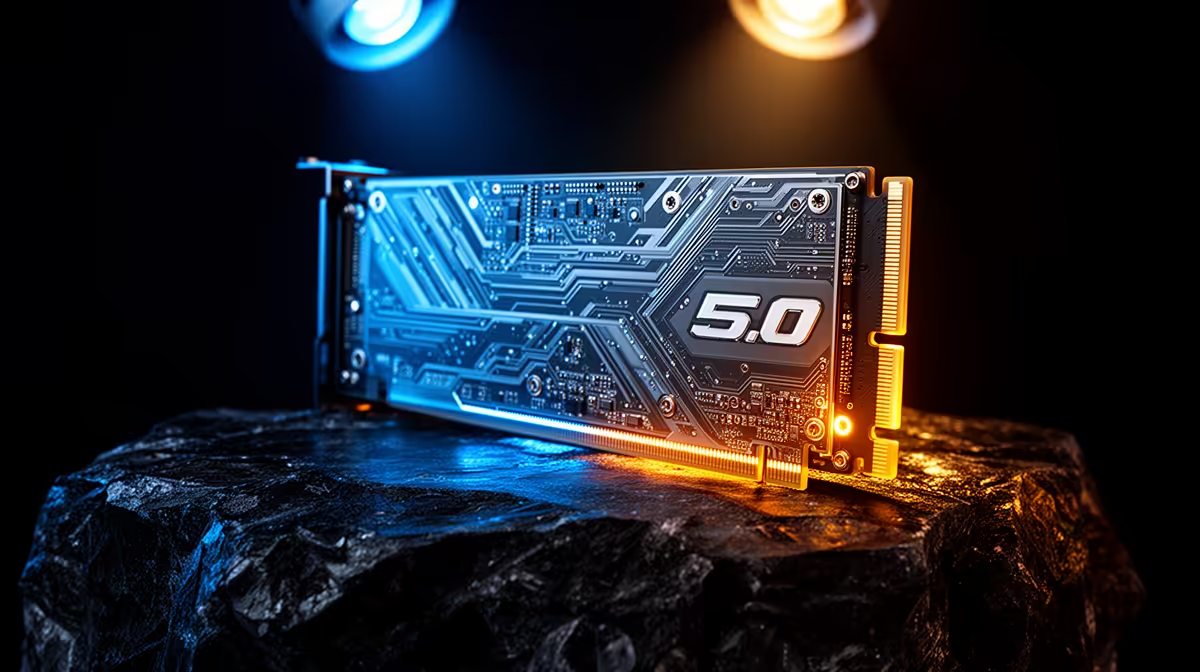
A PCIe 5.0 x16 slot future-proofs a board against the next generation or two of GPUs, since the slot itself will not become the limiting factor as card bandwidth demands climb. That matters more than a marginal memory speed bump, since a graphics card upgrade happens less often and is a bigger single expense to get wrong.
Where that bandwidth actually shows up
Most current GPUs do not yet saturate PCIe 5.0 bandwidth, so the practical benefit today is headroom rather than an instant frame rate jump. That headroom is exactly why builders in South Africa, where a full system refresh is a bigger financial decision, tend to prioritise it.
💾 Why triple M.2 outranks a single fast slot
Storage bottlenecks show up constantly in daily use, from load times to game install sizes that keep climbing. Three PCIe 5.0 M.2 slots let you separate a boot drive from a growing games library without a separate card or living with one overloaded drive.
A more affordable upgrade path
Adding a second or third SSD is cheaper and simpler than adding a new GPU, which makes ample M.2 slot count a practical priority for anyone planning to expand storage before anything else.
🧠 Where DDR5 speed sits on that list
DDR5 up to 8666MT/s is a genuine spec, but reaching it needs a memory kit rated for that speed plus a stable overclocking profile, neither guaranteed straight out of the box. For gaming specifically, the jump from a moderate DDR5 speed to that rated maximum tends to produce a smaller frame rate gap than upgrading storage or graphics bandwidth would.
The full spec sheet sits on the product listing for this configuration, while the broader B860 range or Intel motherboards across every chipset suit anyone weighing up alternatives at a different price point.
Frequently Asked Questions
Should DDR5 speed outrank storage slots when choosing a board?
No, for most builds storage layout and graphics-slot generation affect daily experience more than the last few hundred MT/s of memory speed.
Does PCIe 5.0 graphics bandwidth matter if my GPU does not use it all yet?
Yes, in that it protects the board against becoming the bottleneck as future GPUs increase their bandwidth needs.
Is triple M.2 overkill for a typical gaming PC?
Not necessarily, since separating a boot drive from a growing games library is a common, practical use for the third slot.
Do I need the fastest DDR5 kit the board supports?
No, a mid-range DDR5 kit suits most gaming workloads, and the rated maximum matters more for enthusiasts chasing every last frame.
Ready to rank your must-have features?
The ASUS B860M MAX Gaming AX features under our Intel B860 motherboard lineup, geared to cover PCIe 5.0, fast DDR5 and triple M.2 on one board.