Quick Answer
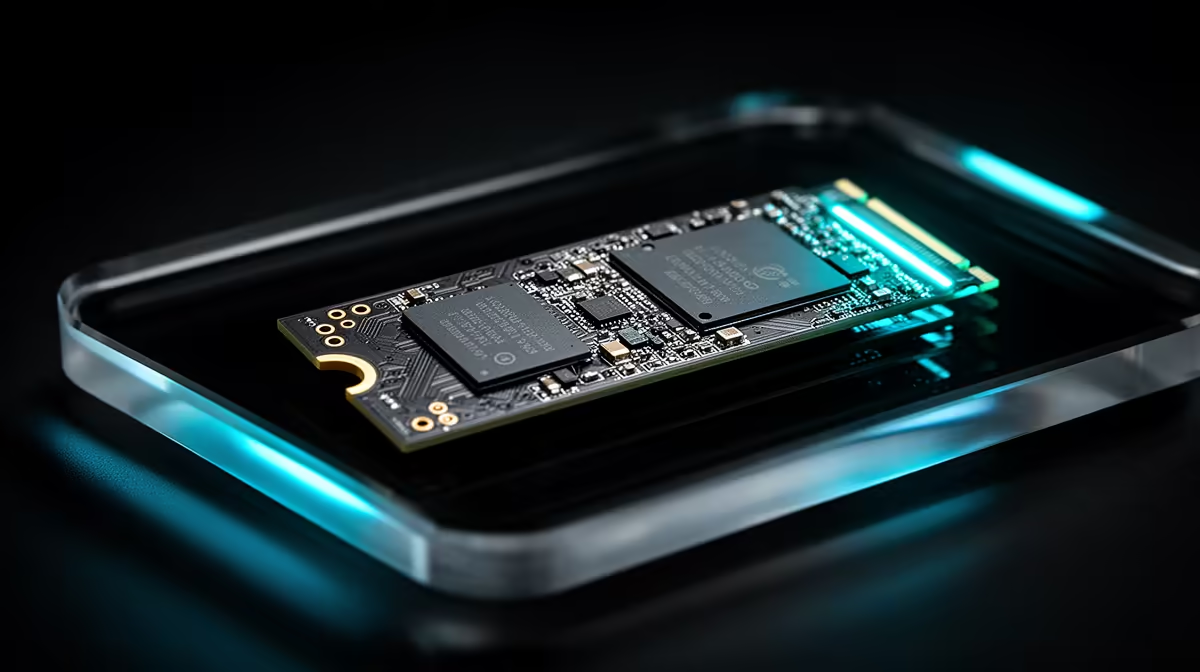
Cheap nvme ssds become expensive when they save R300 upfront but force an adapter, replacement cable, weak battery, or a second purchase within a year. For shared gaming spaces, start around R900-R3,500 and shortlist options like Samsung 990 EVO, WD Black SN770, and Crucial P3 Plus only after checking 1 TB capacity, PCIe 4.0 support where the platform allows it, 3000-7000 MB/s sequential reads, and a sensible TBW rating.
What To Prioritise First
For shared gaming spaces, the must-have is enough capacity before peak speed. A 1 TB NVMe SSD is the floor for modern game libraries, lecture recordings, or project folders; 2 TB is the cleaner pick once installs pass 500 GB. PCIe 4.0 reads near 5000 MB/s feel quick, but endurance, warranty, and a cool M.2 slot matter more during long copies.
Spend Where It Changes Daily Use
Use three price bands to keep the shortlist honest. The budget tier in the R900-R3,500 range should solve the core job without forcing extra adapters; the balanced tier should add durability, speed, or comfort you will notice weekly; the premium tier must justify itself with a measurable gain. Treat Samsung 990 EVO, WD Black SN770, and Crucial P3 Plus as reference names, then confirm the current Evetech listing, warranty terms, and exact stock before buying.
Specs And Extras To Treat Carefully
Ignore peak read speed when the workload is mostly game launches, voice recordings, or moving lecture files. Also ignore heatsinks that do not fit under a laptop cover or motherboard shield. The real checks are 1 TB or 2 TB capacity, a known controller family, TBW rating, and whether the device can use PCIe 4.0 speed at all.
FAQ
What is the safest budget for nvme ssds in SA?
For shared gaming spaces, start with the R900-R3,500 band and move up only when the upgrade changes comfort, speed, or reliability. Exact live pricing changes, so use the band for planning and check the current Evetech listing before checkout.
Which spec matters most for shared gaming spaces?
The most important spec is the one that removes the daily bottleneck: 1 TB capacity, PCIe 4.0 support where the platform allows it, 3000-7000 MB/s sequential reads, and a sensible TBW rating. Cosmetic features should come after that, especially for shared rooms, student desks, and compact home setups.
Should I buy the cheapest nvme ssd available?
Only buy the cheapest option if it still matches the device, workload, and warranty requirement. If it needs an adapter, extra fan, bigger capacity, or a replacement within months, the cheaper price is not the better SA buy.