Gear that moves between res, home and the road faces knocks, heat and tight bags. Picking a streaming microphone that travels well matters as much as raw performance.
Quick Answer
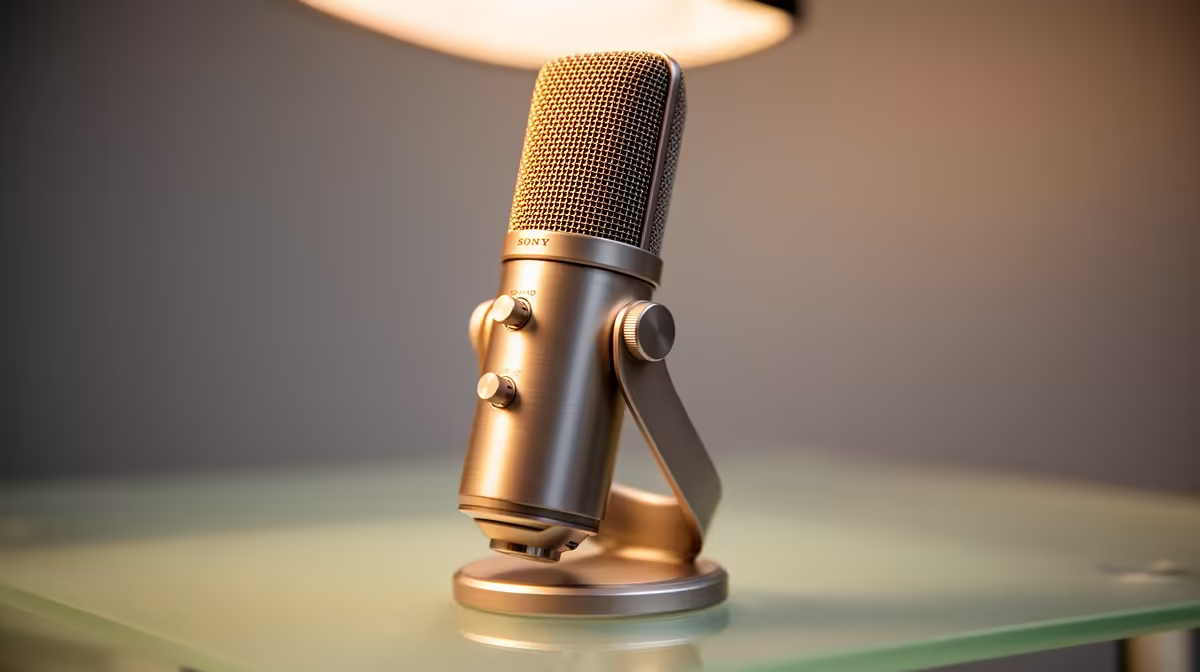
A dedicated streaming microphone matters most for a buyer who moves the kit between res, home and the road when chat or a stream needs clear, professional-sounding voice. A capable USB mic runs roughly R900 to R2,800 locally; the capsule, a cardioid pattern and a boom arm matter more than headline sample rates, since 48kHz is plenty for voice.
When A Real Mic Beats A Headset Mic
A standalone mic earns its place for a buyer who moves the kit between res, home and the road once people listen to your voice for more than quick callouts. A cardioid USB condenser at 48kHz picks up a fuller, clearer voice than any headset boom mic and rejects more room noise from the sides. Look for a cardioid pickup pattern, a built-in gain dial, and a headphone monitor jack so you can hear yourself live. For pure in-game comms, a headset mic is still fine - the upgrade is about how others hear you.
Boom Arm, Pattern And Room Treatment
A boom arm (around R250 to R700) is the upgrade buyers underrate. It positions the mic 15 to 20cm from your mouth, off the desk so keyboard thumps do not transmit, and keeps your hands free. Pair it with a cardioid pattern and a simple pop filter for clean speech.
- Pattern: cardioid for solo voice, rejecting side and rear noise
- Boom arm: keeps the mic close and off the noisy desk surface
- Treatment: a soft-furnished room or a panel behind you cuts echo for free
gain so your normal voice peaks around -12dB to -6dB, not maxed out. Most muddy or distorted mic audio comes from gain set too high, not from a cheap microphone.
Where Cheap Gets Expensive
Cheap kit gets expensive when you replace it twice. A no-name microphone often needs a separate stand, pop filter and noise software to sound usable, pushing the real cost past a R900 to R2,800 cardioid USB mic that ships ready. Count the accessories and the redo before calling the cheap option a saving.
FAQ
Is a USB mic good enough or do I need XLR?
For chat, streaming and recording, a quality USB cardioid mic at 48kHz is more than enough. XLR only pays off once you add an audio interface and multiple mics, which most solo creators never need.
Do I really need a boom arm?
It is the highest-impact accessory for the money. A boom arm keeps the mic close to your mouth and off the desk, so typing and bumps do not transmit, and it frees up desk space at the same time.
Why does my mic pick up so much background noise?
Usually the gain is too high or the mic is too far away. Move it 15 to 20cm from your mouth, use a cardioid pattern, and lower the gain so your voice peaks around -12dB before reaching for software noise removal.
Compare the streaming microphones stocked at Evetech, then pair a cardioid USB mic with a boom arm for the biggest jump in voice quality.