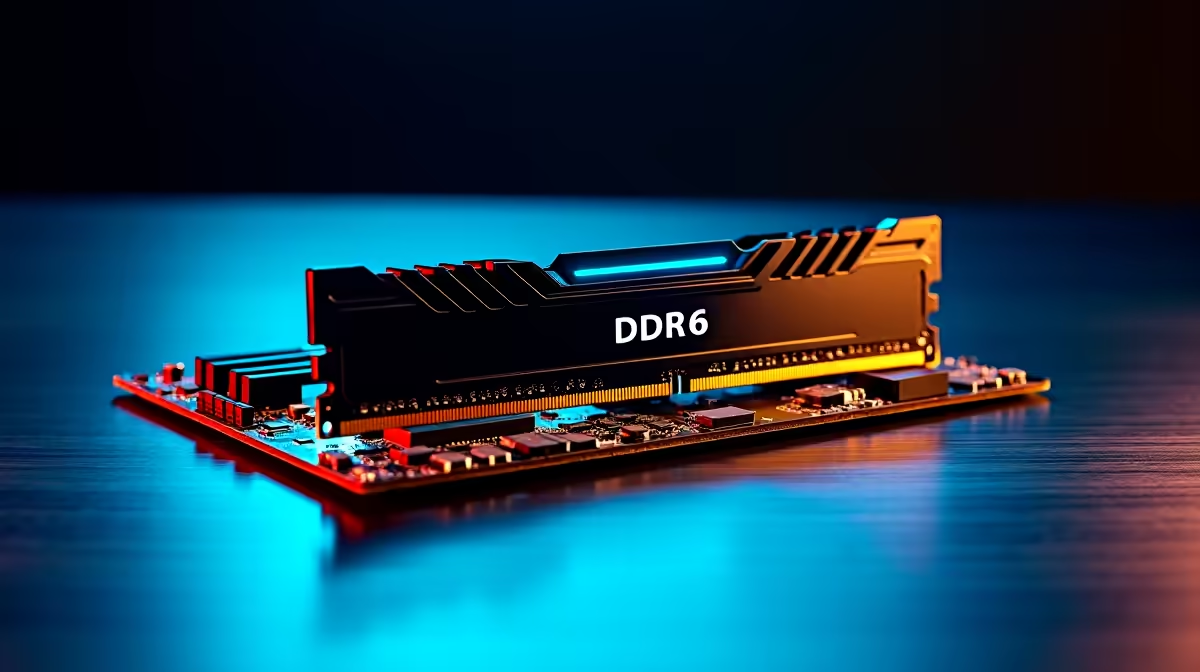
There is a tempting fantasy that DDR6 will drop into your current board the way a faster set of DDR5 sticks might. It will not. DDR6 is a new electrical and signalling standard, and the pins, the voltage behaviour and the way data moves across the channel are different enough that a DDR5 socket simply cannot talk to it. Moving to DDR6 is a platform change, which means a new motherboard and a new CPU, not just a memory swap.
Quick Answer
DDR6 is not backward compatible with DDR5. The slot keying, electrical design and signalling are different, so DDR6 modules will not fit or function in a DDR5 board. Upgrading means buying a new CPU and motherboard built for DDR6 alongside the memory. No firmware update, BIOS flash or adapter bridges the two standards, the same way DDR5 never worked in DDR4 boards.
Why The Socket Itself Is The Barrier
Each DDR generation moves the physical notch in the module and rewires how the memory controller communicates with the sticks. DDR6 raises bandwidth by changing the channel design and signalling, and those changes demand a memory controller built specifically for it. That controller lives inside the CPU, which is why the processor, not just the board, has to change. A DDR5 CPU has no idea how to drive DDR6, and a DDR5 slot is physically keyed so a DDR6 module cannot even seat in it.
What A Real DDR6 Upgrade Involves
Treat DDR6 as a fresh platform, the way every generational memory jump has worked. You will need three things together: a DDR6-capable CPU, a motherboard with DDR6 slots and the matching socket, and the DDR6 modules themselves. Because all three are tied to the same generation, you cannot mix and match across standards. This is identical to the DDR4 to DDR5 transition, where buyers who wanted DDR5 had to replace the board and chip at the same time. There is no adapter that converts a slot, and no software unlock, because the incompatibility is built into the silicon and the physical connector.
For anyone building or upgrading right now, this is reassuring rather than alarming. DDR5 remains the current mainstream standard with a long, healthy life ahead, and a DDR5 kit bought today is not a dead end. When DDR6 platforms eventually mature, the move will be a planned full-platform upgrade, and the best-selling memory options show where current value sits while that transition is still some way off.
Should You Wait For DDR6?
For most buyers, no. Early adoption of any new memory standard means paying a premium for first-generation modules and boards while the ecosystem settles, and DDR5 is fast, affordable and well supported today. Building now on DDR5 makes sense, and you can plan the DDR6 jump as a future full upgrade rather than holding off a build for an unproven, expensive new platform.
Frequently Asked Questions
Can I put DDR6 in my current DDR5 motherboard?
No. The slot is physically keyed differently and the electrical design is incompatible, so a DDR6 module will not fit or work in a DDR5 board.
Will a BIOS update make my board DDR6 compatible?
No firmware update can bridge the gap. The memory controller in the CPU and the physical slot design both have to match DDR6, and neither can be changed by software.
Do I need a new CPU for DDR6, or just a board?
Both. The memory controller lives inside the processor, so a DDR6 build requires a DDR6-capable CPU as well as a matching motherboard.
Is DDR5 going to be obsolete soon?
No. DDR5 is the current mainstream standard with years of support ahead. Buying a DDR5 system now is a sound choice, and DDR6 will arrive as a separate future platform.
Was the DDR4 to DDR5 jump the same?
Yes. DDR5 never worked in DDR4 boards either, and that transition also required a new CPU and motherboard, exactly as DDR6 will.