


Quick Answer
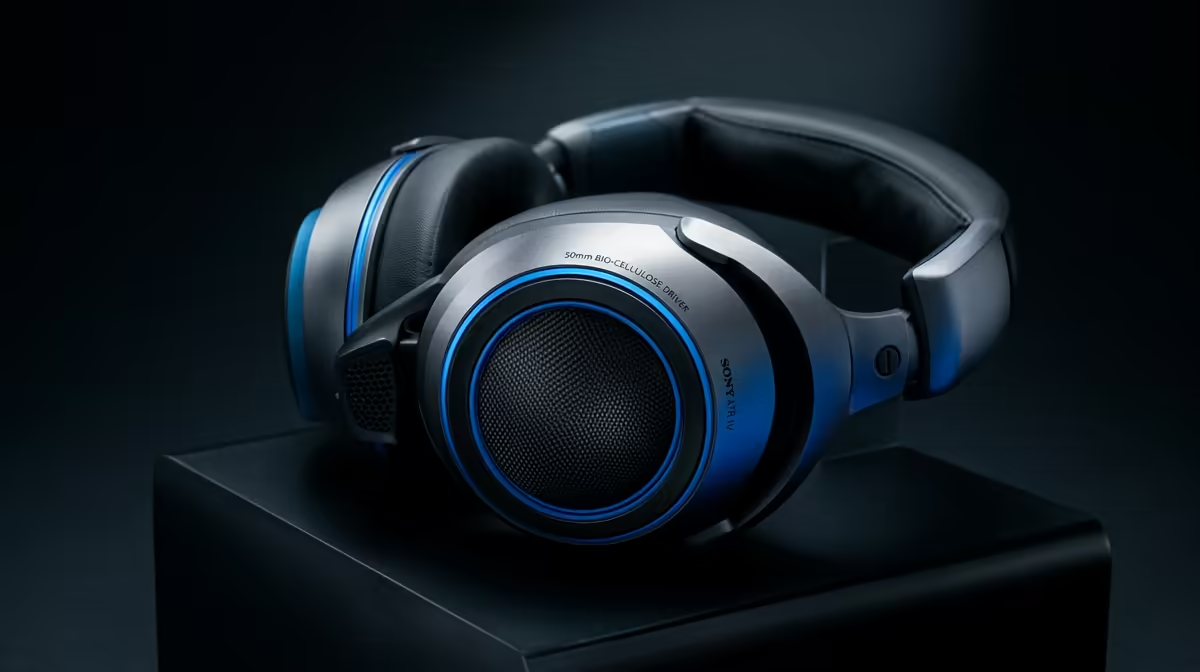
50mm bio-cellulose drivers matter because the larger diameter moves more air for deeper bass extension, while the bio-cellulose diaphragm material reduces distortion and improves transient response compared to standard Mylar. The combination delivers more detailed high-frequency audio and more physical low-frequency impact than standard 40mm Mylar drivers at the same price class.
Why Driver Size Matters for Bass and Soundstage 🔊
Audio driver physics connect diameter directly to bass performance. A larger diaphragm has more surface area to displace air, improving bass extension and physical impact. The jump from 40mm to 50mm increases diaphragm area by 56 percent, giving the driver engineer more headroom to achieve deep bass below 40 Hz. For gaming, explosions, sub-bass cinematic scores, and vehicle engines carry more weight. For music, kick drums and bass instruments feel more physical and present. Most headsets at R800 to R1,500 use 40mm drivers; the shift to 50mm starts around R1,200 to R1,800 and is standard above R2,000.
The Bio-Cellulose Diaphragm Advantage 🔬
Bio-cellulose is produced by bacterial fermentation and forms an extremely stiff, lightweight fibre matrix with a higher stiffness-to-mass ratio than standard PET or Mylar diaphragms. This means the diaphragm flexes less at high drive levels, producing more pistonic motion: the whole surface moves as one unit rather than flexing irregularly. Irregular flexing in cheaper diaphragms generates harmonic distortion audible as a subtle blurring in high frequencies. On bio-cellulose drivers, the treble from 5 kHz to 15 kHz is cleaner and more resolved, making in-game audio like bullet crack, distant footsteps, and reverb tails easier to distinguish. Bass performance is more a function of driver size and suspension tuning than diaphragm material.
Who Benefits Most in SA 💰
South African gamers spending R2,000 to R4,000 are in the bracket where 50mm bio-cellulose drivers appear. Benefits are most tangible for: players who listen to immersive RPG or adventure soundtracks, competitive FPS gamers relying on audio cues for positional awareness, and anyone using the headset for music alongside gaming. For purely competitive gaming at moderate volume, the bio-cellulose treble resolution is still a genuine benefit. The material also contributes to lower listening fatigue because lower distortion means less cognitive effort to interpret audio signals over long sessions.
Driver Break-In is Real But Subtle ⚡
New 50mm bio-cellulose drivers benefit from 10 to 20 hours of normal use before the suspension settles to its operating compliance. Bass may sound slightly tight initially. Do not judge the headset's final sound signature in the first hour of use, particularly for bass extension and soundstage width.
FAQ
Is 50mm bio-cellulose significantly better than 50mm standard Mylar?
In a blind test at moderate volume, many listeners can distinguish them on material with complex treble content like orchestral game audio or jazz. The difference is subtle on voice-range content. The bio-cellulose advantage is clearest in direct comparison at higher volume levels where distortion in Mylar drivers compounds.
Do all gaming headsets claiming 50mm drivers use bio-cellulose?
No. Many headsets specify 50mm drivers with standard Mylar diaphragms. Bio-cellulose commands higher manufacturing cost and is typically called out explicitly in marketing. If the spec sheet does not mention bio-cellulose, assume standard Mylar.
Are there diminishing returns beyond 50mm drivers for gaming headsets?
Yes. Drivers larger than 50mm become physically uncomfortable inside an over-ear earcup and are associated more with open-back audiophile headphones. For closed-back gaming headsets, 50mm represents the practical ceiling where driver size benefits and earcup ergonomics are best balanced.
Want to hear what 50mm bio-cellulose drivers actually sound like? Browse Evetech's premium gaming headset range and find a model with the driver technology your audio deserves.










