Quick Answer
High-end GPUs run hot under load by design: a card like the RTX 5090 has a rated junction temperature of up to 110 degrees Celsius, and reaching 80 to 90 degrees under sustained gaming or rendering is entirely normal. Temperatures above that threshold, combined with clock speed drops, point to a real cooling problem worth investigating.
What Normal Thermals Actually Look Like 🌡️
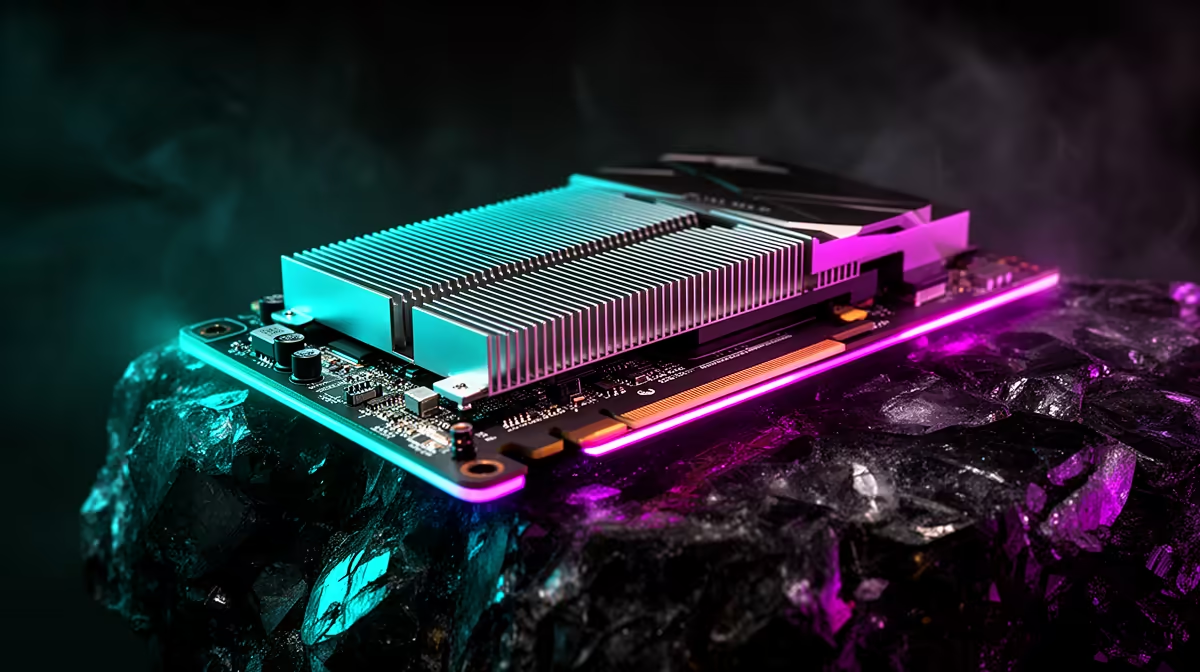
Flagship GPUs are dense with transistors and push thermal design power ratings of 300W to 575W. The RTX 5090, for example, carries a TDP of 575W, meaning its cooler must shed as much heat as a small electric heater while maintaining clock speeds above 2.4GHz. Most triple-fan aftermarket coolers, including the Palit GameRock's TurboFan 4.0 system with its vapour chamber base, are engineered to keep GPU core temperatures below 85 degrees even at sustained full load. If yours sits at 83 degrees and holds its boost clock steady, the system is doing exactly what it should.
Common Causes of Genuinely High Temperatures 🔧
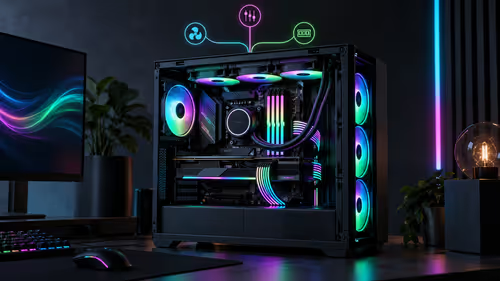
When temperatures climb above 90 degrees and you notice frame rate stuttering or automatic clock reductions, several causes are worth checking. Dust accumulation on heatsink fins and fans is the most frequent culprit in South African homes, particularly in Gauteng where fine Highveld dust penetrates even well-sealed cases. Thermal paste degradation on cards older than three to four years can add 10 to 15 degrees to idle and load temperatures. Poor case airflow is the second most common cause: a compact ITX or mATX case with blocked intakes will starve even a premium GPU of cool air. Finally, running rendering workloads with the GPU power limit at stock while ambient temperatures exceed 30 degrees in summer can push thermals to their ceiling.
How to Diagnose and Fix the Problem 🖥️
Start with a free monitoring tool to log GPU temperature, clock speed, and fan speed simultaneously over a 20-minute gaming or rendering session. If the clock speed drops when temperatures peak, thermal throttling is confirmed. Clean the GPU heatsink with compressed air, ensure at least two case intake fans and one exhaust fan are running, and recheck temperatures. If the problem persists and your card is under warranty, contact your local retailer before attempting a repaste, as opening the cooler may void the warranty. For cards outside warranty, replacing thermal paste with a high-quality compound can drop temperatures by 8 to 12 degrees on older hardware.
Set a Fan Curve Before You Panic ⚡
Many GPU monitoring utilities let you define a custom fan speed curve so the cooler ramps up aggressively before temperatures reach 85 degrees rather than reacting after the fact. Raising the fan speed target to 70 percent at 75 degrees typically drops peak load temperatures by 5 to 8 degrees with only a modest increase in audible noise.
FAQ
Is 85 degrees too hot for an RTX 5090 during a long render?
No. The RTX 5090 is rated to operate safely up to 110 degrees junction temperature. An 85-degree GPU core temperature during a sustained render is within the normal operating envelope. Monitor for throttling rather than fixating on the temperature number alone.
Can South African summer heat make GPU temperatures dangerous?
High ambient temperatures of 35 degrees or more compress the thermal headroom available to the GPU cooler. In a well-ventilated room with case intake fans drawing cooler air, the effect is manageable. Rooms without air conditioning in midsummer can push GPU temperatures 5 to 10 degrees higher than winter baselines, so a custom fan curve becomes especially useful.
Does undervolting damage a high-end GPU?
No. Undervolting reduces the voltage supplied to the GPU at a given clock speed, which lowers heat output without reducing performance in most workloads. It is a widely used and safe method for bringing temperatures down by 5 to 15 degrees on cards that run warm at stock settings.
Sorting out GPU temperatures? Compare cases, fans and graphics cards stocked at Evetech to keep your build running cool.