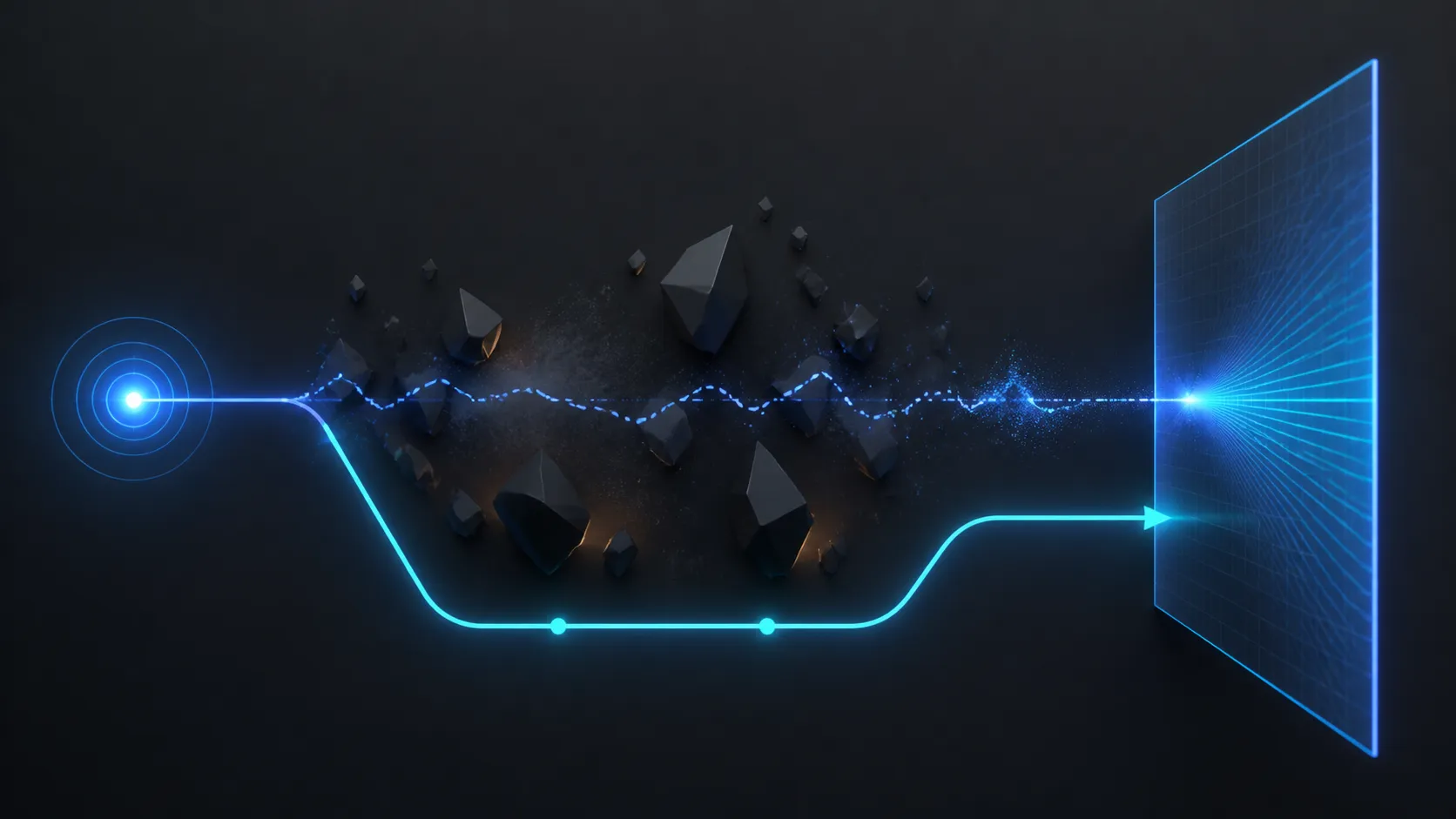
A USB-C connector can carry different functions on different devices, so no signal does not immediately identify the failed part. Troubleshooting a USB-C portable monitor with no signal should isolate power, source video support, cable capability, display detection and output mode in that order.
Quick Answer
The J314 is driver-free, so a blank USB-C screen usually points to the user's port lacking video output, an unsuitable cable or an incomplete power path.
The R1,799 UPERFECT UBegin J314 has a Type-C input, but the source port and cable must support compatible display video. Power the screen through the intended arrangement, verify the source output and then test detection or the Mini HDMI alternative one variable at a time.
🔋 Separate power from video
Confirm whether the monitor starts and how it receives power. Type-C presence does not establish power delivery, source charging or single-cable operation.
A dark, unpowered display differs from a powered panel showing no signal. Record which state is present before changing equipment.
Browse the Evetech portable monitor selection only after the source requirements are understood.
🔎 Verify the source port and cable
Read the exact laptop or phone specification for external-display output. Connector shape alone cannot prove the port sends video.
Use a cable known to carry the required signal. Avoid testing several unknown adapters together, because one failed link can hide the rest of the path.
🖥️ Check detection and output mode
Open the source's display settings and look for the external panel. Choose a supported mode, aiming for the J314's 2160x1440 resolution when the complete route can deliver it.
Driver requirements depend on source hardware and software. Consult instructions for that exact environment instead of assuming no installation is ever needed.
Phone support is model-specific. Verify the handset's external-display capability before diagnosing the monitor.
🧪 Use Mini HDMI as a controlled comparison
The J314 also accepts Mini HDMI. If a known compatible HDMI source and cable produce a picture, that can help narrow the Type-C path without proving every other source.
Choose any replacement cable through the Evetech monitor accessory category after both ends and signal functions are specified.
Once the image appears, save the successful route and resolution. The 30ms response and 1500:1 contrast describe panel behaviour, not connection detection.
Keep a simple no-signal log. For every attempt, write the power state, source port, cable, detection status and selected output mode. Change one field and observe the result.
Start with the shortest route and remove docks or adapters. Once the panel receives a stable picture, add necessary components individually. This reveals which link introduces the fault.
If another device works on the same Type-C path, do not conclude that the original source is defective. Its port may simply lack the required video function or need a different software configuration.
After recovery, disconnect and reproduce the working procedure. Save it by device model so the next trip begins from evidence rather than a connector-shape assumption.
Label the known-good cable and keep it with the setup. This reduces the chance that a charge-only or otherwise unsuitable substitute reintroduces the fault.
Review the saved baseline after a system update before replacing any hardware.
If the source offers several Type-C ports, verify the function of each rather than rotating through them blindly. Port capabilities can differ on one device.
Test the known cable without docks first, then add the required desk equipment. Save which link restores the image after sleep or reconnection.
When support help is needed, provide the source model, operating-system version, power state, cable and exact symptom. That evidence is more useful than reporting only that USB-C does not work.
Use the included full-featured cable and adapter as the first controlled route. Test one compatible laptop port, confirm display output is enabled and avoid changing power and signal simultaneously. If USB-C remains unavailable, Mini HDMI provides another video input. Once the native 2160x1440 picture appears, label the successful cable and port so the next setup does not repeat the same diagnosis.
Frequently Asked Questions
What should be established first after no signal?
Determine whether the display is powered, then inspect source video support, cable capability, detection and output mode individually.
Does the USB-C shape prove video output?
No. The source-device specification must identify external-display support on that exact port.
Can Type-C guarantee power delivery?
It cannot. Map monitor power and any source-charging expectation separately from the video signal.
How can Mini HDMI help diagnosis?
A working known-source HDMI route can show that the panel accepts a signal while the Type-C chain receives further investigation.
Tracing a no-signal problem without swapping everything at once?
Isolate power, source output and cable function, then compare proven portable-monitor and connection options through Evetech.