


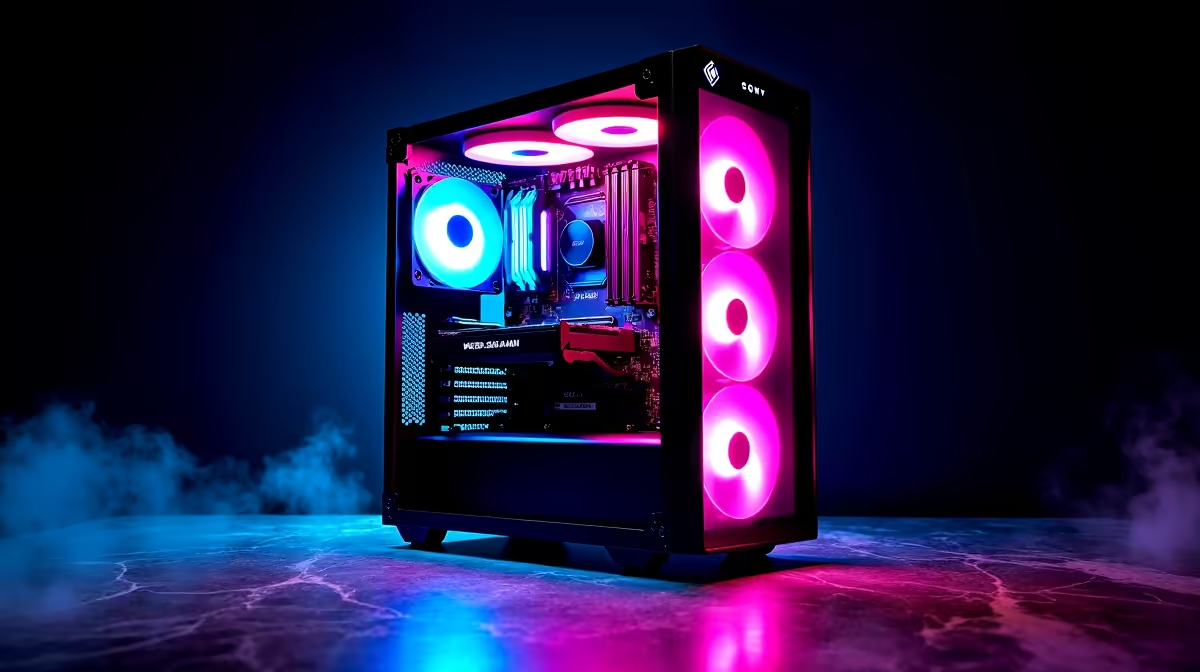
Overall PC build prices in SA shift with component cycles and the rand, so understanding the movement helps you time a build and allocate budget where it counts.
Quick Answer
PC build prices in SA move with global component cycles (GPUs, RAM, SSDs), the rand exchange rate, import duties and VAT. No single part dictates the total, so a balanced build timed sensibly gives the best value. Buying a tier down on the GPU is usually the biggest saving at Evetech.
What Drives Build Prices
A full build's cost is the sum of parts that each follow their own cycle: GPU prices weigh heavily and track the rand and local supply, while RAM and SSD prices follow global flash and memory cycles. Import duties and 15% VAT apply across the board, so the rand exchange rate affects nearly everything.
How to Get the Best Value
The GPU is usually the largest single cost and the biggest lever, so buying a tier down from the flagship often saves the most while keeping strong performance. Time RAM and SSD purchases when those markets are favourable, and avoid over-spec on parts your games do not need.
Planning a Balanced Build
Set your resolution target, then balance the GPU, CPU, RAM and storage to suit it without overreaching on any one part. A balanced 1440p build typically offers better value than a lopsided one chasing a flagship GPU.
FAQ
Why do PC build prices change in SA?
Because each component follows its own global cycle, and the rand exchange rate, import duties and 15% VAT apply across all imported parts. The GPU and memory markets move the total most.
What is the biggest cost in a gaming build?
Usually the GPU. It is also the biggest value lever, so buying a tier down from the flagship often saves the most while keeping strong performance for your target resolution.
How do I time a PC build for best value?
Buy RAM and SSDs when those markets are favourable, choose a sensible GPU tier rather than the flagship, and balance the build to your resolution rather than over-speccing any one part.
resolution target, buy a tier down on the GPU as the biggest value lever, and balance RAM and storage rather than over-speccing any single part.










