


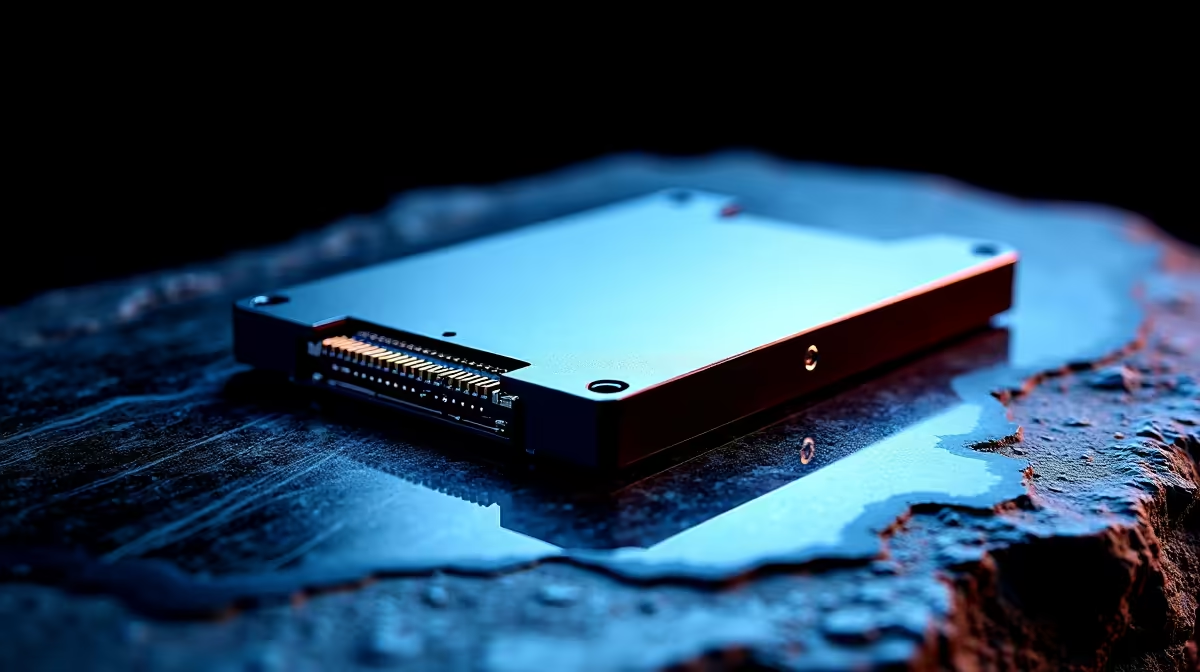
Falling SSD prices in SA are a genuine win for gamers, and knowing what is behind the drop helps you buy the right drive at the right time.
Quick Answer
SSD prices fall in SA when global NAND flash supply is abundant and manufacturing improves, lowering costs that reach local pricing despite import and VAT factors. For gamers, this means larger, faster NVMe drives become more affordable. Aim for a 1TB+ NVMe SSD at Evetech while prices are low.
What SA Gamers Should Know
SSD prices track global NAND flash supply more than local factors. When the world has plenty of flash, prices fall everywhere, and SA benefits even after import costs and 15% VAT. This is different from GPUs, where local supply and the rand weigh more heavily on price.
Making the Most of a Price Drop
Use the lower prices to buy enough storage for your library, since modern games take 80-120GB each. A 1TB NVMe is a sensible baseline; 2TB removes the need to uninstall games often. Fast NVMe also cuts loading times sharply over older SATA or hard drives.
Picking the Right Drive
Choose NVMe for speed, match capacity to your needs, and confirm M.2 slot compatibility on your motherboard. A reputable drive with a good local warranty is worth a small premium over the cheapest option for reliability.
FAQ
Are SSD prices really dropping in SA?
When global NAND flash supply is abundant, yes, prices fall locally too, even after import costs and VAT. SSD pricing follows global supply closely, so worldwide drops reach SA buyers.
How much SSD storage do gamers need?
At least 1TB NVMe, since modern games take 80-120GB each. 2TB is worth it when prices are low, so you avoid constantly uninstalling games to free space.
Why are SSDs different from GPUs on price?
SSD prices follow global NAND supply, which can create worldwide drops. GPUs are weighed more by the rand exchange rate and local supply, so the two components move on different drivers.
price drop to buy a 1TB or 2TB NVMe SSD; modern games run 80-120GB each, and NVMe cuts loading times sharply over SATA or hard drives.










