


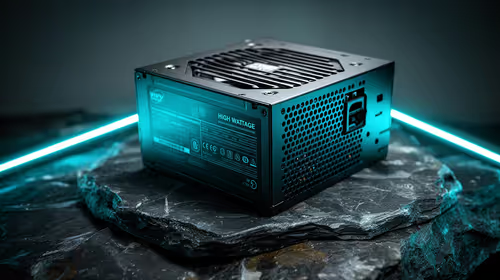
550W PSU Planning for RTX 5080 Super Builds in SA
550W for RTX 5080 Super needs a full-build check, not a simple yes. Review GPU guidance, CPU draw, transient load, connectors, PSU quality, and upgrade plans before deciding.
Read moreUSB-C charging gives SA gamers simpler cable management for wireless gear. It is useful when mice, keyboards, headsets, and controllers need quick top-ups without keeping several older leads on the desk.
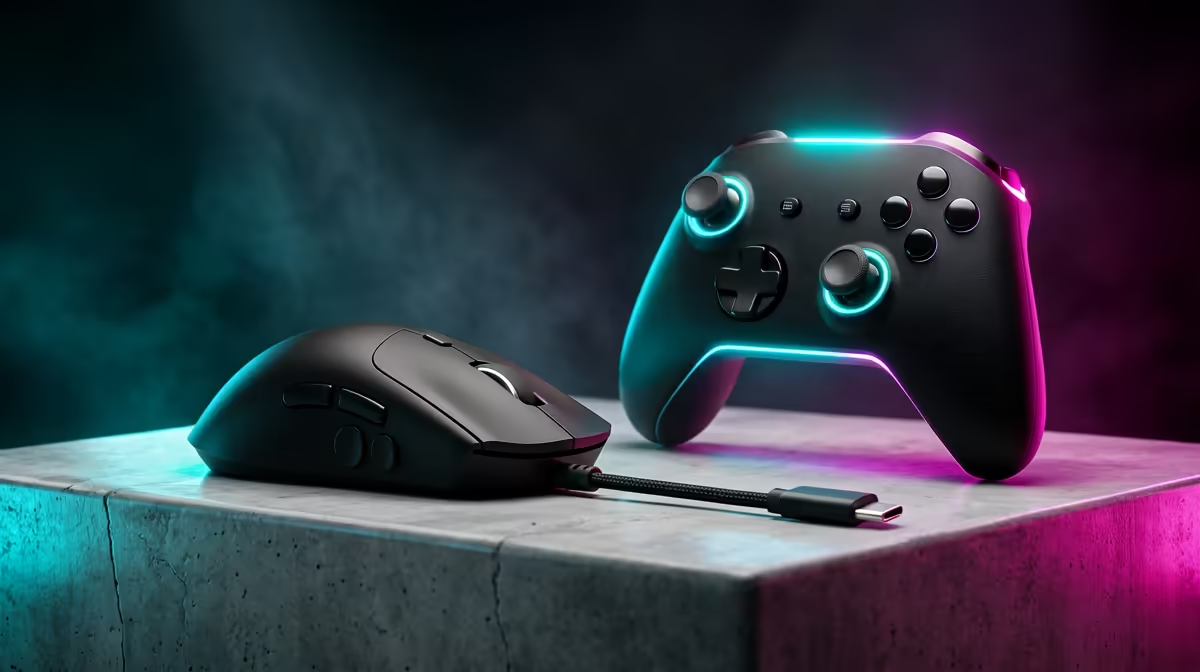
USB-C charging is becoming the standard for SA gaming peripherals because one reversible cable can charge mice, keyboards, headsets and controllers without keeping old micro-USB leads around. For buyers spending roughly R600-R3,500 on peripherals, USB-C is now a practical convenience feature rather than a premium novelty.
Gaming desks collect cables quickly: keyboard, mouse, headset, controller, phone, monitor hub and sometimes a laptop dock. USB-C reduces that clutter because the same cable shape works across more devices. It also avoids the weak, fiddly feel of older micro-USB connectors on wireless mice and headsets.
For SA gamers, the useful check is not only the port. Look at battery life, 2.4GHz wireless support, polling rate, spare cable quality and whether the device can be used while charging.
A wireless gaming mouse should offer at least 1,000Hz polling, low-latency 2.4GHz wireless and a battery figure that suits the player's routine. Keyboards and headsets need different checks: stabilisers and switches for keyboards, microphone quality and comfort for headsets. USB-C helps, but it does not fix a weak sensor or poor fit.
Named examples in this category include Logitech G Pro X Superlight-style mice, Razer Viper-style esports mice and compact wireless keyboards with USB-C charging. The category is broad, so compare the exact model specs before choosing.
USB-C does not mean every cable is equal. A soft, flexible cable is useful for mouse charging while playing. A short rigid cable can be annoying on a desk. If a peripheral supports fast charging, check the wattage and the manufacturer's cable guidance before mixing random chargers.
Yes. USB-C is easier to plug in, more common across modern devices and generally more durable in daily desk use.
No. Speed comes from the sensor, wireless system and polling rate. USB-C mainly improves charging and cable convenience.
Only if the upgrade also improves comfort, latency, battery life or desk setup. The connector alone is not enough reason to replace good gear.
Before buying, check whether the peripheral can be used while charging; that single detail matters more than the port shape during long sessions.
550W for RTX 5080 Super needs a full-build check, not a simple yes. Review GPU guidance, CPU draw, transient load, connectors, PSU quality, and upgrade plans before deciding.
Read more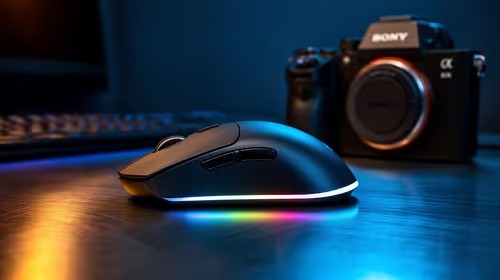
8000Hz polling is overrated for most SA gamers because gains can be tiny next to battery drain and monitor limits. Mbombela players should weigh mouse feel, game support, and system stability before chasing the number.
Read more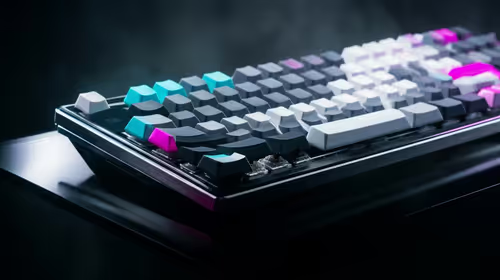
Magnetic switches are taking over SA gaming keyboards because actuation can be tuned. For Sandton gamers, rapid trigger, reset control, and profile depth can help, but layout, key feel, and software quality still matter.
Read more
Polokwane oled monitor value questions need cautious SA context because pricing can move with availability, exchange rates, specs, and warranty support. Treat the trend as a planning signal, not a fixed price promise.
Read more
Arc B580 budget builds for Midrand gamers can shift with exchange rates, supply, specs, and model tier. Treat the title as a buying prompt, then compare SA warranty, timing, and build priorities.
Read more
ROG Ally X may beat the LCD Steam Deck for SA gamers who value stronger handheld performance, more memory, and Windows flexibility. Compare battery life, controls, game libraries, and Polokwane support needs before deciding.
Read more
Minisforum's M2 Pro pairs Core Ultra X7, Arc B390 graphics and 32GB onboard memory in 1.8 litres. SA buyers should weigh its fixed memory and $1,439 launch offer against local mini PCs.

Lenovo says Legion Go failures linked to BIOS N3CN42WW are not user error. Affected SA owners should stop retrying the update, preserve proof and open a support case.

Smart monitors can add apps and convenience, but they also add privacy settings and unwanted-software risk. SA buyers should audit the operating system before paying for extras.

A fake 113GB GTA VI ISO reportedly used empty padding around a small malware payload. SA gamers should delete unofficial builds, keep Windows security active and wait for official channels.

ASUS calls the ROG GT-BN98 the first Wi-Fi 8 gaming router. SA buyers should fix coverage and client limits before paying for a future wireless standard.

Apple's M6 Mac mini adds faster AI, graphics and networking in the same compact format. SA buyers should wait for a rand listing before comparing value.

The Vulcan II XP adds hot-swappable switches, sound damping and gaming controls to a full-size wired board. SA buyers should compare feel before features.

Microsoft says Windows on Arm now has over 7,000 verified apps and games. SA buyers should still check each driver, game and work tool before switching.
ASUS calls the ROG GT-BN98 the first Wi-Fi 8 gaming router. SA buyers should fix coverage and client limits before paying for a future wireless standard.
Microsoft says Windows on Arm now has over 7,000 verified apps and games. SA buyers should still check each driver, game and work tool before switching.
Apple's M6 Mac mini adds faster AI, graphics and networking in the same compact format. SA buyers should wait for a rand listing before comparing value.
The Vulcan II XP adds hot-swappable switches, sound damping and gaming controls to a full-size wired board. SA buyers should compare feel before features.