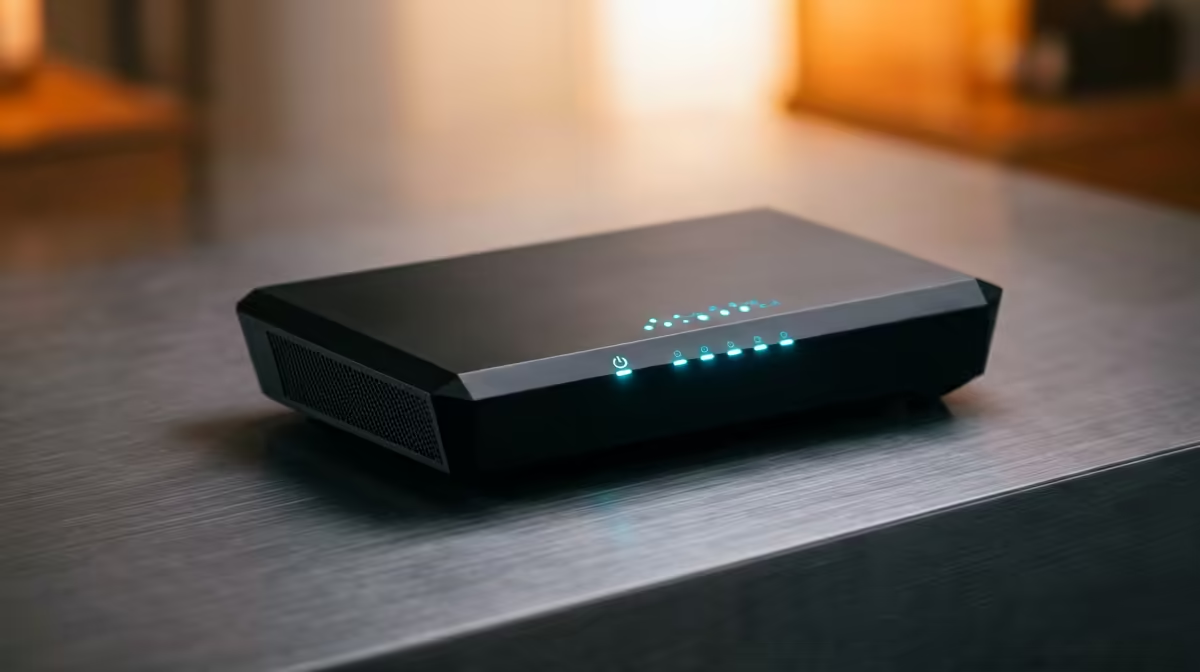
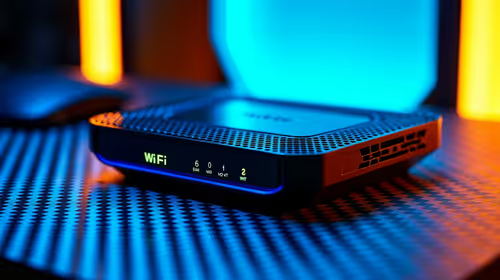
Every Wi-Fi generation before this one chased a bigger headline number. Wi-Fi 8 breaks that pattern. The IEEE 802.11bn standard, branded Ultra High Reliability, deliberately stops trying to set a new peak-speed record and instead promises a connection that holds up when conditions are bad: at the edge of range, in a crowded block of flats, or while you move between rooms.
Quick Answer
Wi-Fi 8 targets three roughly 25% gains over Wi-Fi 7: better throughput in poor signal conditions, lower tail latency, and fewer dropped packets during handovers. The peak link rate stays around the same ceiling. The goal is consistency, not a faster top speed.
The 25% That Actually Matters
The three numbers at the heart of 802.11bn are all about the worst case, not the best. The standard aims for a 25% throughput increase at a given signal-to-noise ratio, meaning more usable speed when the signal is weak rather than when you are sitting next to the router. It targets a 25% reduction in the 95th-percentile latency, which is the slow tail that causes stutters and lag spikes rather than the average ping. And it aims for a 25% drop in packet loss during the moments a device hands off between access points.
Those are the failures people actually notice. A video call that freezes for a second, a game that rubber-bands as you cross the house, a stream that buffers in the back bedroom. None of those are fixed by a higher peak rate, which is why Wi-Fi 8 spends its engineering budget elsewhere.
Why Peak Speed Stopped Mattering
Wi-Fi 7 already pushed peak rates well past what a typical home connection can feed. For most South African households on fibre or fixed wireless, the bottleneck is the internet line, not the air between the router and the laptop. Adding more theoretical gigabits to a link that already outruns your ISP plan changes nothing you can feel.
Reliability is the part you do feel. A connection that holds a steady, predictable rate across the whole home is more useful than one that hits a huge number in one spot and collapses two rooms away. Wi-Fi 8 reflects that, formally shifting its primary goal from raw throughput to consistency. The networking hardware that will eventually carry these features is worth understanding now, and the current home networking range at Evetech shows where Wi-Fi 6 and Wi-Fi 7 gear sits while the new standard finalises.
What This Means for Buying Today
Here is the practical part: Wi-Fi 8 is not a reason to wait. The specification is expected to be finalised around 2028, with shipping devices arriving after that. Anything sold today is Wi-Fi 6, 6E or 7, and those are the right choices for now. The lesson from Wi-Fi 8 is what to value when you do upgrade: coverage, steady performance across the home, and behaviour at the edge of range, rather than the single biggest number on the box. The accessories and add-ons that round out a network setup show up across the Evetech accessories best sellers.
Frequently Asked Questions
Is Wi-Fi 8 faster than Wi-Fi 7?
Not at peak. The headline link rate stays roughly the same. Wi-Fi 8 instead improves throughput in weak-signal conditions, lowers tail latency and reduces dropped packets, so it feels faster where Wi-Fi 7 struggles.
When can I buy Wi-Fi 8 devices?
Not yet. The 802.11bn standard is expected to be finalised around 2028, with compatible devices arriving after that. Today's routers are Wi-Fi 6, 6E or 7.
What does Ultra High Reliability mean?
It is the official theme of Wi-Fi 8: making the connection dependable across the full range of conditions, especially the worst cases, rather than maximising the best-case peak speed.
Should I wait for Wi-Fi 8 before upgrading?
No. It is years from market. A current Wi-Fi 6E or Wi-Fi 7 router is the right buy now, and the reliability lessons of Wi-Fi 8 simply tell you to prioritise coverage and steadiness over peak numbers.
Will Wi-Fi 8 help my gaming?
Potentially, since lower tail latency and fewer dropped packets target exactly the lag spikes and stutters that hurt gaming. But the benefit only arrives once the standard ships and you have matching hardware on both ends.
Upgrading your home network now? Compare current routers and mesh kits in the Evetech networking range at https://www.evetech.co.za/networking/x/1623 and prioritise coverage and steady performance over peak numbers.