Premium chipset features become worthwhile only after they solve a named device or workflow constraint. In an X870E versus mainstream AMD comparison, the useful questions concern storage count, expansion, network infrastructure and case fit. A flagship feature with no job is simply budget taken from another component.
Quick Answer
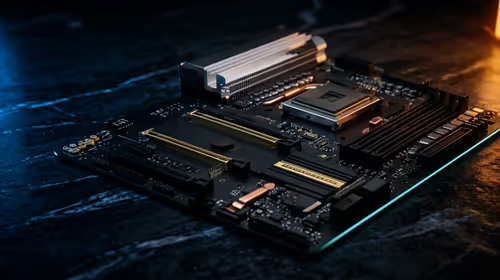
Pay for X870E breadth when the build can use several fast storage positions, modern expansion or advanced networking. The R24,899 Extreme spans a PCIe 5.0 route, five M.2 locations and three modern network choices: Wi-Fi 7 plus 5G and 10G wired links. Mainstream can win when that breadth stays idle.
?? Price the requirement list
Write down the processor, DDR5 plan, number of storage devices, add-in cards, network equipment and chassis before comparing boards. The right chipset tier is the least expensive one that covers that complete list with sensible margin.
The AMD X870 selection shows current options for builders whose requirements point towards the platform. Compare exact boards rather than treating every model carrying the same chipset as identical.
?? Value expansion by planned use
Five M.2 positions can suit a workstation with separate active, scratch, game and archive roles. A gaming PC with one drive does not gain value merely because four empty positions exist. PCIe 5.0 follows the same logic: the device and workload must be able to use the route.
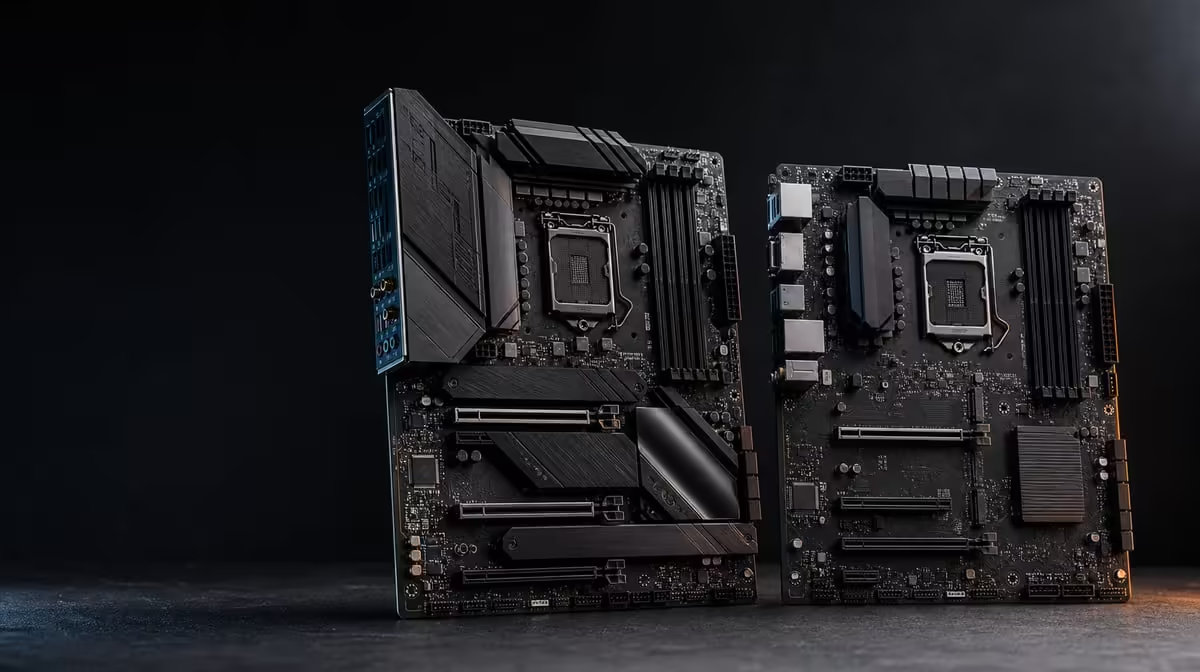
The Extreme's E-ATX size also creates a cost outside the board. Confirm case support and internal clearances before counting its expansion as an advantage.
?? Match the network around the PC
Wi-Fi 7 needs compatible wireless equipment and suitable signal conditions. The 10G and 5G ports need an appropriate wired path. Without that surrounding infrastructure, the interfaces provide potential rather than immediate benefit.
Choose the processor first through Evetech's AMD CPU collection, then decide how much motherboard breadth remains sensible within the total build.
?? Know when mainstream wins
At R24,899, the Crosshair should deliver multiple active advantages. A board covering the exact CPU, memory, storage and connection requirements at a lower price can leave more money for the graphics card, SSD capacity or display.
Evetech's broad AMD motherboard category supports that side-by-side check. Compare functions used, not the length of each feature list.
Audit one premium at a time
Remove Wi-Fi 7 from the comparison and ask whether the flagship still wins. Repeat for 10G LAN, the fifth M.2 position and any other major differentiator. This prevents several individually unused features from appearing valuable merely because they form a long bundle.
Now reverse the exercise. Identify any one requirement that a mainstream candidate cannot meet without an add-in device, a different case layout or a later board replacement. Price that workaround honestly. A premium can be reasonable when it removes several real compromises, even if it does not increase frame rates directly.
Plan the build sequence
E-ATX fit, storage access and large expansion hardware affect assembly. Confirm difficult-to-reach M.2 positions before the graphics card goes in, route power cables without pressing on the board edge, and retain a record of the completed device map.
Good platform value continues after purchase. A board whose layout can be understood, serviced and expanded cleanly may be worth more to its owner than one chosen only because its chipset tier looked higher.
Finally, keep a small margin for the practical parts that make the platform work: suitable cooling, the right chassis, sufficient storage capacity and compatible network equipment. Paying for a premium interface while removing the hardware that would use it produces a weaker system, even if the motherboard wins a feature comparison.
Re-run the value test after choosing the GPU
The graphics card often changes the remaining budget and physical layout more than any chipset feature. Once the exact GPU is selected, redraw the occupied expansion area, storage access and case cooling. A flagship board that looked comfortable in isolation may become difficult to service around a thick card.
Now compare the performance-oriented parts in two complete baskets. If a mainstream board protects the same CPU and devices while funding a stronger graphics choice, test that benefit against the unused X870E routes. If the Extreme prevents several add-in compromises and supports planned storage or networking, keep the premium.
This late comparison stops motherboard enthusiasm from silently weakening the component that carries much of the gaming workload.
Frequently Asked Questions
Does X870E guarantee faster gaming'
No. Gaming performance depends on the complete PC. The chipset and board features mainly shape platform capability and connectivity.
Who can use five M.2 positions'
Storage-heavy creators, multi-library systems and builders with planned drive roles can use them. A single-drive machine may not.
Is Wi-Fi 7 worth paying for by itself'
Only if the surrounding wireless equipment and room conditions can use it and cable-free networking matters to the build.
When can 10G LAN justify the premium'
It becomes relevant for a compatible local network moving large data between fast endpoints. Online gaming alone is not enough evidence.
Should the AI features lead the choice'
AI Overclocking and Networking can assist defined tasks, but CPU compatibility, DDR5, case fit and required devices come first.
Ready to separate useful features from expensive extras'
Compare AMD motherboards at Evetech against a written device plan and spend the premium only where the complete build can use it.