Stuttering in Blade & Sorcery when the physics go wild? Getting nauseating frame drops in Half-Life: Alyx? We've all been there. While your graphics card gets all the glory, the unsung hero of immersive virtual reality is your processor. For the complex physics, enemy AI, and flawless tracking that make VR feel real, you need the best CPU for VR gaming. Let's dive into the top picks for 2025 to ensure your virtual world is as smooth as reality.
Why Your CPU is Critical for Immersive VR
Unlike traditional flatscreen gaming where the GPU does most of the heavy lifting, VR is a demanding team sport for your components. Your CPU has a huge job list that directly impacts how real your experience feels.
A powerful processor is responsible for:
- Physics Calculations: Every object you throw, every enemy that ragdolls, every realistic ripple in a virtual puddle… that's your CPU crunching numbers. A weak CPU leads to objects clipping or behaving unnaturally, shattering the illusion.
- Tracking & Positional Data: Your headset and controllers are constantly sending data. The CPU processes this information to translate your real-world movements into the game, millisecond by millisecond. Lag here is the primary cause of motion sickness. 🤢
- AI & World Logic: Managing non-player characters (NPCs), game events, and environmental interactions all fall on the CPU.
Essentially, a better VR gaming CPU builds a more believable and stable world for your GPU to render.
Finding the Best CPU for VR Gaming in 2025
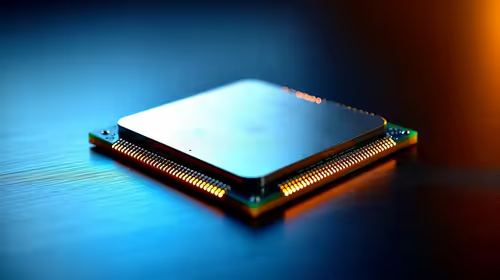
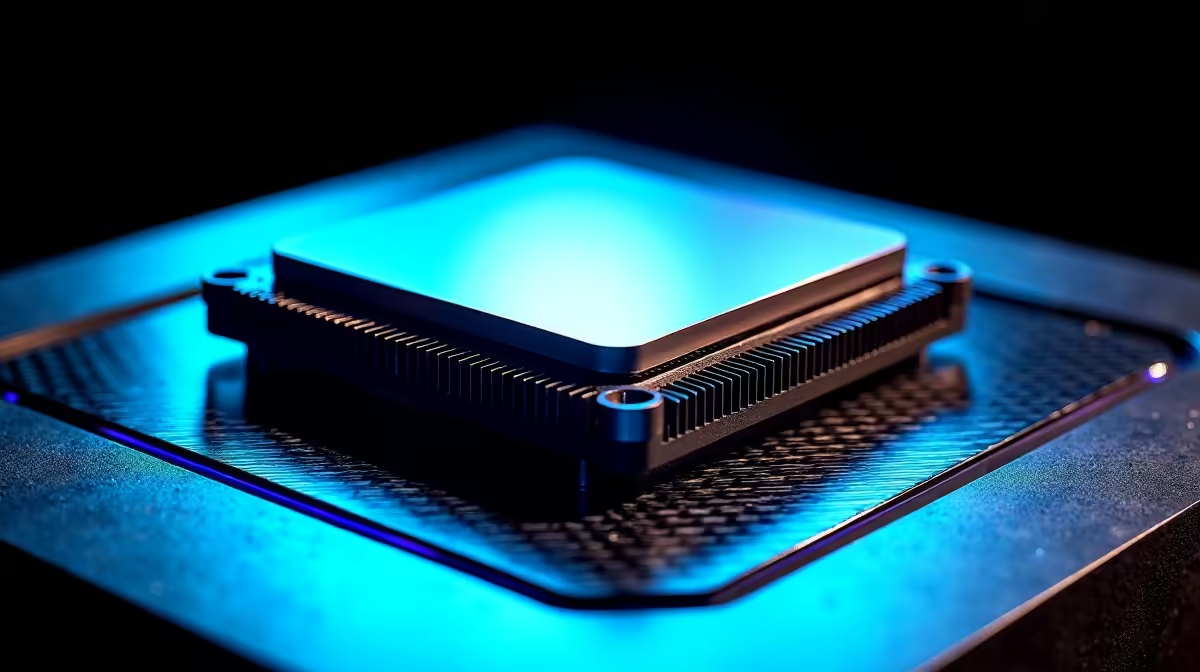
Choosing the right processor isn't just about picking the one with the biggest number. For VR, a balance of core count, clock speed, and architecture is key. High single-core performance is vital for gaming, as it determines how quickly individual tasks can be executed. However, modern VR titles and background processes (like the Oculus or SteamVR software) benefit greatly from having multiple cores to spread the load.
When you're ready to upgrade, you can browse our complete range of CPU processors to see the latest pricing and availability right here in South Africa.
Top Contenders: AMD vs Intel for VR
The classic red vs. blue debate is as relevant as ever for building the ultimate VR rig. Both teams bring serious power to the table. 🚀
For years, the Intel CPU lineup has been a favourite for gamers thanks to its outstanding single-thread performance, which is crucial for achieving high frame rates. Their latest architectures continue this trend, making them a formidable choice for a dedicated VR machine.
On the other side, the current AMD CPU offerings boast impressive multi-core performance and efficiency, often at a competitive price point. Their 3D V-Cache technology, in particular, has shown incredible benefits in gaming by massively increasing the L3 cache available to the CPU.
VR Performance Pro Tip ⚡
Your GPU gets the spotlight, but don't forget your headset's software. In SteamVR, manually setting the Render Resolution to 100% (instead of Auto) can prevent performance dips caused by the system over-estimating your hardware. This gives your CPU more breathing room for physics and tracking!
Our Top Picks for a Flawless VR Experience
So, what is the best CPU for VR gaming you can actually buy? It depends on your budget and goals.
For the enthusiast who wants zero compromises, especially if you're streaming your VR sessions or running other demanding apps, a high-core-count CPU is the way to go. Processors like the AMD Ryzen 9 series are fantastic for this kind of mega-tasking, ensuring smooth performance both in and out of the headset.
If your priority is purely the highest possible frame rate for competitive VR titles, a processor with blistering clock speeds is your best bet. Flagship chips like the Intel Core Ultra 9 deliver the raw single-thread speed needed to push your GPU to its absolute limit, ensuring a responsive and fluid experience.
Ultimately, you can't go wrong with a modern 6-core or 8-core processor from either camp for a premium VR experience. The key is to pair it with a capable graphics card and fast RAM to build a balanced system ready for anything 2025 throws at it. ✨
Ready for Unbeatable Immersion? Choosing the best CPU for VR gaming is the first step to a truly mind-blowing experience. Don't let lag or stutter pull you out of the action. Explore our massive range of PC Components and find the perfect engine for your virtual world.