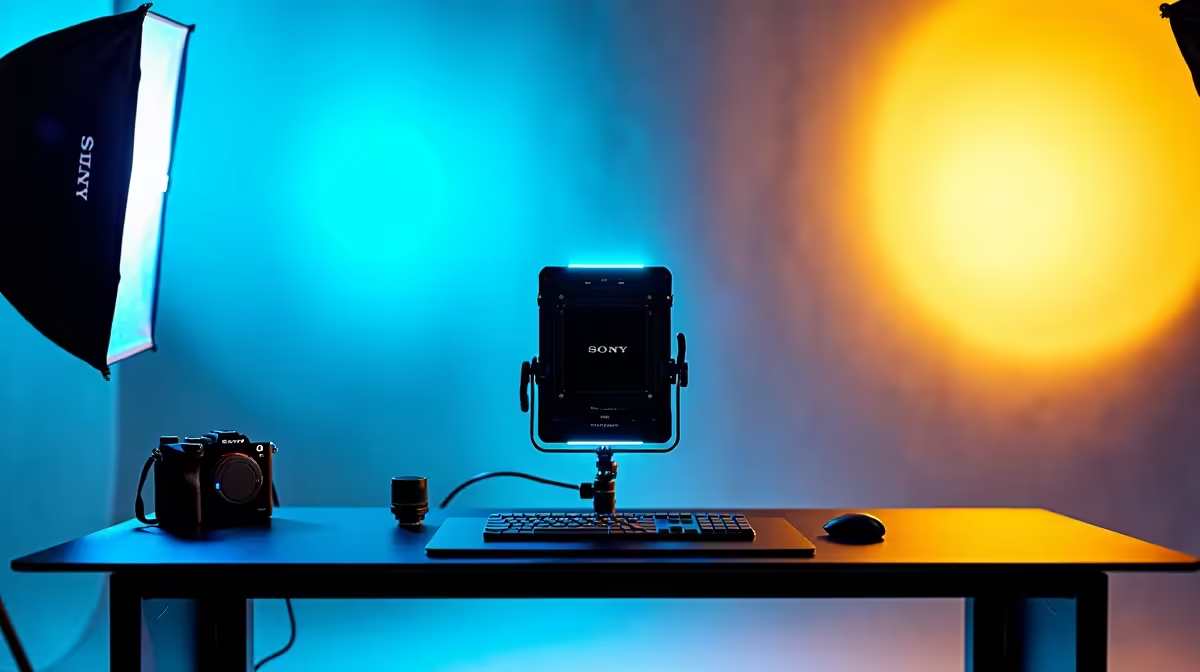
Most South African content creators treating a garage as a studio are sitting on a genuine advantage: the ceiling height and open floor plan that a bedroom setup cannot match. That space means you can finally run a proper three-point lighting configuration without every stand crowding the shot. Getting that layout right determines whether your footage looks like a professional shoot or a dimly lit side project.
Quick Answer
A three-point softbox setup, key light at 45 degrees, fill at half power opposite, and a back light behind the subject, suits a garage studio best. Its height and width carry the stands far enough apart to produce clean separation on camera. Daylight 5500K bulbs keep skin tones neutral.
🔆 Why the Garage Changes the Lighting Equation
Walk into most bedroom setups and the options are already limited before you place a single stand. Low ceilings push the key light too close, and there is rarely room to separate the fill enough to avoid flat, shadowless footage. A garage flips every one of those constraints.
With three or more metres of ceiling overhead, you can raise a softbox on a full-length stand and angle it down naturally the way a professional shoot would. The beam spills evenly rather than blasting the subject from too near. The floor space lets you place fill and back lights on their own stands metres away, which gives you genuine control over the shadow depth on the subject's face.
That back light is the element most new creators skip. In a garage with concrete or bare-painted walls, the background goes flat and grey without something lifting it. A single back light angled toward the wall or placed behind the subject to rim-light their shoulders adds depth that separates the subject visually and stops the footage looking like a badly lit interview clip.
🔧 Building the Three-Point Layout
The key light goes to one side, typically left for most presenters, at roughly 45 degrees off the camera axis and elevated above eye level so it casts a natural downward shadow. This is your primary source and it does the most work, so it should be the brightest and, if budget allows, the largest softbox you can manage.
Your fill light goes on the opposite side at approximately half the key's power output. Its job is to lift the shadows the key creates, not to compete with it. If the fill matches the key's brightness you lose all dimension and the subject looks washed out. Think of it as a correction tool, not a second key.
The back light, sometimes called a separation or hair light, sits behind the subject aimed back toward the camera. It traces the outline of the head and shoulders and lifts the subject visually off the background, which is the detail that makes footage feel polished before any grading.
Pro Tip ⚡
In a Joburg or Cape Town garage where summer afternoon light leaks under the roller door, hang a dark moving blanket across the door gap. Even a slow colour shift from warm late afternoon sun to your neutral studio lights will wreck colour consistency between shots taken an hour apart.
💰 Managing Colour Temperature and Costs
The number most creators should anchor to is 5500K. Daylight-balanced bulbs at that value produce a neutral white that does not warm your skin into orange or cool it into blue-grey. In a garage with exposed concrete, that neutrality matters because the walls offer zero flattering warmth of their own.
Mixing colour temperatures is where most setups go wrong. One LED panel at 6500K and another at 3200K split the subject's face between two casts no colour grade will cleanly fix. Keep the Kelvin value consistent across every stand.
At 45W per softbox, three lights draw around 135W combined, which sits well within what a standard garage wall socket and extension lead can handle without tripping the breaker. You do not need to rewire anything for a three-bulb studio.
🎙️ Controlling Ambient Light and Echo
Natural light is free but unpredictable. A north-facing garage door in summer sends direct sunlight creeping across the floor for hours, and the colour temperature drifts continuously as it moves. Covering the door and relying on your own balanced sources keeps every frame consistent.
Bare concrete walls return a slap echo that lands in every take. A pair of moving blankets on the walls adjacent to the shooting position, or a thick rug under the subject's chair, adds enough absorption to tighten the sound without treating every surface.
Frequently Asked Questions
What lighting positions make up a three-point setup?
Three-point lighting places a key light at roughly 45 degrees from the camera axis, a fill light on the opposite side at about half the key's output, and a back light behind the subject to separate them from the background. Each handles a distinct job, which is why removing any one changes the look noticeably.
Why does a garage work better than a bedroom for this layout?
Floor space and ceiling height. A bedroom rarely has room to spread a fill light far enough from the key for the half-power difference to matter, and low ceilings force the key too close to the subject. A garage lets you run all three stands at full distance, producing the gradients and shadow depth the layout is designed for.
How do I stop bare garage walls looking flat on camera?
A back light aimed at the wall or a separate background light behind the subject lifts the grey concrete out of flat darkness. Alternatively, a white or coloured paper backdrop between the subject and the wall gives a clean surface the back light can wrap around. Without any light on the background plane, even a well-lit subject will sit against a dull void.
What colour temperature should I use in a garage studio?
Daylight 5500K is the standard choice. It renders skin neutrally against grey walls and matches overcast daylight, keeping any natural leak through the garage door consistent with your artificial sources. Mixing different Kelvin values across stands produces a split cast that no in-camera white balance setting can correct.
How do I reduce the echo in a bare garage?
Moving blankets, thick rugs, and upholstered furniture are the absorbers. Hang one blanket behind the shooting position and another on the facing wall. A rug under the chair removes floor bounce. Two or three large soft surfaces break up the worst of the slap echo without full acoustic treatment.
Ready to build a clean three-point studio in your garage? Browse the lighting and studio accessory range at Evetech and put together the softbox and stand kit your setup needs to shoot professional footage from day one.