Quick Answer
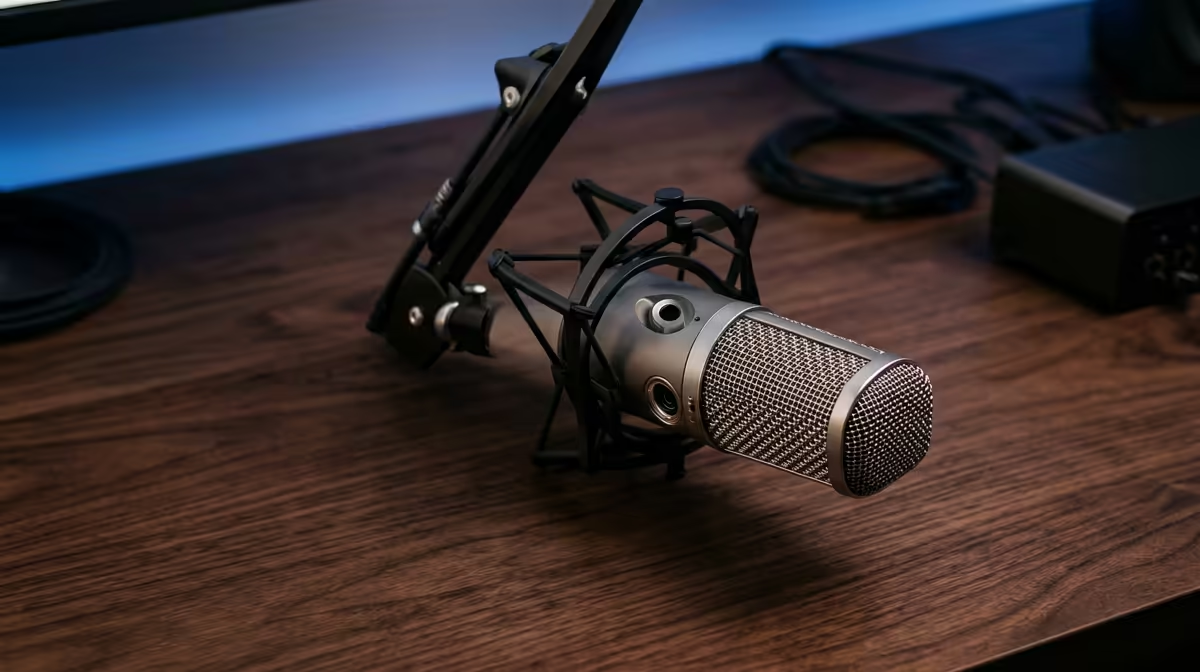
For LAN party preparation, a cardioid USB mic like the HyperX QuadCast S (around R2,600) rejects most room noise for streaming and calls, while the Shure MV7 (~R5,500) is the upgrade when you want broadcast-grade voice. Pickup pattern matters more than raw price: cardioid suits one speaker, and software like NVIDIA Broadcast or Krisp handles the rest.
Pickup pattern vs noise rejection
A cardioid pattern hears mainly what is in front of it, so it ignores a fan or housemates behind you - that is your first line of noise rejection. Supercardioid (tighter) helps in echoey res rooms but punishes off-axis movement. Only multi-pattern mics like the Blue Yeti (~R2,800) offer omni or bidirectional modes for two-person podcasts.
Where software beats hardware
Free tools do a lot. NVIDIA Broadcast (RTX cards), RTX Voice and Krisp strip keyboard clatter and aircon hum in real time. A R2,600 cardioid mic plus NVIDIA Broadcast often beats a R5,000 mic in a noisy room. Add a R200 pop filter and a desk arm to kill plosives and bumps.
The SA buyer reality check
NSFAS pays a R5,200 learning-material allowance; it will not cover even Evetech's cheapest laptop at R8,000, so plan accessories around a combined budget. Prices here track the rand, so wait for an Evetech special if the budget is tight rather than overspending now. At Wits, UCT, Stellenbosch and UP, residence desks are small, so size and clutter matter more than raw specs.
FAQ
Is the HyperX QuadCast S good enough for streaming?
Yes. Its cardioid capsule, built-in pop filter and tap-to-mute make it a strong all-rounder around R2,600. Most viewers cannot tell it apart from far pricier mics.
Do I need an audio interface?
Not for USB mics like the QuadCast or MV7 (USB mode) - they plug straight into USB. You only need an interface for XLR mics such as the Shure SM7B.
Does pickup pattern fix a noisy room?
A cardioid pattern helps a lot by ignoring sound from behind, but pair it with NVIDIA Broadcast or Krisp and soft furnishings for the cleanest result.
mic to cardioid, speak across it not into it, and switch on NVIDIA Broadcast or Krisp before spending more on hardware.