Quick Answer
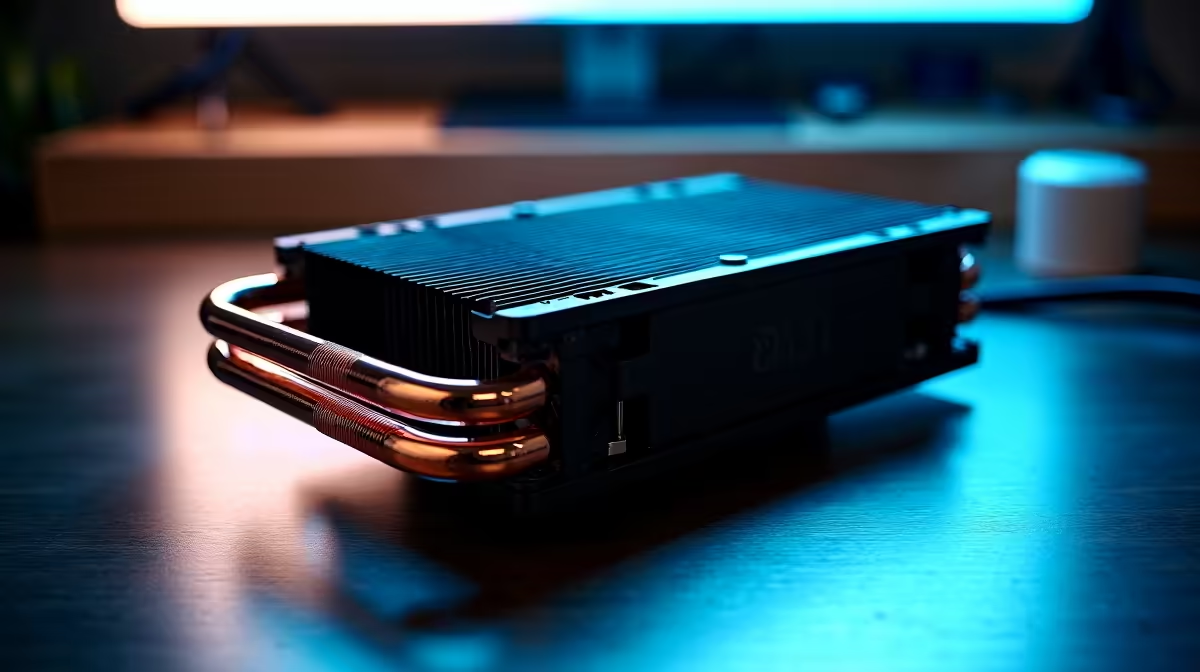
For engineering simulations (CFD, FEA, CAD rendering), the cooler upgrade path goes from a tower air cooler to a 240-360mm AIO. Start with a solid R600-R900 dual-tower air cooler, then step to a 240mm AIO (R1,800-R2,800) and finally a 360mm AIO (R3,000-R4,500) as you move to higher-core Ryzen 9 or Core i9 chips that sustain full load for hours.
Starter: A Capable Air Cooler (R600-R900)
Simulation workloads run the CPU at 100% for long stretches, so cooling must hold up under sustained load, not just gaming bursts. A good dual-tower air cooler keeps a Ryzen 7 7700 or Core i5 near 75C through long solves, which protects sustained clock speeds and your simulation times. This is the sensible starting point for a workstation on a budget.
Mid Path: 240mm AIO (R1,800-R2,800)
Moving to a higher-core chip like a Ryzen 9 7900 for faster solves means more heat. A 240mm AIO holds these chips near 75-80C under sustained multi-core load, where a basic air cooler would let them throttle and slow your runs. This is the practical upgrade once core counts and run times grow.
Serious: 360mm AIO (R3,000-R4,500)
For a Ryzen 9 7950X or Core i9 churning through large FEA or rendering jobs, a 360mm AIO gives the headroom to sustain all-core boost without throttling, shaving real minutes off long simulations.
FAQ
Why do simulations need better cooling than gaming?
Simulations load all CPU cores at 100% for long periods, generating sustained heat, whereas gaming is more intermittent. A cooler that holds the chip under throttling temps for hours directly protects your solve times.
What cooler suits a high-core simulation CPU?
For a Ryzen 9 or Core i9 running long jobs, a 240-360mm AIO keeps the chip near 75-80C under sustained all-core load. A basic air cooler often lets these hotter chips throttle, slowing simulations.
Does cooling really affect simulation speed?
Yes. A throttling CPU drops clock speed under sustained load, lengthening runs. Keeping a high-core chip cool enough to hold its all-core boost can meaningfully shorten long FEA, CFD or rendering jobs.
work, size the cooler to sustained all-core load, not peak gaming temps; a 240-360mm AIO that holds a Ryzen 9 under 80C through long solves protects your run times far better than a gaming-tuned air cooler.