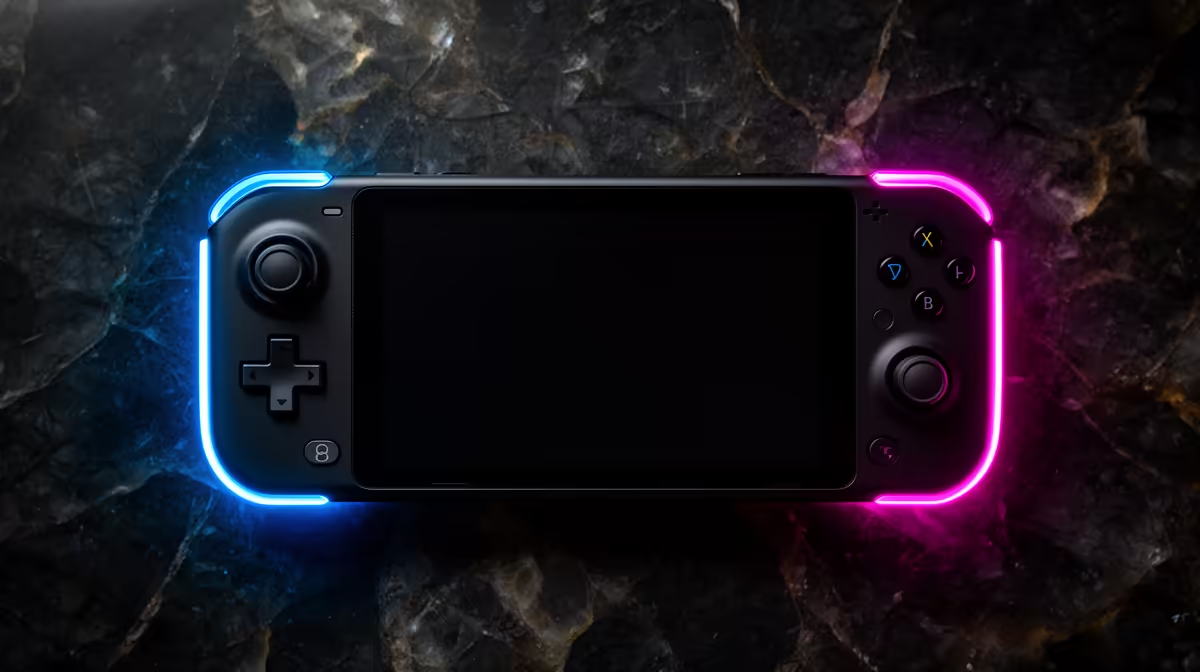
A commuter handheld spends as much time in your bag and hands as it does chasing frame rates. The best gaming handheld for travel balances battery, size, grip, offline play and a case that fits your route.
Quick Answer
The best handheld for a South African commuter or frequent flyer is the one that fits the trip after you add a case, charger and power bank. Prioritise comfortable mass, proven battery life in your games, quick sleep and wake, offline play, readable screen, quiet cooling and local support. Peak graphics performance matters only after the device survives the daily route.
Compare real dimensions and specifications in the gaming handheld range. If most play happens at a destination rather than in transit, check popular gaming PC configurations as another use case. A handheld earns its premium through portable sessions you will complete.
Map one real travel day
Write the time spent walking, waiting, sitting on a train or taxi, inside an airport and on the aircraft. Mark where gaming is safe, comfortable and permitted. A two-hour commute does not create two hours of play when half of it is spent standing or changing transport.
Measure the bag pocket, tray-table space and distance between your elbows. Add the protective case to the dimensions. A device described as portable can still be too wide or heavy for your route.
Decide whether you need ten-minute sessions or long uninterrupted play. Reliable suspend and resume matters more for short bursts, while battery and grip comfort dominate a long flight.
Read battery figures through your games
Battery life changes with game load, frame target, screen brightness, wireless use, speaker volume and battery age. Ignore one universal hours claim. Look for independent testing of the named device in games similar to yours.
Set a stable frame limit and sensible power profile. A lighter game can run longer than a demanding new release. Download updates before leaving home and test offline launch, because a missing sign-in can waste the whole trip.
For a commute, measure whether one charge covers the return journey with reserve. For flying, include airport waits and transfers. Do not plan to reach zero at the gate.
Choose a safe charging kit
Use the maker's charger or a compliant replacement that supports the required USB power profile. Check cable rating, length and strain relief. A compact charger with enough ports can reduce clutter, but every connected device still needs supported power.
Airlines and aviation authorities set conditions for lithium batteries and power banks. Check the current carrier rules before each flight, including where the battery must be carried and the allowed rating. Do not put a damaged, swollen or recalled battery into luggage.
Keep a power bank where you can monitor it. Stop using any pack that becomes unusually hot, deforms, smells odd or has a damaged lead. Never charge the handheld inside a closed case or packed bag.
Protect the screen and controls
Use a rigid fitted case that prevents stick and screen pressure. A soft sleeve can stop scratches without protecting against a full bag leaning on the controls. Keep keys, plugs and loose adaptors in another pocket.
Do not carry the handheld loose in a backpack while it is running. Heat builds when vents are covered. Confirm that sleep mode has engaged before closing the case, and power down for longer storage when the maker recommends it.
A screen protector can reduce scratch risk when correctly fitted, though it does not make the display impact-proof. Check whether a glossy or matte finish suits the light on your route.
Make offline play part of the test
Sign in, update the operating system and download games while you have a stable trusted connection. Launch each travel game once, switch to the platform's supported offline mode and test it away from Wi-Fi.
Some games depend on an online check, launcher or server. Do not discover this after take-off. Keep two offline-safe games with different power demands so you can choose between performance and runtime.
Avoid open public Wi-Fi for account changes or sensitive logins. Use trusted connectivity and strong account authentication. Save recovery details somewhere secure that is not stored only on the handheld.
Check comfort and visibility
Hold the device for at least half an hour. Watch wrist angle, grip pressure, button reach and heat against your palms. A lighter device can still feel worse when its controls force an awkward grip.
Test the screen in daylight and under bright indoor lighting. Peak brightness does not describe reflections, text size or battery cost. Choose a size you can read without holding it too close.
Use headphones at a safe level and remain aware of announcements and surroundings. Noise isolation is useful on a flight, while strong isolation can be unsafe on a walk or platform.
Plan security and handover points
Do not display an expensive handheld near an open vehicle window or crowded exit. Put it away before leaving the secure waiting area, not while standing on the pavement. Record the serial and keep the invoice separate from the bag.
Enable the device's supported account protection and tracking features, understanding that tracking does not guarantee recovery. Use a strong login and remove saved sensitive information you do not need for travel.
At airport security, follow current official instructions and be ready to present electronics separately if requested. Never argue from an old trip; screening procedures can differ.
Score devices against the route
Give each real model a score for packed size, mass, runtime in your games, offline reliability, comfort, screen visibility, charger burden and local support. Double the two features that cause the most trouble on your route.
Then run a bag test. Pack the handheld, case, charger, power bank and headphones. Carry it for the length of your commute and play for one normal session at home. Specifications cannot tell you whether the full kit feels worthwhile.
FAQ
How much battery life is enough?
Enough for your measured outward and return sessions with reserve. Use game-specific testing rather than the maker's lightest workload.
Should I carry a power bank?
It can help when it supports the required power profile and current travel rules. Include its mass, cable and safety condition.
Is smaller always better for travel?
No. Smaller helps packing, while grip comfort, text readability, battery and cooling may suffer. Test the complete device in your hands and bag.
Map one real trip, score named handhelds on packed size, offline play and measured runtime, then carry the complete kit before choosing.