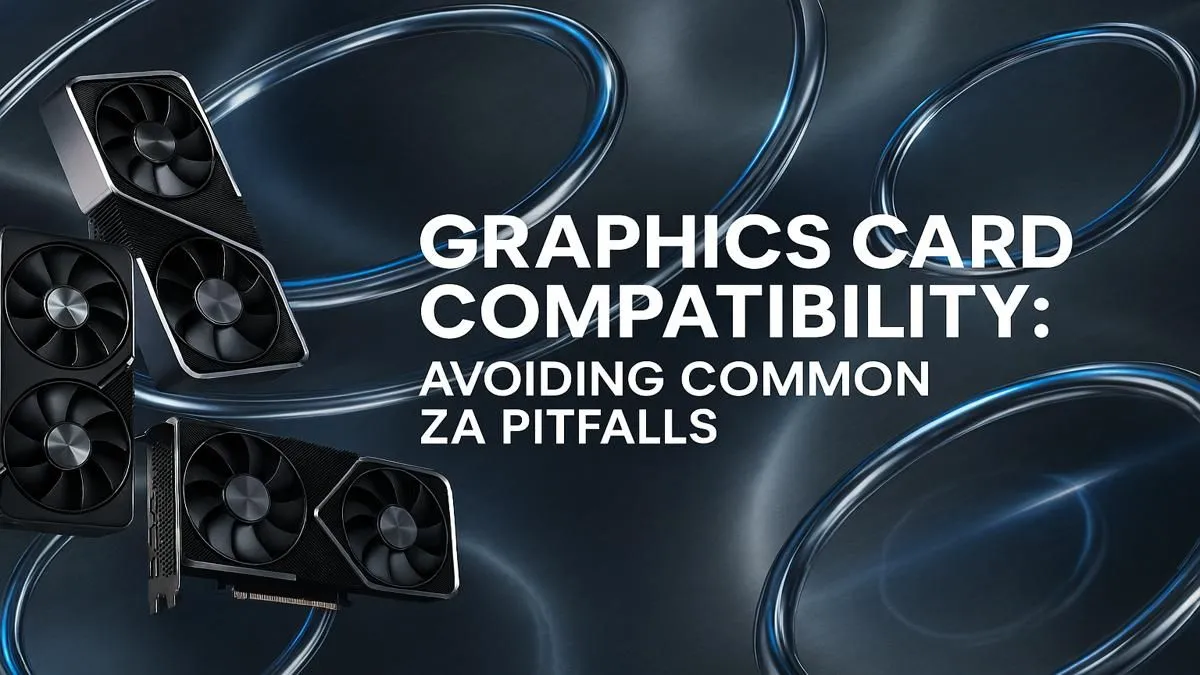
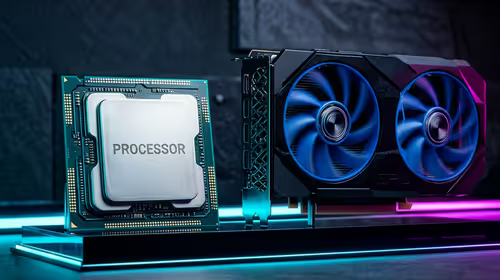
So you've found the perfect GPU, your wallet is ready, and you can already smell the frames-per-second. But the horror of discovering it doesn’t fit your case or your power supply can’t handle it? Eish, that’s a PC builder's nightmare. Before you click 'buy', let's quickly run through the essential graphics card compatibility checks every South African gamer needs to know. It’s easier than you think and will save you a world of frustration. 🔧
The Core Checks for GPU Compatibility
Ensuring your new graphics card works flawlessly involves more than just plugging it in. True graphics card compatibility comes down to three key areas: the physical fit, the power delivery, and the performance balance with your other components. Getting these right is the difference between a smooth build and a weekend of troubleshooting.
Will It Physically Fit? (Case & Motherboard)
This is the most common "oops" moment for first-time builders. Here's what to check:
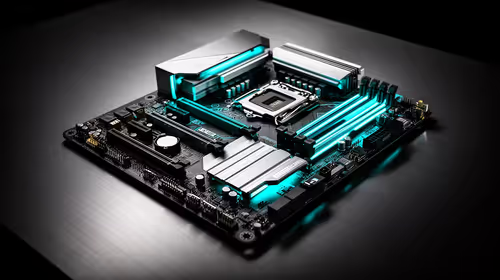
- PCIe Slot: Your motherboard needs a PCI-Express x16 slot. Luckily, virtually every consumer motherboard from the last decade has one.
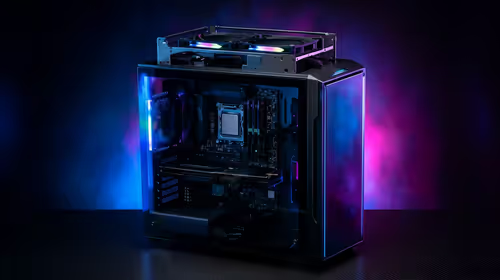
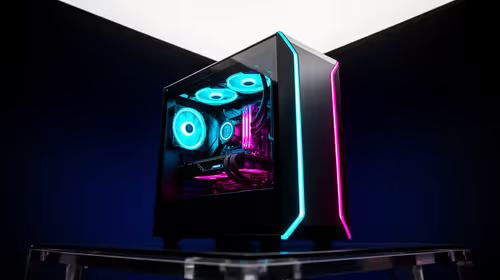
- Card Dimensions: This is the big one. Check the GPU's length, height, and width (often measured in "slots") against your PC case's maximum GPU clearance specs. A triple-slot RTX 4080 simply won't squeeze into a compact case designed for a dual-slot card. Measure twice, buy once! ✨
Have You Got Enough Juice? (Power Supply Unit)
A powerful GPU is thirsty. Your Power Supply Unit (PSU) must be up to the task, otherwise you'll face random shutdowns and instability.
- Wattage: Check the recommended PSU wattage on the GPU's official product page. It's always wise to have a little more than the minimum.
- Connectors: Does your PSU have the right power cables? Modern cards often need one or two 8-pin (or 6+2 pin) PCIe power connectors. The latest high-end NVIDIA cards use a single 12VHPWR connector, so check if your PSU has one or if the GPU includes an adapter.
PSU Pro Tip ⚡
Don't just look at the total wattage on your PSU! Check the sticker for the amperage (A) on the +12V rail. Modern graphics cards draw almost all their power from this rail. A good quality 650W PSU is often better than a cheap 800W unit with a weak +12V rail. Always aim for a bit more wattage than the GPU manufacturer recommends to give yourself some headroom.
Balancing Your Build: CPU Bottlenecks
While most modern cards are technically compatible with older motherboards thanks to backward-compatible PCIe standards, pairing a top-tier GPU with an ancient CPU is a waste of money. This creates a "bottleneck," where your slow processor can't feed the graphics card data fast enough, holding back its full potential. A balanced system is a happy system.
Choosing Your Team: NVIDIA vs. AMD
Part of the compatibility puzzle is deciding which ecosystem suits you best. For many, the choice comes down to Team Green or Team Red. If cutting-edge features like DLSS 3 and top-tier ray tracing performance are your priority, exploring the latest NVIDIA GeForce graphics cards is a great place to start. On the other hand, if you're chasing incredible rasterization performance and excellent value for your hard-earned Rands, the lineup of AMD Radeon graphics cards offers some seriously powerful contenders.
Finding the Right Card at the Right Price
Once you've confirmed your case, PSU, and motherboard are ready for an upgrade, the final piece of the puzzle is finding a card that fits your budget. Prices can change fast in the tech world, so keeping an eye on the market is key to snagging a great deal. Checking out the best graphics card deals in South Africa can help you find that perfect price-to-performance sweet spot for your next build. 🚀
Ready to Find Your Perfect GPU?
Getting your graphics card compatibility right is the first step to a legendary PC build. Now for the fun part! Explore our massive range of graphics card deals and find the perfect GPU to power up your gaming experience in South Africa.