


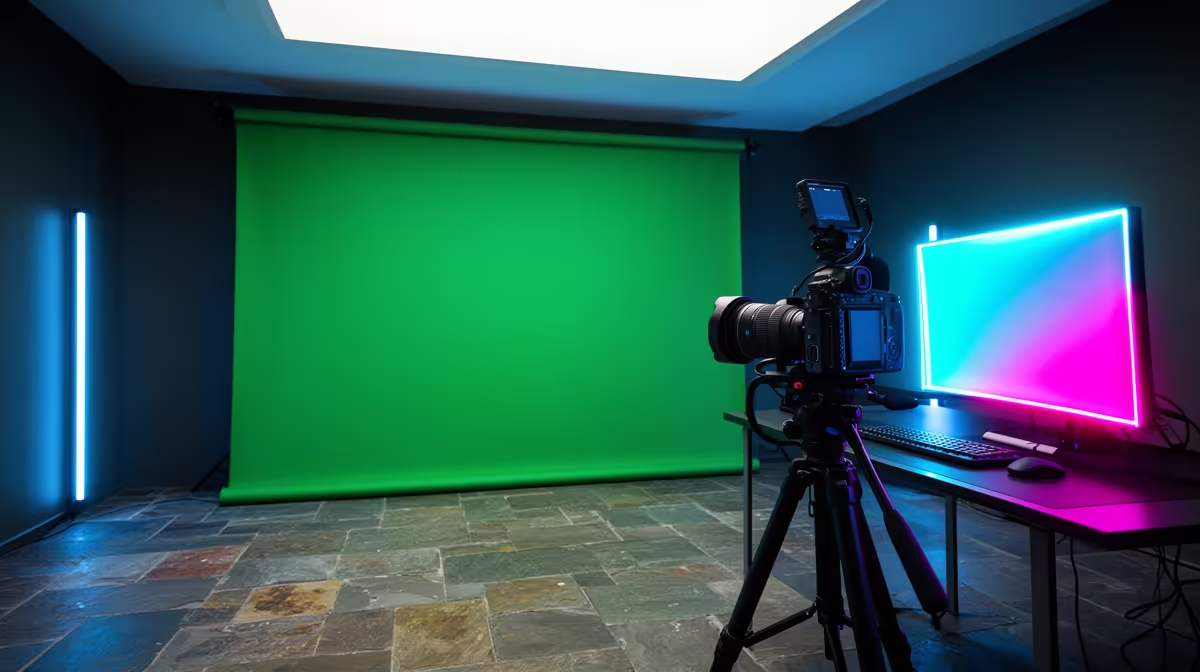
A convincing green screen streaming setup does not require a large budget. The technical requirements for a clean key are surprisingly modest: evenly lit fabric, enough separation from the subject, and soft light on the presenter. Getting those three things right on a few thousand Rand is entirely achievable if you know where to spend and where to save.
Quick Answer
Around R2,200 covers a quality budget green screen build: roughly R600 for a muslin backdrop with a crossbar stand, and R1,200 to R1,600 for two 45W softboxes on stands. The key to a clean result is even lighting on the screen, not premium fabric. Put the budget into lights first and the key will follow.
💰 Where the Budget Actually Goes
A green screen rig has three core components: the screen itself, the stands to hold it, and the lights to illuminate it and the presenter. Of these three, the lights are the most important and should receive the largest share of the spend.
The screen at this budget level is a purpose-dyed muslin fabric. A 1.5 to 2m wide panel suitable for a seated streaming frame typically costs around R500 to R700, including a simple crossbar and two lightweight stands. That price point delivers perfectly functional fabric; the chroma green dye is the same targeted hue across the price range, and a tensioned, steamed muslin keys cleanly in OBS and other standard streaming software.
The softboxes take the remaining R1,200 to R1,600. Two 45W daylight softboxes in the 45 to 60cm range, each on a stand, provide key and fill for the presenter plus enough output to keep the backdrop evenly lit if positioned correctly. Buying two matching lights from the same manufacturer ensures the colour temperatures agree, which matters for consistent white balance session to session.
The total lands at R1,700 to R2,300 for all three components. Budget R100 to R200 for a pair of sandbags, which are not optional if any window is open or any ventilation is running.
🔧 Lighting the Screen and the Presenter From Two Sources
The most common mistake in a budget setup is using both softboxes on the presenter and leaving the green screen to pick up whatever ambient light falls on it. The result is an unevenly lit backdrop with hotspots near the top and darker patches at the bottom, which reads as multiple shades of green to the keying algorithm.
A better strategy: position one softbox as a key-and-fill combination for the presenter, slightly off to one side, and angle the second to illuminate the backdrop directly. That second light, aimed at the fabric from the front at a low angle, produces much more even coverage across the screen surface than ambient room light would.
The tradeoff is that you are running a single-light setup on the presenter, which means more shadow on the opposite side of the face. For a budget rig, this is an acceptable compromise. Add a large reflector or white foam board on the fill side to bounce some light back and soften those shadows without a third light.
🎯 Muslin Versus Pop-Up Screens at This Budget
At the R2,200 total budget, muslin is the right call. Here is why.
A pop-up disc screen at the 1.5m width useful for a seated streamer costs R600 to R900 on its own, leaving R1,300 to R1,600 for two softboxes. The setup is faster since the pop-up requires no crossbar assembly, but the price per square metre of covered area is significantly higher than muslin.
A muslin panel at the same width costs R300 to R500, freeing R200 to R400 more for the light budget. In a rig where the lights are doing the heavy lifting, that extra spend goes a long way toward a more stable softbox stand or a slightly larger modifier.
The only case where pop-up wins at this budget is if the setup is assembled and packed daily and speed matters. For a fixed dedicated desk setup, muslin is the more cost-effective surface and produces equivalent key quality when properly tensioned and lit.
✨ Getting the Key Right in OBS
A clean physical setup can still produce a poor key if software settings are off. In OBS, start the chroma key similarity slider at around 400 and raise it until the green disappears without cutting into your hair or face edges. Smoothness at 50 to 80 blends the key edge cleanly.
If the centre keys but a ring remains around the edges, green light is spilling from the backdrop onto the presenter. Add more subject-to-screen distance, or place a black card between the backdrop light and the subject to block the forward spill.
Frequently Asked Questions
What is the minimum spend for a working green screen stream rig?
A single 45W softbox for the presenter plus a basic muslin and crossbar stand runs around R1,200 to R1,400. The key will show some unevenness on the backdrop without a dedicated backdrop light, but it is functional for a tight, seated shot. The R2,200 two-light version produces a noticeably cleaner key and is worth the extra R700 to R800 for anyone recording regularly.
Does a budget muslin screen hold up over time?
Muslin dye fades slowly with UV exposure and washing. In a closed, indoor studio away from direct sunlight, a quality muslin backdrop holds its chroma green reliably for several years. Avoid washing unless absolutely necessary; most marks are on the back side and are invisible to camera. If the fabric is stored folded, steam it flat before each session to remove compression creases that would shadow in the key.
Is one softbox enough to start with?
You can start with one, but the result is compromised in two ways. A single light on the presenter leaves a noticeable shadow on the side of the face away from the source. A single light is also divided between illuminating the presenter and illuminating the backdrop, meaning at least one of them is underlit. Starting with two is a more complete rig and the R600 to R800 difference is worth it for regular streaming.
How wide a backdrop does a seated streamer actually need?
For a head-and-shoulders frame at 1.2 to 1.5 metres of camera distance, a 1.5 to 2m wide screen covers the entire background visible to the lens with comfortable margin. A 298cm full-width backdrop is more than is required for a solo seated shot; the extra width adds cost and bulk without improving the key for this specific use case. Save the wider backdrop investment for standing shots or multi-person setups.
Ready to build a clean green screen stream on a real Rand budget? Browse the softbox kits and green screen backdrop bundles at Evetech and put together a rig that keys well from session one.










