Small vents and hot rooms leave a handheld with less cooling margin than a desktop. Handheld thermal care keeps intakes clear, avoids soft surfaces and follows safe cleaning guidance before dust becomes a performance problem.
Quick Answer
Keep a gaming handheld cool by leaving every intake and exhaust open, avoiding direct sun and cleaning the outside vents when dust becomes visible or fan behaviour changes. A fixed monthly compressed-air blast is too blunt for every model and can drive dust deeper or overspin the fan. Follow the maker's exact cleaning method, log temperature and performance under one game, and use service support before opening a covered device.
Learn the airflow path
Find the intake and exhaust in the exact manual. Intakes often sit on the rear or underside, while hot air leaves from a top edge. Keep fingers, cases, blankets and stands clear of both.
Play on a desk, lap tray or another firm surface. A bed or sofa can seal an intake and feed lint straight into it.
Do not rest a power bank or cable coil against the exhaust. Check whether a grip case changes the gap around the vent.
South African summer changes the baseline
Cooling depends on the temperature of air entering the device. A hotter room leaves less margin and can raise fan speed or reduce sustained boost.
Record room temperature, performance profile, frame cap, fan noise and game frame time during a twenty-minute route. Compare the same route on a cooler day. The change helps you distinguish weather from a new hardware fault.
Avoid gaming in a parked car, direct sun or a closed bag. The screen, battery and shell absorb heat even before the game starts.
Clean based on evidence
Inspect vents under a bright light every few weeks when the home is dusty or pets share the room. Clean sooner when lint forms a mat, fan noise rises at the same load or temperature changes from the saved baseline.
Power off, unplug accessories and let the handheld cool. Use a soft brush on the outer grille when the maker allows it. Hold the unit so loose dust falls away rather than into the vent.
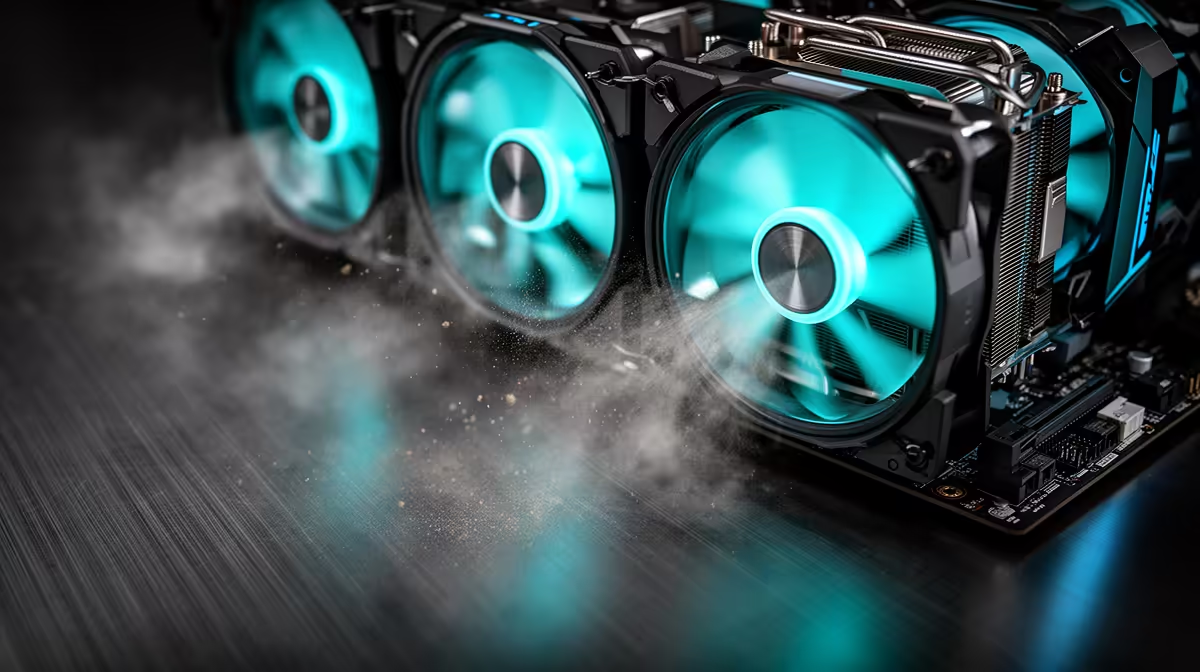
If official guidance permits compressed air, use the specified pressure, distance and direction. Do not spin the internal fan at high speed. Never insert a nozzle, pin or cotton bud through the grille.
Vacuum cleaners can create static and apply strong suction. Keep them away from exposed vents unless the manufacturer documents a safe accessory and method.
Opening the case is a service decision
Dust inside the heatsink may need the rear cover removed on a serviceable model. This can damage clips, cables, thermal pads and the battery, and can affect warranty.
Use authorised service while cover applies. If service has ended, follow the exact model's maintenance manual with the correct tools and anti-static practice. Never improvise around a swollen battery.
Do not replace thermal paste as routine care. A temperature change can come from firmware, room heat, fan profile or another workload.
Frame limits cut heat at the source
A handheld rendering frames beyond the screen target wastes battery and produces heat. Set a frame cap the game can hold and lower heavy settings before adding an external cooler.
Use the lowest supported power profile that meets the frame-time target. A quiet profile can feel smoother than a maximum mode that throttles after ten minutes.
Avoid unsupported voltage tuning. Keep firmware and performance tools on known stable versions.
A stand can help without claiming cooling
A stand keeps rear vents clear and lifts the screen. It does not guarantee lower temperature. Some fan-equipped stands blow in the wrong place or add dust.
Check vent alignment, stability and cable clearance. Run the same logged game route with and without the stand. Keep it only when temperature or comfort improves.
Battery heat deserves respect
Charging and gaming together add heat. Use the supported charger and cable, keep the power brick ventilated and stop if the device reports a temperature warning.
A swollen shell, lifted screen, chemical smell or unusual battery heat calls for immediate shutdown and professional service. Do not press a swollen battery flat or puncture it.
Store the handheld in a cool dry place after it returns to room temperature. Do not seal a hot unit in a case.
Travel without feeding the vents
Use a case that holds the device without pressing sticks or covering a still-hot exhaust. Empty crumbs and sand from the case before packing.
Power the handheld down for a long trip rather than relying on sleep inside a tight bag. An update or wake event can create heat with no airflow.
At the destination, let a cold device reach room temperature before power-on when condensation is possible.
Study vent placement and power profiles across the handheld gaming console range. When every summer session stays at one desk, open the PC best-seller page and compare a tower's cooling route.
FAQ
How often should I clean the vents?
Inspect them on a schedule suited to the room and clean when visible dust or a baseline change provides a reason.
Can a bed make the handheld overheat?
Soft fabric can block an intake and feed lint into it. Use a firm tray or desk.
Does thermal throttling damage the device?
It is a protection response. Repeated throttling means the workload, airflow, room or cooling system needs attention.
Map every vent, save one warm-load baseline and clean through the exact model guide when dust or performance changes justify it.