If your ISP has put you behind a shared public address, the old advice to "just forward a port" on your router simply does not work, and opening ports was never a great idea anyway. Tailscale sidesteps the whole problem. It builds a private encrypted network directly between your devices, so your phone can reach your home server from anywhere without touching your router settings or exposing anything to the open internet.
Quick Answer
Install the Tailscale client on your home server and on your phone or laptop, log both into the same account, and they join one private mesh network. No port forwarding, no dynamic DNS, no certificates. Traffic is WireGuard-encrypted end to end, and Tailscale works even when you are behind CGNAT where traditional port forwarding fails entirely.
Why port forwarding is the wrong tool
Port forwarding opens a hole in your router and points it at a device inside your home. It exposes that service to the entire internet, so it gets scanned and probed constantly, and one weak password becomes a real breach.
It also increasingly does not work. Many SA mobile and fibre providers place customers behind Carrier-Grade NAT, where you share a public address with other users and have no port to forward. Dynamic DNS, certificate management and firewall rules pile on more fragile moving parts. Tailscale removes all of it.
How Tailscale actually works
Tailscale wraps WireGuard, a fast modern VPN protocol, in a coordination layer that handles the hard parts for you. A coordination server helps your devices find each other and exchange their WireGuard public keys, but it never sees your actual traffic. Your data flows directly between your devices, peer to peer.
When both devices sit behind strict NAT and cannot connect directly, Tailscale falls back to encrypted relay servers called DERP. Even relayed, the traffic stays WireGuard-encrypted end to end, so the relay only forwards sealed packets it cannot read. Both your devices reach out to Tailscale rather than waiting for inbound connections, which is exactly why no port forwarding is needed and why CGNAT is not a problem.
Step-by-step setup
The whole thing takes a few minutes.
- Create a free Tailscale account. The free tier comfortably covers a typical home setup, with no cost for personal use.
- On your home server, install the Tailscale client and run the start command. It prints a login URL. Open it, authenticate, and approve the device.
- On your phone or laptop, install the Tailscale app and log into the same account. Approve that device too.
- Both devices now appear in your Tailscale network with their own private addresses. They can reach each other directly.
That is the core of it. No router login, no ports, no public exposure.
Reaching your server by name
Typing private IP addresses gets old fast. Turn on MagicDNS in the Tailscale admin console and every device gets a friendly name. Instead of remembering an address, you connect to your server by its hostname, for example reaching a web app at http://homeserver:8080 or opening an SSH session with the device name. It works the same whether you are on home WiFi or on mobile data across the country.
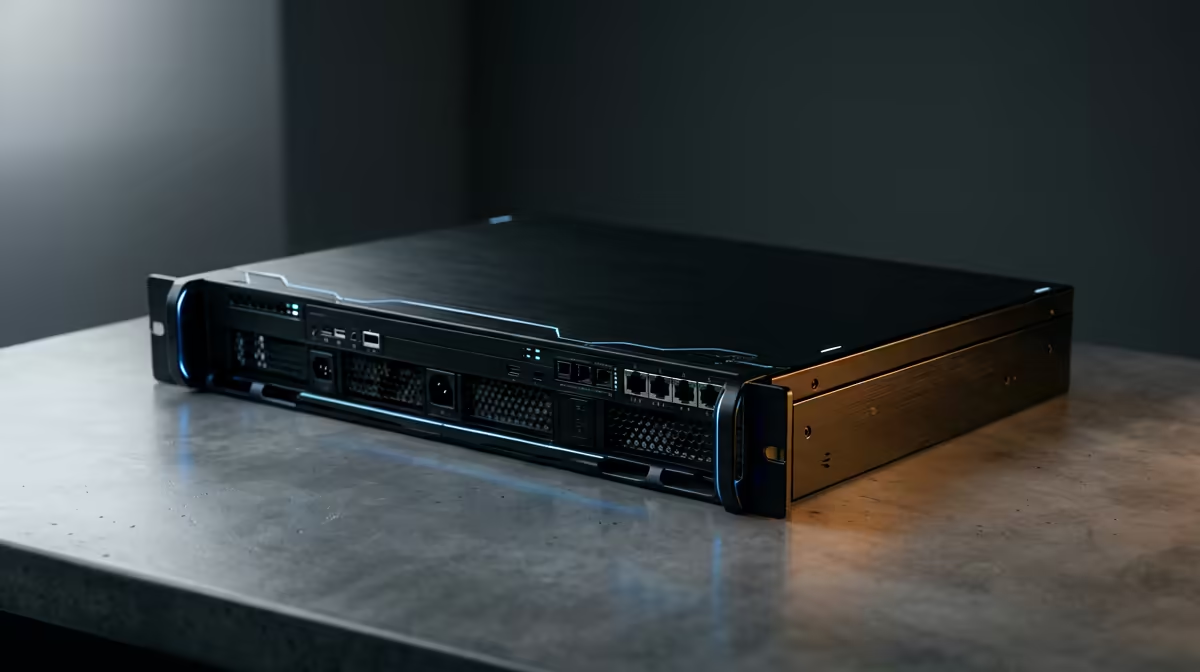
For a home server itself, a low-power always-on machine is ideal, since it sits running quietly and Tailscale's overhead is minimal enough to leave on permanently. Evetech's mini PC range is worth a look -- these efficient, compact boxes suit a 24/7 server role without inflating your electricity bill.
Tailscale or raw WireGuard?
Both use WireGuard underneath, so the encryption is the same. The difference is who does the work. Raw WireGuard means you manage keys, configs and, behind CGNAT, your own relay server on a VPS. Tailscale handles all of that automatically.
Choose Tailscale when you want it to just work, you are behind CGNAT, or you are tired of editing config files. Choose self-hosted WireGuard when you want zero external dependencies and are happy to manage it yourself. For most home users, Tailscale wins on convenience, and there is a self-hosted control server called Headscale if you later want the mesh without the cloud component. If you are still choosing the hardware to run all this on, the PC best sellers at Evetech show which builds SA home-labbers are actually buying right now.
Frequently Asked Questions
Do I need to open any ports on my router for Tailscale?
No. Both devices connect outward to Tailscale's coordination servers and negotiate a direct encrypted link, so nothing needs to be opened or exposed on your router. That is the main reason to use it over port forwarding.
Does Tailscale work if my ISP uses CGNAT?
Yes. Tailscale is built to traverse NAT and CGNAT, and falls back to encrypted DERP relays when a direct connection is not possible. Plain port forwarding cannot work behind CGNAT because you have no public port to forward.
Can Tailscale see my data?
No. Traffic is WireGuard-encrypted end to end and flows directly between your devices. The coordination server only helps devices find each other and exchange keys, and the relay servers forward sealed packets they cannot read.
Is Tailscale free for home use?
The free tier covers typical personal and home-lab use, including a generous number of devices. Most home users never need a paid plan for accessing their own server from their own devices.
What is MagicDNS?
It is a Tailscale feature that gives each device a memorable name so you can reach your server by hostname instead of a numeric address. You enable it once in the admin console and it works across all your enrolled devices.
Want safe remote access to your home server without exposing it to the internet? Pair Tailscale with a quiet, low-power machine from the mini PC range at Evetech and reach your files from anywhere in minutes.