Quick Answer
For low-latency online gaming, choose case fans by airflow and noise, not RGB: a quality 120mm or 140mm PWM fan moving 50-70 CFM at under 30dBA costs about R150 to R400 each. Set up positive pressure with more intake than exhaust and add dust filters. Two good fans beat five cheap, loud ones.
Airflow, Pressure And Layout
Low-latency online gaming depends on stable thermals and input, not flashy extras. Aim for positive pressure: slightly more intake than exhaust so dust enters through filters, not gaps. A common setup is two or three 120mm/140mm intakes at front plus one rear exhaust. 140mm fans move more air at lower RPM and noise than 120mm, which helps in larger cases.
PWM, Noise And Bearings
PWM (4-pin) fans let the motherboard tune speed to temperature, so they stay quiet until the system heats up. A fluid-dynamic or rifle bearing lasts longer and runs quieter than a cheap sleeve bearing. For low-latency online gaming, target under 30dBA at idle; you will hear the difference between a R150 budget fan and a R350 quiet-tuned one.
Filters And Maintenance
Dust filters on intakes keep heatsinks clean and stop temperatures creeping up over months. Magnetic filters are easy to pull and rinse. A full set of three quality 120mm PWM fans plus filters lands around R1,200 to R1,800, which usually beats stuffing a case with eight cheap fans that add noise without improving real airflow for low-latency online gaming.
FAQ
How many case fans do I need for low-latency online gaming?
For low-latency online gaming, two intakes and one exhaust is a solid baseline. Add a third intake only if your GPU or CPU runs hot under sustained load.
Are RGB fans worth it?
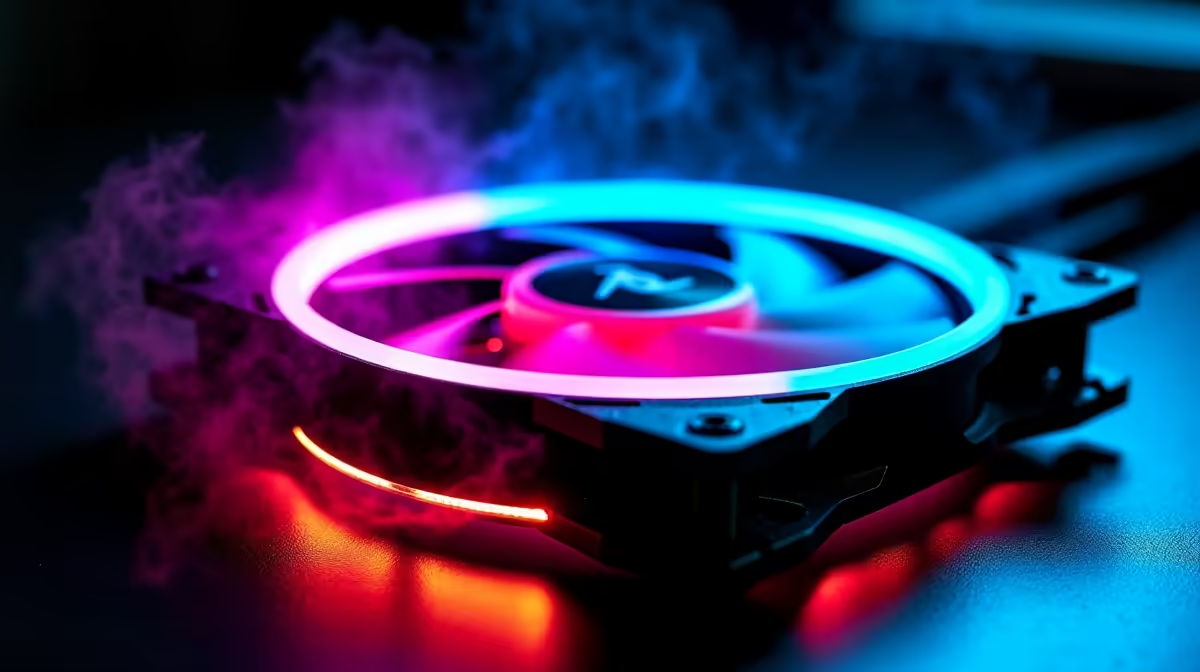
Only for looks. RGB does nothing for cooling, and lighting can add cost and cable clutter. Spend on airflow, low noise and good bearings first, then add RGB if your build calls for it.
120mm or 140mm fans?
140mm fans move more air at lower RPM and noise where your case supports them. Use 120mm where mounting space is limited, and prioritise PWM control either way.
slightly more intake than exhaust for positive pressure, fit dust filters on the intakes, and use PWM fans so the board can keep them quiet until the system heats up.