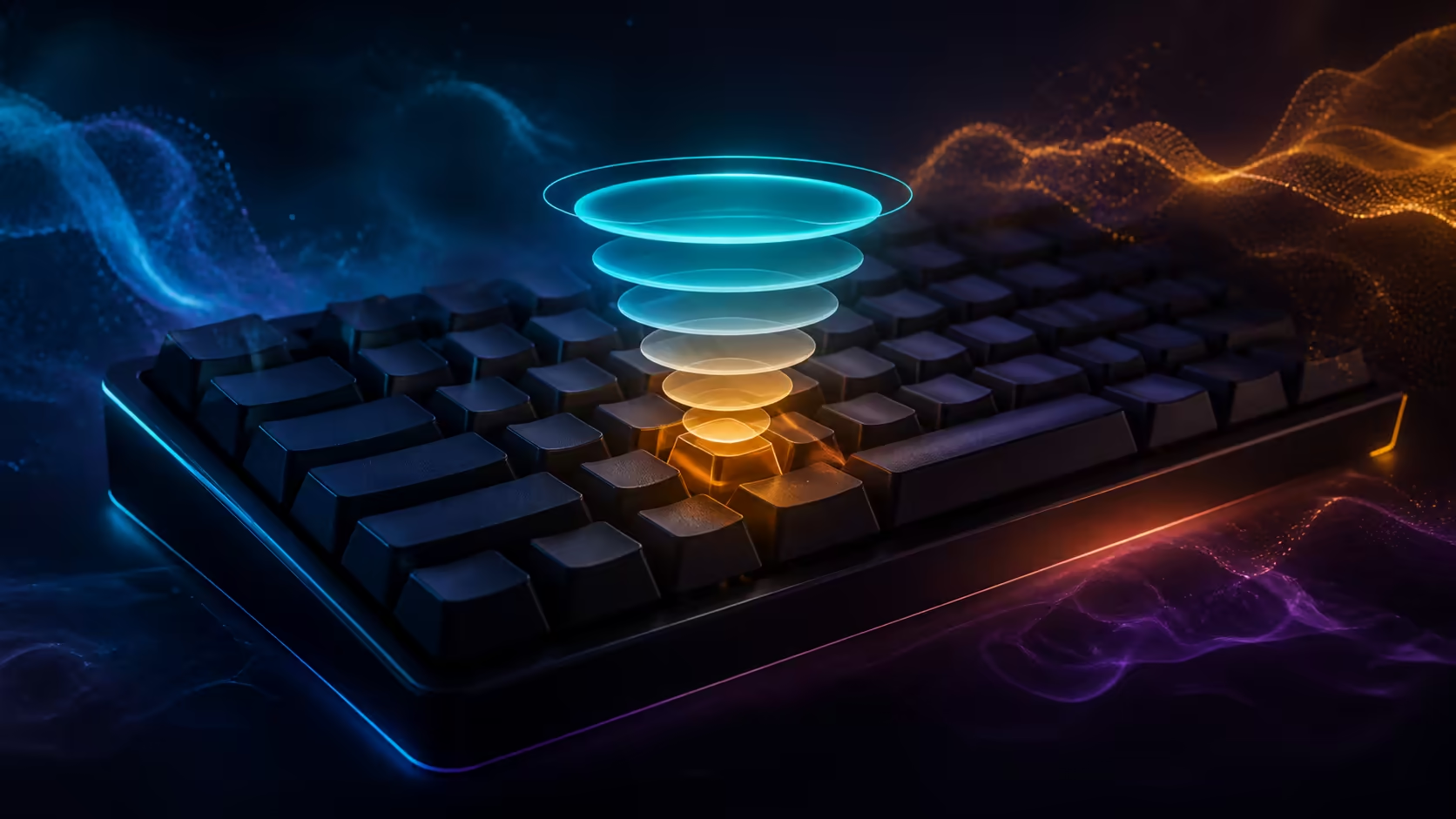
Adjustable keys become useful only after the numbers are tied to the way your fingers move. A good Hall Effect keyboard actuation setup starts at a moderate depth, changes only the important gaming keys, and uses a repeatable test before anything becomes more sensitive. The Corsair CLIPPER PRO MINI 60 provides a 0.2-3.8mm range for R1,799.
Quick Answer
Begin around the middle of the available range, then move movement and action keys shallower in small steps while leaving typing-prone keys deeper. At R1,799, the CLIPPER PRO MINI 60 lets its MGX Hyperdrive Core magnetic switches be configured from 0.2mm to 3.8mm, so one profile does not have to govern the entire board.
🎯 Build a neutral baseline first
Reset the keyboard profile to a known state and choose a moderate actuation depth. Open a simple text editor and type several sentences, then launch a familiar game practice area. The goal is to establish whether ordinary presses register consistently before chasing the shallowest possible response.
Keep a written note of the baseline. Record actuation depth, Rapid Trigger state and the keys you intend to change. Evetech's gaming keyboard category helps place adjustable boards alongside conventional options, but the useful comparison begins with your own stable starting point.
🕹️ Tune movement keys separately
Select a small group such as W, A, S and D. Reduce their actuation depth by one controlled step, save the profile and repeat the same movement drill. Look for quicker response without unintended strafes when a finger rests on a key.
An extremely shallow 0.2mm setting is available, but availability does not make it the universal target. Finger weight, posture and keycap contact differ between players. If accidental movement appears, increase the depth until the error disappears, then test for several rounds rather than a single clean attempt.
⌨️ Give typing and shortcuts more travel
Keys used for chat, commands or ordinary work can benefit from a deeper trigger point. A firmer decision distance reduces accidental letters when fingers hover across the compact layout. Number and punctuation access through a 60% function layer also deserves deliberate testing because shortcuts may combine several presses.
Browse Evetech's keyboard switch selection to understand how switch choice and response customisation sit together. Magnetic sensing enables the adjustable point here; it does not remove the importance of key feel or practice.
🔄 Add Rapid Trigger after actuation is stable
Actuation decides where a press registers, while Rapid Trigger changes how the key resets as it moves. Configure the initial depth first, verify clean presses, and only then add dynamic reset behaviour to the specific keys that need fast repetition.
The CLIPPER PRO MINI 60 also offers FlashTap SOCD and 8,000Hz polling. Leave advanced controls at known settings while actuation is being learned. Multiple simultaneous changes make it difficult to identify why movement improved or became unstable.
At R1,799, the keyboard combines this response tuning with an IP57 water- and dust-resistant design. Evetech's gaming keyboard deals page gives current category context before a buyer commits to the compact format.
Save profiles by activity
Create one named profile for competitive play and another for typing or general use. Describe the changed keys in the profile name or a note. A clear label prevents an aggressive movement setup from causing mistakes during work and makes later refinements reversible.
Calibrate around resting finger weight
Place the hand in its normal position without deliberately pressing. Watch whether any key registers from the natural weight of a finger, then repeat after several minutes when posture is relaxed. A depth that behaves during a formal test may become troublesome once the player stops holding their fingers artificially high.
Increase only the affected keys until resting contact remains inactive. This per-key correction preserves a shallow response on commands that the hand does not touch accidentally. Test crouch, walk and ability keys as well as movement because different fingers carry different weight.
Review the profile after real play
Return to the notes after three full sessions. Record accidental inputs, missed presses and any tendency to tense the hand. Keep changes that solve a repeated problem and restore settings that merely felt novel during the first minutes. Long-term comfort is stronger evidence than a single fast drill.
Run a four-stage actuation workshop
Spend ten minutes at the baseline, ten with only movement keys shallower, ten with typing keys deeper and ten in a mixed real session. During each stage, count accidental activation, missed presses and moments when the hand becomes tense. Do not change Rapid Trigger or polling during the workshop.
Afterwards, compare error types rather than choosing the profile that merely felt quickest. If shallower movement reduces missed starts but introduces resting-input errors, return halfway towards the baseline. If deeper typing removes stray letters without fatigue, keep that group. End by restarting the system, loading the chosen profile and repeating one movement plus one paragraph. This final check proves both the values and the profile-loading routine. Store the four-stage notes with the date so later changes can be compared against an actual result instead of memory.
Frequently Asked Questions
What is a sensible starting point for adjustable actuation?
Begin near the middle rather than at either extreme. This provides room to move shallower for response or deeper for protection against accidental presses.
Should every key use the same actuation depth?
No. Movement keys, chat keys and layered shortcuts serve different roles, so per-key or grouped settings can be more practical.
What range does the CLIPPER PRO MINI provide?
Its MGX Hyperdrive Core magnetic switches support adjustment from 0.2mm to 3.8mm.
How can I test a new actuation setting?
Repeat one movement drill and one typing sample after each change. Use several rounds so a lucky clean attempt does not hide instability.
Why can an extremely shallow setting feel difficult?
The key may trigger from light resting pressure or small finger movements. Increasing the depth adds a clearer decision before registration.
When should I use a deeper setting?
Use more travel on keys that fire accidentally, handle destructive shortcuts or need deliberate input during typing.
Ready to turn millimetres into a profile your fingers can trust? Explore Evetech's magnetic gaming keyboards, establish a moderate baseline, and tune only the keys whose real behaviour proves that a change is useful.