Switching to a Mac after years on Windows feels disorienting for about a day, and almost all of that friction comes from one tiny habit: your thumb reaching for Ctrl. On macOS the key you want sits right next to the spacebar and it is labelled Command (Cmd). Learn that one swap and the muscle memory you built on Windows mostly carries straight over. Copy, paste, save, undo, find: they all work the way you expect, just with a different key.
Quick Answer
On a Mac, the Command key replaces Ctrl for everyday shortcuts. Copy is Cmd-C, paste is Cmd-V, save is Cmd-S, undo is Cmd-Z. Master that single substitution and roughly 90 percent of the keyboard adjustment is done. The exceptions are few and easy to learn.
Step 1: Find the Command Key
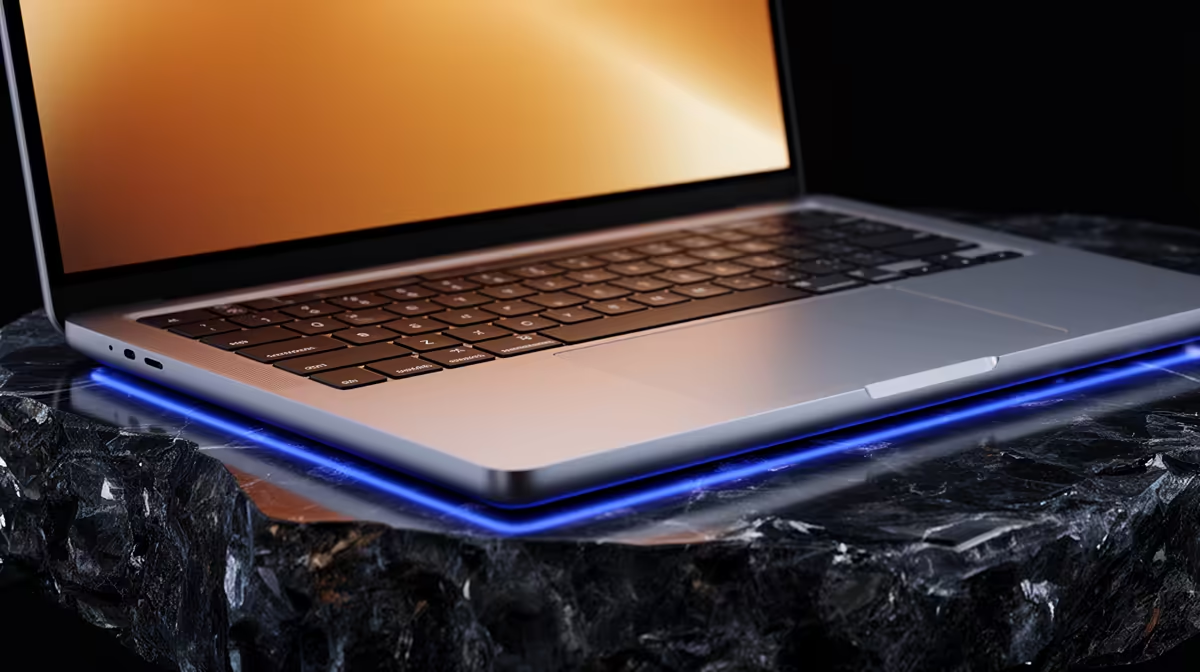
Look at the bottom row of your Mac keyboard. On either side of the spacebar sits a key marked Command, sometimes with a looped square symbol. That is your new Ctrl. Your thumb already knows the position from Windows, it just has to land one key over. Rest your thumb there deliberately for the first few hours and the habit rewires quickly.
Step 2: Learn the Core Four
These four cover the vast majority of daily use:
- Copy: Cmd-C
- Paste: Cmd-V
- Cut: Cmd-X
- Save: Cmd-S
Add Cmd-Z for undo and Cmd-Shift-Z for redo, and you have everything most documents and browsers need. Notice the pattern: wherever Windows used Ctrl, the Mac uses Cmd, with the same letter.
Step 3: The Shortcuts That Are Genuinely Different
A handful do not map one-to-one, and these are where new switchers get tripped up:
- Select all: Cmd-A (straightforward).
- Find: Cmd-F.
- New tab: Cmd-T.
- Close window: Cmd-W; quit the whole app: Cmd-Q. On Windows these blurred together, but on Mac closing a window does not close the app.
- Switch apps: Cmd-Tab instead of Alt-Tab.
- Screenshot: Cmd-Shift-4 for a region, Cmd-Shift-3 for the full screen.
The Cmd-W versus Cmd-Q distinction surprises people most: closing the last window leaves the app running in the background. Use Cmd-Q when you actually want it gone.
Step 4: Delete, Home and End
Mac keyboards often lack a forward Delete key. The Delete key acts as Backspace; to delete forward, use Fn-Delete. Home and End scroll to the top and bottom of a document rather than jumping the cursor to the start or end of a line, which is a real difference from Windows. To move the cursor to a line's start or end, use Cmd-Left and Cmd-Right.
Step 5: Right-Click Without a Right Button
On a MacBook trackpad, tap with two fingers to right-click, or hold Ctrl and click. You can also enable a dedicated right-click zone in System Settings under Trackpad. Once that is on, context menus behave exactly as they did on Windows. If you prefer a mouse, any standard USB or Bluetooth mouse with two buttons works without setup, and you can pair one through the laptop best sellers accessories if you want a familiar two-button feel from day one.
A Quick Cheat Sheet
Keep this near your desk for the first week:
- Cmd-C / Cmd-V / Cmd-X: copy, paste, cut
- Cmd-S: save
- Cmd-Z / Cmd-Shift-Z: undo, redo
- Cmd-A: select all
- Cmd-F: find
- Cmd-Q: quit app
- Cmd-Tab: switch apps
After a few days the substitution becomes automatic and you stop thinking about it. If you are shopping for the machine itself rather than just adapting to one, the MacBook range at Evetech covers every current model so you can weigh screen size and chip tier against your budget.
Frequently Asked Questions
Why does Mac use Command instead of Ctrl?
It is a long-standing macOS design choice that keeps Command as the primary modifier and frees Ctrl for other functions like right-click and terminal commands. The result is that most Windows Ctrl shortcuts translate directly to Cmd.
Does Ctrl do anything on a Mac?
Yes. Ctrl is used for right-click (Ctrl-click), some text-editing shortcuts, and terminal commands. It just is not the main copy-and-paste modifier the way it is on Windows.
How do I force quit an app on Mac?
Press Cmd-Option-Esc to open the Force Quit menu, select the frozen app, and confirm. It is the Mac equivalent of Ctrl-Alt-Delete's task manager.
Is there a Mac equivalent of the Print Screen key?
Yes. Cmd-Shift-3 captures the whole screen and Cmd-Shift-4 lets you select a region. Both save the image to your desktop by default.
How long does it take to adjust to Mac shortcuts?
Most people are comfortable within two or three days of regular use. The Command-for-Ctrl swap is the main hurdle, and once it is muscle memory the rest follows quickly.
Ready to make the switch properly? Explore the MacBook range at Evetech to find a model that fits your work, and pair it with the accessories you need to feel at home from the first day.