Quick Answer
Frame pacing stutter - uneven gaps between frames even at a high average FPS - is usually a sync or memory-timing issue, not the part you just changed. Enable VRR (G-Sync/FreeSync), set a frame cap a few fps under your refresh rate, and confirm EXPO and chipset drivers are correct. Cap frames a few fps under your refresh rate (for example 141 fps on a 144Hz monitor) for steadier pacing.
What causes uneven frame pacing
Frame pacing is about consistency, not peak frames: a 120 fps average that swings between 90 and 150 fps feels worse than a locked 100. Do a clean GPU driver install, update the BIOS and chipset drivers, set Windows 11 to High Performance, and confirm your memory's EXPO/DOCP profile is active. These four steps resolve most post-upgrade stutter. A frame-time graph (in the driver overlay) makes the spikes visible so you can tell whether they line up with shader compilation, traversal or background tasks.
Lock the pacing down
Turn on G-Sync or FreeSync and keep VSync 'On' in the driver while disabling it in-game, which is the cleanest combination for tear-free, evenly paced frames. Set a frame cap 3-5 fps below your refresh rate so the GPU never runs ahead of the VRR range. Then disable overlays one by one and let shader caches build on the first run of a level before judging the result.
SA setup notes
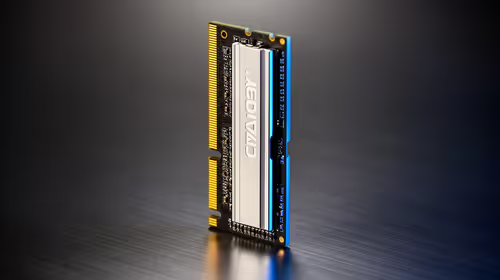
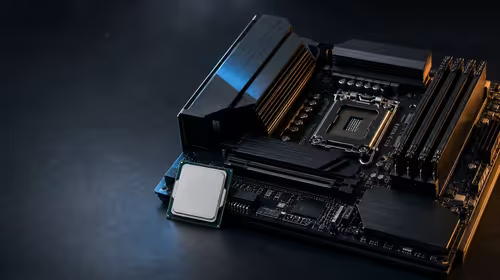
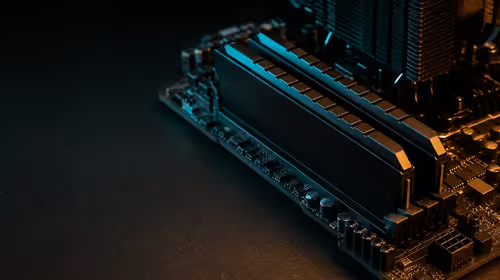
On AM5 systems, 32GB DDR5-6000 CL30 with a stable EXPO profile gives the most consistent 1% lows; untrained or unstable memory is a leading pacing culprit. Keep the GPU cool - check case airflow, since a card that throttles after warming up introduces periodic frame-time spikes. For online titles, a wired line to your Vumatel or Openserve router removes network jitter that can masquerade as a pacing problem.
FAQ
What is the difference between low FPS and bad frame pacing?
Low FPS is a low average; bad pacing is uneven spacing between frames even when the average looks high. Pacing problems show up as a spiky frame-time graph and feel like micro-stutter rather than general slowness.
Does VRR fix frame pacing?
VRR (G-Sync/FreeSync) smooths most of it by matching the display to the GPU's output, especially with a frame cap just under your refresh. It will not hide stutter caused by unstable memory or background tasks, so fix those too.
Could my DDR5 memory be the cause?
Yes - an unstable or untrained EXPO profile is a common pacing culprit on AM5. Test at JEDEC defaults to confirm, then run a proven 32GB DDR5-6000 CL30 kit for steady frame times.
Smooth out your frame times.
Enable VRR, cap frames a few fps under your refresh, and lock in a stable DDR5-6000 CL30 kit from Evetech for the most consistent pacing.