Quick Answer
Fix frame pacing around the B850 motherboard by proving the timing path first. Check refresh rate, VRR, Game Mode, HAGS, overlays, thermals, drivers, and the game frame cap, then confirm the result against 4.2ms at 240Hz, 6.9ms at 144Hz, or 16.7ms at 60Hz before replacing parts. Use CapFrameX, PresentMon, HWiNFO64 and target DDR5-6000 EXPO, PCIe Gen 5 options, 1000Hz USB polling, 144Hz/240Hz tests.
Build A Clean Baseline
Use one game, one route or benchmark pass, one preset, and one fixed cap. If the setup worked before, compare today's result with one familiar game scene instead of guessing from memory. Close capture overlays, RGB panels, browser video, and extra launchers before the first run.
Settings And Hardware Checks
In Windows 11, confirm Settings > System > Display > Advanced display shows the intended refresh rate. Then review Settings > Gaming > Game Mode and Graphics > Default graphics settings for VRR and Hardware-accelerated GPU Scheduling. In the game profile, check VSync, Reflex, Anti-Lag, raw input, and any manual FPS cap.
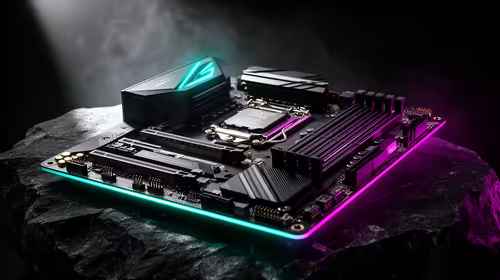
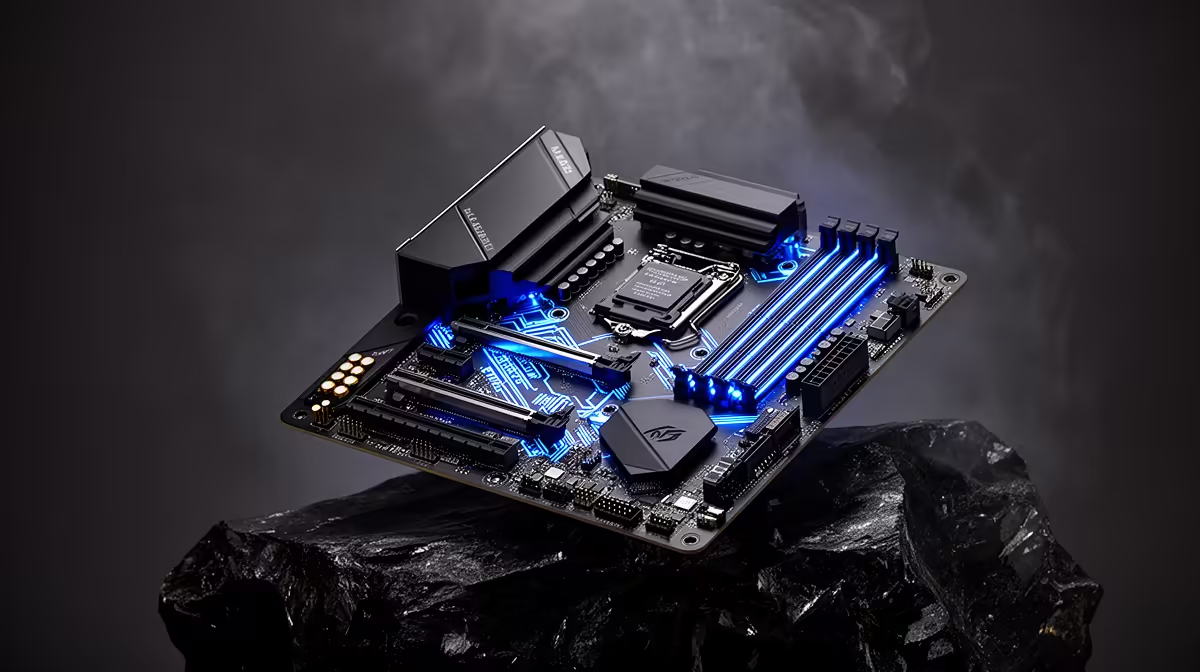
For the B850 motherboard, the practical fix is to load stable BIOS defaults, install chipset drivers, compare EXPO off/on, and check USB controller placement. Relevant reference hardware includes MSI B850, ASUS TUF B850, Gigabyte B850, Ryzen 7 9700X, Ryzen 7 9800X3D. Broad SA B850 pricing usually lands above basic B650 and below premium X870E. B850 is a platform choice, not the first suspect for every lag complaint.
Buying Decision
Keep the current part if the clean test passes. If it fails, buy only against the evidence: display timing points to a monitor or cable, USB timing to a device or port, storage spikes to the SSD, and network spikes to router placement or Ethernet.
FAQ
What should I check first for frame pacing on this setup?
Start with refresh rate, frame cap, and a clean baseline. Then check the driver, firmware, USB, storage, wireless, or cooling item tied to the recent change.
Should I replace the B850 motherboard immediately?
No. Replace it only after CapFrameX, PresentMon, HWiNFO64, a ping test, Ethernet, or direct USB shows the part is the limit.
What numbers show the fix worked?
A good result has steady 1% lows and no repeated jumps above 33ms. For 240Hz play, 4.2ms is the reference; for 60fps play, 16.7ms is the target.
Practical Check
Capture one clean run, note driver version, refresh rate, frame cap, and temperature, then compare Ethernet or direct USB before replacing hardware.