Quick Answer
For builders in Sandton, AM5 is a smart long-term platform because AMD has committed to supporting the AM5 socket with new CPUs for years, so you can start with a Ryzen 5 7600 (around R3,500) and later drop in a Ryzen 7 9800X3D without changing the motherboard or RAM. Sandton builders get the same long-term flexibility, with AM5 components available locally. That upgrade path is the core reason AM5 is the sensible base today.
Why the AM5 socket is future-friendly
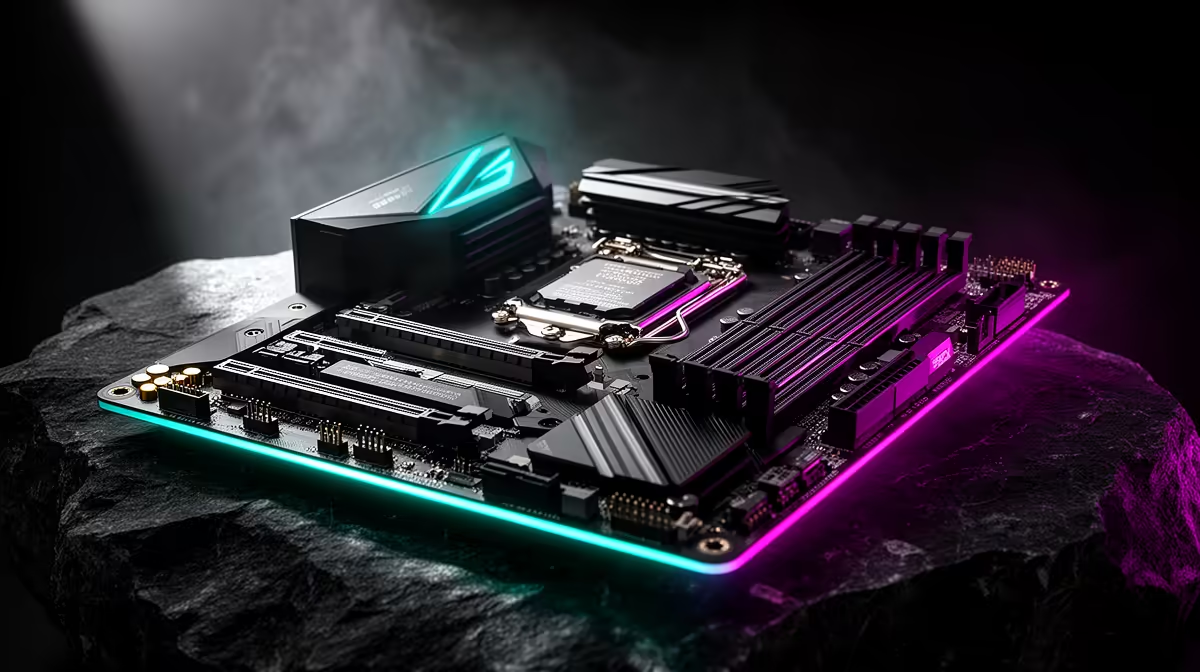
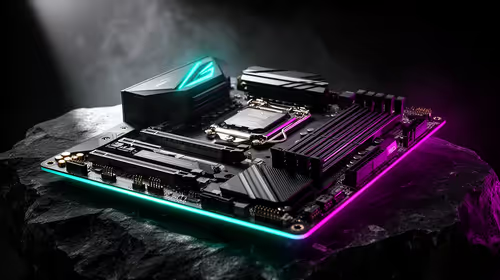
AM5 uses DDR5 memory and PCIe 5.0, and AMD has pledged socket support well into the future, meaning a B650 board bought now can host several CPU generations. Builders can buy a modest chip today and step up to a faster one later by swapping only the CPU — keeping the board, cooler, RAM and case. That protects your investment far better than a platform with a one-and-done socket.
How to start an AM5 build in Sandton
A practical AM5 starting point is a Ryzen 5 7600, a B650 board (around R2,600), 32GB DDR5-6000 with EXPO, and a 650W PSU. This runs current games well and leaves a clear path to a Ryzen 7 7800X3D or 9800X3D for a big gaming boost later, with no new board or RAM needed. Sandton builders get the same long-term flexibility, with AM5 components available locally. Update the BIOS when fitting a newer CPU so the board recognises it.
FAQ
Why is AM5 a good long-term platform?
AMD supports the AM5 socket with new CPUs for years, so you can upgrade the chip later without changing the motherboard or DDR5 RAM, protecting your investment.
Can I upgrade my AM5 CPU later?
Yes. Start with a Ryzen 5 7600 and later drop in a Ryzen 7 9800X3D on the same B650 board. Just update the BIOS so it recognises the new chip.
What RAM does AM5 use?
DDR5, with DDR5-6000 the sweet spot. A 32GB DDR5-6000 kit with EXPO enabled is the practical choice for an AM5 build.
Before you buy
Start AM5 with a Ryzen 5 7600 on a B650 board now, then swap in a 9800X3D later — keep the board and RAM, just update the BIOS.