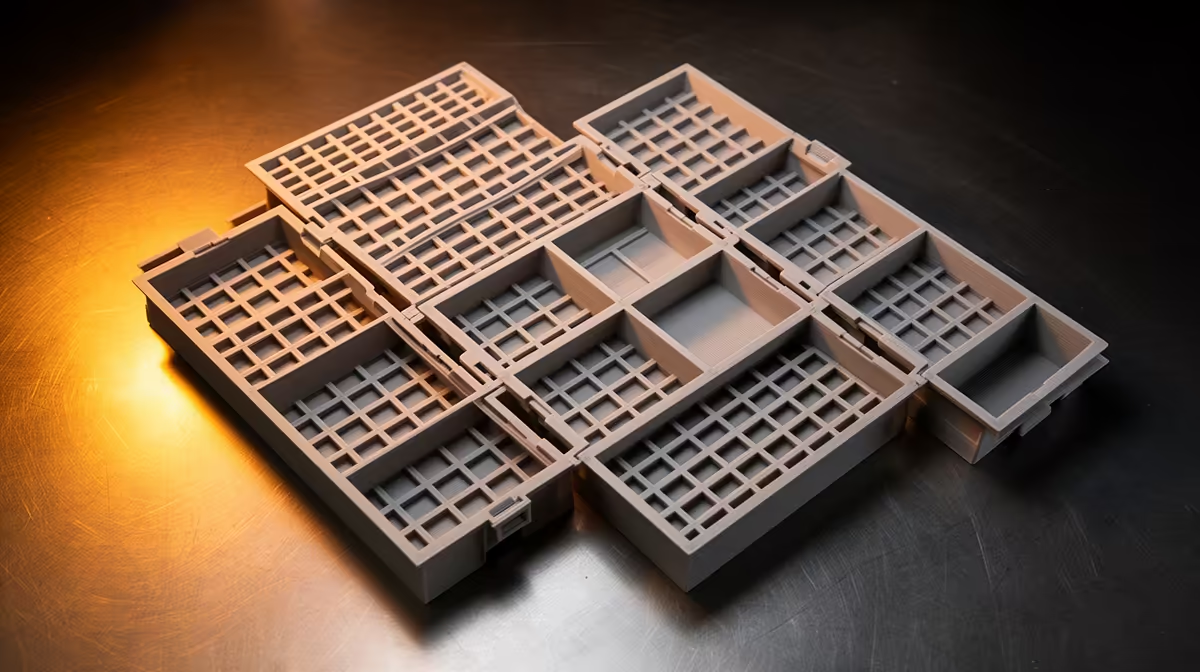
A drawer full of loose cables, USB sticks and bits is a solved problem once you understand that Gridfinity bins and organisers all snap to one number: a 42x42 mm base grid. Print a baseplate sized in whole 42 mm units to match your drawer interior, then drop in bins that fill the space with no sliding and no wasted gaps. Because the standard is open and MIT-licensed, every bin you print today still fits every baseplate you print next year.
Quick Answer
Gridfinity uses a 42x42 mm base unit. Measure your drawer interior, divide by 42 mm to get a whole-number grid, print a baseplate that size, then print bins in 1x1, 2x1 or larger multiples to fill it. The whole system is parametric, so you scale bins to the slot, not the slot to the bins.
Step 1: Measure the drawer interior accurately
Measure the usable inside width and depth of the drawer in millimetres, not the outer dimensions. Subtract a couple of millimetres of clearance so the baseplate drops in without forcing. A drawer with a 340 mm interior width gives you 8 columns of 42 mm (336 mm) with a few millimetres to spare. Note both numbers, because the baseplate is defined by columns times rows.
Step 2: Work out your grid in whole 42 mm units
Divide each interior measurement by 42 and round down. A 340x300 mm interior becomes an 8x7 grid. Those leftover millimetres are fine, the baseplate sits with a tiny margin and the bins stay put. If you want a printer that handles a full baseplate in one piece, the 3D printer range lists current build volumes so you can match the bed to your largest drawer.
Step 3: Generate the baseplate
Use a parametric Gridfinity generator (several free ones run in the browser or in your slicer) and enter your column and row count. The generator outputs an STL sized exactly to your grid. If the drawer is wider than your printer bed, split the baseplate into two or more tiles that butt together, since every tile still aligns to the same 42 mm pitch.
Choosing baseplate style
A plain baseplate is fastest to print and uses the least filament. A weighted or magnet-ready baseplate adds slots for steel weights or magnets if the drawer slides open hard and you want bins to stay locked down. For most desk drawers the plain version is enough.
Step 4: Size your bins to what goes in them
Bins come in unit multiples: a 1x1 holds small items like SD cards and clips, a 2x1 suits pens and screwdrivers, a 3x2 swallows a power brick. Set the bin height in 7 mm increments (the Gridfinity height unit) so a 6-unit bin clears taller items. Print a mix, then rearrange them in the baseplate like tiles until the layout matches how you reach for things.
Print settings that matter
PLA at a 0.2 mm layer height and 15 percent infill is plenty for organiser bins that carry light loads. Bump infill to 25 percent only for bins holding heavy tools. Print baseplates with a brim if they curl at the corners on a larger bed.
Step 5: Iterate without waste
The strength of the system is that nothing is permanent. Print a few bins, live with the drawer for a week, then reprint the two sizes you got wrong. Old bins are not waste, they migrate to another drawer because every bin fits every baseplate. Stock up on a couple of filament colours so you can colour-code categories, and you will find the accessories best sellers a quick stop for spare nozzles and build plates when a long baseplate print wears one down.
Frequently Asked Questions
What exactly is the 42 mm Gridfinity standard?
Gridfinity is an open, MIT-licensed storage system where every bin and baseplate aligns to a 42x42 mm footprint and a 7 mm height unit. That shared grid is why bins from any source interlock, and why you can mix designs freely.
Do I need a special printer for Gridfinity?
No. Any FDM printer handles bins and small baseplates. The only constraint is bed size for large single-piece baseplates, which you solve by tiling the baseplate into sections that align on the same grid.
How much filament does a drawer take?
A typical desk drawer baseplate plus a set of bins uses a few hundred grams of PLA. Bins are mostly hollow, so the bulk of the filament goes into the baseplate. A single 1 kg roll comfortably kits out two or three drawers.
Can I make bins taller for deep drawers?
Yes. Bin height is set in 7 mm units, so you scale a bin up to clear taller items like cable coils or power bricks. The baseplate stays the same, only the bin walls grow.
What if my drawer is wider than my print bed?
Split the baseplate into two or more tiles in the generator. They butt together on the same 42 mm pitch, so the join is invisible in use and bins span the seam without trouble.
A drawer organised on the 42 mm grid stays tidy because every bin has a home and every home fits every bin. Pick a printer that suits your largest drawer in the Evetech 3D printer range, grab a couple of filament colours, and your first baseplate can be printing tonight.