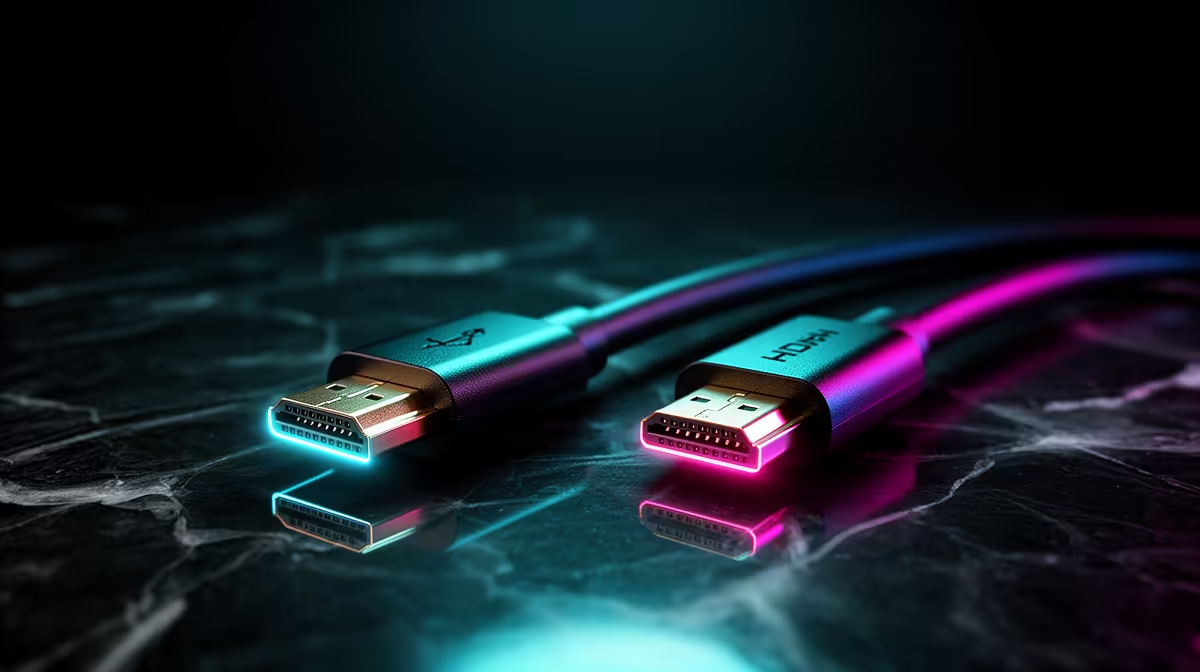
A monitor capable of stunning resolution and refresh rate numbers can still end up capped by the one part nobody thinks twice about: the cable connecting it to your PC. Getting the most from an 8k displayport cable on a compact gaming machine means confirming that cable is actually built for the bandwidth involved, not assuming any DisplayPort lead will do, and that check takes far less time than troubleshooting a blurry or capped display afterward.
Quick Answer
Setting up an 8K DisplayPort cable properly means confirming it is certified for the resolution, refresh rate and HDR combination you intend to run, then letting Windows detect your monitor's full capability once connected. On the R66,399 GR70, that cable plugs straight into the DisplayPort output feeding the 8GB RTX 5070, so the graphics card itself is rarely the limiting factor once cabling is sorted.
🔎 Why Cable Certification Comes First
Not every lead labelled DisplayPort actually carries the bandwidth needed for high resolutions, high refresh rates and HDR data all at once. Older or budget cables often top out at a lower combination of those three, quietly limiting your display to something below what both your monitor and the RTX 5070 are capable of, without throwing any obvious error on screen. Confirming a cable is rated for the specific combination you need before buying removes that guesswork entirely.
What an Uncertified Cable Actually Does
Plug in a cable that lacks the bandwidth you need, and Windows may still show a picture, just at a reduced resolution, a locked refresh rate, or with HDR quietly switched off. That silent downgrade is the exact trap proper certification avoids, since there is no ambiguity about what the cable can carry.
⚡ Getting the Physical Connection Right
Before touching any software setting, make sure the cable is fully seated at both ends, the machine's DisplayPort output and the monitor itself. A connector that looks plugged in but has not clicked home fully can produce the same symptoms as a cable without enough bandwidth: dropped resolution, flickering, or a refresh rate that will not climb past a certain number. Checking that seating at both ends takes under a minute and rules out the most common cause of a display not showing what it should.
A Quick Physical Checklist
Run through the physical side in order before assuming a software fault: confirm the connector is seated at the PC end, confirm it is seated at the monitor end, and check the cable itself is not visibly kinked or pinched anywhere along its length.
🖥️ Letting Windows Handle the Rest
Once the cable is properly connected, Windows should automatically detect your monitor's maximum supported resolution and refresh rate through the DisplayPort connection. Head into Display Settings to confirm those numbers match your monitor's own spec sheet, and enable HDR there if your panel supports it, since it typically needs switching on within Windows even once the cable itself can carry that signal. If the numbers shown fall short of your monitor's actual capability, that is usually a settings issue rather than a cabling one, provided a properly certified cable is already in use.
🧩 Where the Rest of the Machine Comes In
The DisplayPort output on this chassis is fed directly by the RTX 5070's 8GB of memory, and the sixteen-core Ryzen 9 9955HX behind it keeps frame delivery steady even when a demanding title is running at the monitor's top resolution. Thirty-two gigabytes of memory, backed by a terabyte-class NVMe drive, round out a system where the cable, not the hardware feeding it, is usually the last thing worth double-checking. Reviewing the GR70's full listing confirms exactly what DisplayPort output this setup provides before you buy a cable to match it. Cross-shopping other compact machines first? Check Evetech's mini PC range for the alternatives, and since the graphics card ultimately decides what resolution and refresh rate the cable actually needs to carry, current pricing across the GPU lineup is a useful reference before finalising your setup.
Frequently Asked Questions
Does any DisplayPort cable support 8K resolution?
No, bandwidth capability varies significantly between cables, and only those specifically certified for 8K reliably carry that resolution alongside high refresh rates.
Why is my monitor showing a lower resolution than expected?
This is often caused by an uncertified cable silently capping bandwidth, or a Display Settings configuration that has not yet been adjusted to match your monitor's maximum output.
Do I need to enable HDR manually?
Yes, even with a cable rated for it, HDR typically needs to be switched on within Windows Display Settings before it becomes active on screen.
Does the graphics card matter as much as the cable for 8K output?
Yes, the RTX 5070's own output capability sets the ceiling, and the cable simply needs to carry whatever signal the card and monitor agree on.
What should I do if the picture still looks wrong after setup?
Reseat both connector ends first, then double-check Display Settings against your monitor's own spec sheet, since a mismatch there is more common than an actual hardware fault once a properly certified cable is in use.
Ready to run 8K output over a single cable? Look at the ASUS GR70 build in Evetech's mini PC catalogue, listed for R66,399 so it can get the most out of the RTX 5070 with the right cable.