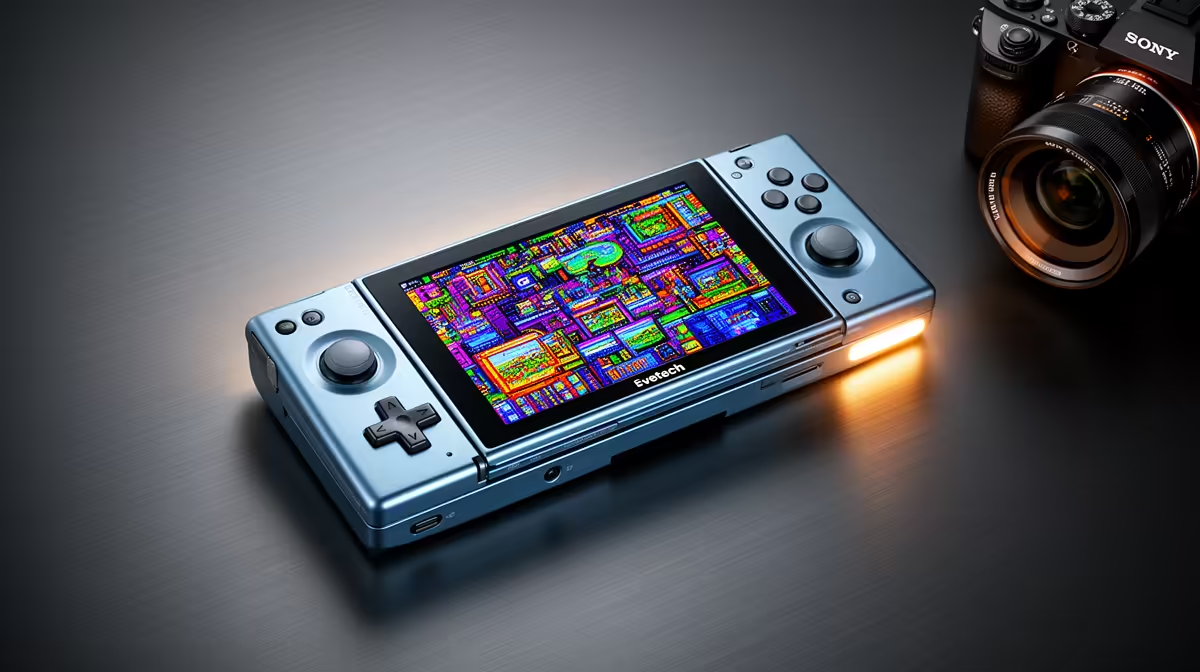
An entry-level handheld can run early consoles flawlessly and then stutter the moment you load an N64 or PSP title. The fix is not a new device, it is per-system performance settings, system-level overrides in RetroArch that kick in only for the console giving you trouble. Tune the demanding systems and leave the easy ones alone, and one handheld can run a huge spread of games smoothly.
Quick Answer
Per-system tuning means saving core-level overrides that apply only to one console. For heavy systems like N64 and PSP on entry-level chips, the levers that matter are frameskip, rendering resolution, and texture settings. Keep PSP at native resolution with light frameskip for 3D games, drop the resolution scale, and turn off texture upscaling so the GPU is not overwhelmed.
Why some systems need tuning and others do not
Emulating an older console is light work; emulating a more demanding one like the N64 or PSP asks a lot more of a handheld's modest processor. On an entry-level chip those systems can drop frames or run unevenly with default settings. The solution is to apply performance tweaks only to the cores that need them, so your lighter systems keep their crisp defaults while the heavy hitters get just enough help to run smoothly.
Step 1: Open core options for the system
Launch a game on the system you want to tune, then open the Quick Menu and go to Options. This Options section lists the core options for that specific emulator, and the available settings differ from core to core. This is where the per-system levers live, because each core exposes its own performance and rendering controls.
Step 2: Set rendering resolution sensibly
Resolution scaling is the biggest performance dial on demanding systems. Higher-end cores let you upscale the rendered image well above the original console resolution, which looks sharper but costs a lot of processing power. On a handheld, that cost is often more than the chip can pay.
- For PSP, keep the rendering resolution at native (480 by 272) for smooth performance on portable hardware. Pushing higher multipliers is where most handheld slowdown comes from.
- For N64, start at native or a modest scale and only raise it if frames stay solid. If the game stutters, drop back down.
- Leave texture scaling off on entry-level devices, because the GPU usually cannot handle upscaled textures without severe slowdown.
Step 3: Use frameskip with care
Frameskip skips rendered frames to claw back emulation speed, and it can be the difference between a slideshow and a playable game. The catch is that it trades smoothness for speed: skipping frames makes a game feel faster but introduces stutter, and it only helps when the processor is close to keeping up in the first place.
A practical starting point on a handheld is a frameskip of 1 for demanding 3D PSP titles and 0 (disabled) for 2D games and visual novels, which generally run fine without it. Use the smallest amount of frameskip that gets you to a playable frame rate, since more than you need just makes the motion choppier than it has to be.
Step 4: Save the override per system
Once a system runs well, save the configuration so it loads automatically for that core and only that core. RetroArch lets you save settings at the core level, and a per-system advanced configuration option keeps these tweaks scoped to one system rather than changing your global setup. That is the whole point: your N64 and PSP settings stay separate from the lighter systems, which never needed the help. For a closer look at which devices comfortably handle these heavier systems, the handheld gaming console range at Evetech is worth comparing, and if you find yourself wanting full-fat emulation, the best-selling PC builds handle even the most demanding cores without compromise.
Frequently Asked Questions
What settings improve N64 and PSP performance on a handheld?
The main three are rendering resolution, texture scaling, and frameskip. Keep resolution at or near native, turn texture upscaling off, and add a small amount of frameskip only if a game still stutters. These are found in the core Options for each system.
What does frameskip actually do?
Frameskip drops rendered frames to recover emulation speed, making a struggling game playable. The trade-off is added stutter, and it only helps when the processor is nearly fast enough already. Use the least frameskip that achieves a smooth-enough frame rate.
Why not just upscale every system to look sharper?
Because upscaling resolution and textures is expensive, and a handheld's modest chip often cannot keep up, which causes slowdown. Light systems can sometimes take a higher scale, but demanding ones like PSP usually run best at native resolution on portable hardware.
Will these tweaks affect my other emulated systems?
No, when saved as a core or per-system override they apply only to that one console. Your lighter systems keep their default settings, so tuning the N64 core does not change how your other games look or run.
Chasing smooth performance across every era? Browse the handheld gaming console range at Evetech and pick a device with the headroom to tune the demanding systems your way.