


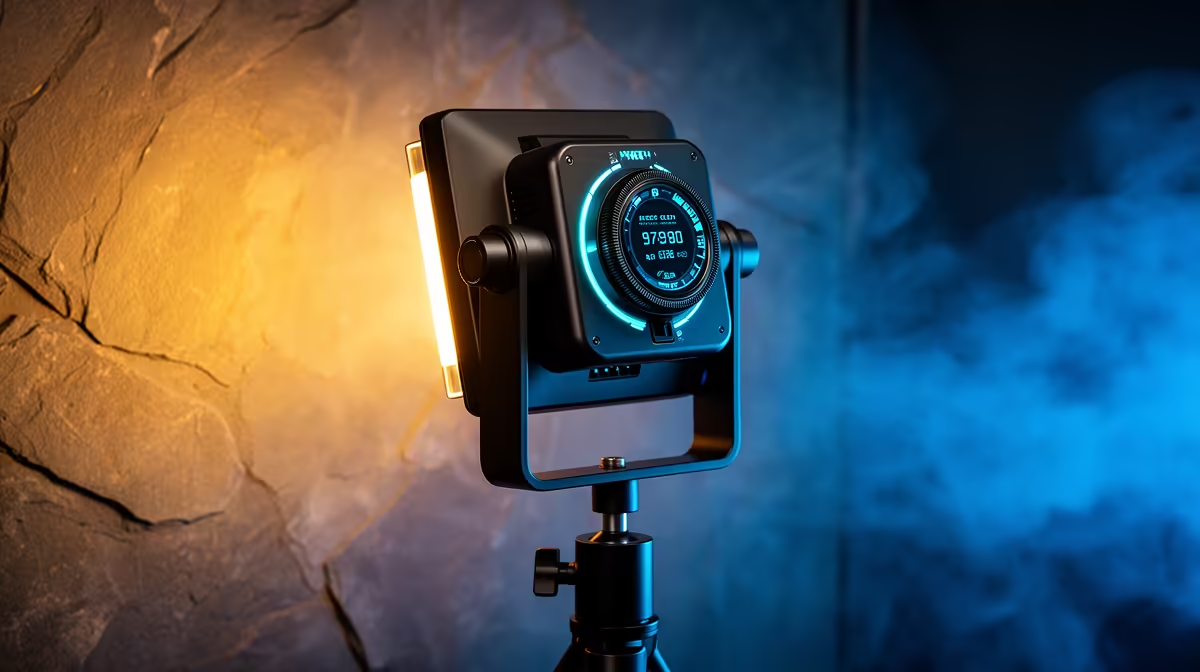
South African homes are not designed with video or photography in mind. Many have small windows, warm-painted walls, and single overhead bulbs that produce a flat, dim wash across every surface. Working with that environment rather than fighting it takes one tunable tool and a clear method. A 2700K-6500K LED video light gives you the adjustability to blend your artificial light with whatever natural light exists in the room, so the final image looks consistent rather than colour-battling itself.
Quick Answer
Set a bi-colour LED to around 5600K when filming near a daytime window, and drop it to 3000K after dark to match indoor ambient light. Bounce it off a pale wall for softer, wider fill in a small room. One tunable panel covers both conditions.
🌗 Reading Your Room's Available Light
Before touching the LED panel, understand what the room is already doing. Daytime window light in South Africa is generally cool, sitting between 5000K and 6500K depending on cloud cover and the time of day. Morning and late afternoon pull warmer, midday is the coolest. A north-facing room in Cape Town or Johannesburg gets direct light; south-facing rooms get diffused ambient light that reads cooler and softer.
Your overhead lights and lamps are almost always much warmer, typically 2700K to 3000K. Leaving both sources running simultaneously means the camera is trying to white balance against two completely different colour temperatures at once. The result is usually a warm patch from the overhead bulbs and a cool patch from the window, with your face sitting uncomfortably in between.
The tunable LED solves this by letting you pick one colour temperature and commit to it. Film in daytime window light? Turn off the overhead bulbs, set the panel to 5500K, and let it reinforce the window rather than clash with it. Film at night with no natural light? Turn off the overhead bulbs, set the panel to 2700K, and the whole scene reads as warm and controlled.
🔧 Positioning for a Dim South African Room
The placement of the light matters as much as the colour temperature. Most dim rooms need a light that adds frontal illumination the ceiling cannot provide, and the standard position is roughly 45 degrees off-axis from the camera at a height slightly above eye level.
At this position, the light falls across the subject from one side, creating a gentle shadow on the opposite cheek that makes faces look three-dimensional rather than flat. The shadow is not dramatic. It is the kind of natural-looking shading that daylight from a window to the side of a desk produces.
If the room has a pale wall, point the LED at the wall instead of directly at the subject. The wall becomes a large, soft light source roughly two to three times the area of the panel, and that larger source wraps around the face rather than hitting it from one sharp angle. In a white or off-white room, this is often the most significant quality improvement available without buying extra equipment.
Not every window provides equal light. A glass door onto a garden lets in direct sun; a small bedroom window on a grey Cape Town afternoon lets in almost nothing. Dial up to 6500K when supplementing very cool overcast window light, and come down to 4000K for rooms with warm-toned walls that would fight a cooler panel.
✨ After-Dark Adjustments
Once the sun sets, window light disappears and whatever bulbs are on define the ambient colour. Setting the panel to 3000K after dark keeps it in the same tonal family as a warm bedside lamp or overhead bulb, so the scene reads as a consistent warm interior rather than a mix of warm background and cool key light.
If the overhead lights are warm, switch them off and run the panel alone at 3000K. One controlled warm source is almost always more flattering on camera than two warm sources from different angles with inconsistent intensities.
Pro Tip ⚡
In South African homes with orange or terracotta wall paint, even a 5600K LED picks up a warm cast when bounced. Do a short test recording and check the white balance on screen before committing to the bounce technique. Shift the panel direct-to-subject if the wall colour is too strong.
💰 Building a Practical One-Light Setup
A single 2700K-6500K panel in the R600 to R1200 range covers the majority of home filming scenarios when used thoughtfully. The investment is modest relative to the quality improvement, and the variable colour temperature means it does not become obsolete as your environment changes.
Start with a desk clamp or a small stand at R150 to R250 and the panel itself. Add a cheap white foam board from a craft shop as a reflector if the room needs fill on the shadow side. That combination, panel plus stand plus foam board, achieves a two-light look from one powered source and costs well under R2000 in total.
Frequently Asked Questions
How do I set the colour temperature when I have both window light and an overhead bulb?
Turn off the overhead bulb first. It is almost always warmer than the window, and mixing the two creates a white balance problem the camera cannot resolve cleanly. Match the panel to the window at roughly 5500K during the day. One consistent colour source is far easier to work with than two competing ones.
What Kelvin setting works best after the sun has set?
Around 3000K suits most South African indoor environments at night. If your room has cool LED strip lighting or fluorescent overheads, shift the panel up to 4000K so it does not fight the blue-white ambient. Check on screen rather than guessing.
Does pointing the light at the wall actually improve the image?
Yes, when the wall is pale. A white or light grey wall increases the effective source size significantly, softening shadow edges and giving the subject a more naturally lit appearance. Dark or strongly coloured walls absorb or tint the light, so reserve the bounce technique for neutral surfaces.
Why does my LED look different on screen than it does to my eye?
Camera white balance is more literal than human perception. Your eye compensates continuously for colour temperature shifts; the camera records the actual sensor reading, which reveals any mismatch. Setting a custom white balance or adjusting the panel to match the dominant ambient source closes that gap.
Ready to get consistent light from the room you already have? Browse the bi-colour LED video lighting range and find the tunable panel that works with South African home conditions rather than against them.










