Photo editing and retouching reward RAM, fast storage and a colour-accurate workflow far more than raw gaming power, even on a minimum 1080p build. This SA guide tunes an affordable machine for smooth Lightroom and Photoshop work.
Quick Answer
A capable 1080p photo-editing PC runs about R12,000 in SA: a 6-core CPU, 32GB DDR5, a 1TB NVMe SSD and an entry dedicated GPU around R3,500 for GPU-accelerated filters. The 32GB of RAM is the key upgrade over an office build, handling large RAW files and many open layers without slowdown.
RAM and storage drive editing speed
Retouching large RAW files and stacked layers demands memory; 32GB DDR5 is the standout upgrade over a basic build and prevents the stutter that 16GB hits on big projects. A 1TB NVMe SSD keeps catalogue scrubbing and file saves instant, which matters more than CPU clock speed for most edits.
A modest GPU and colour accuracy
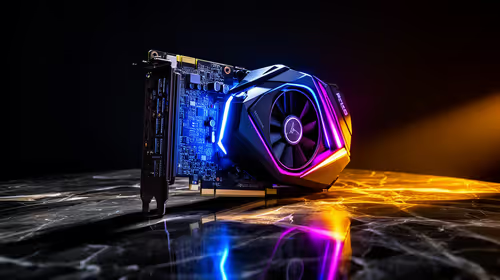
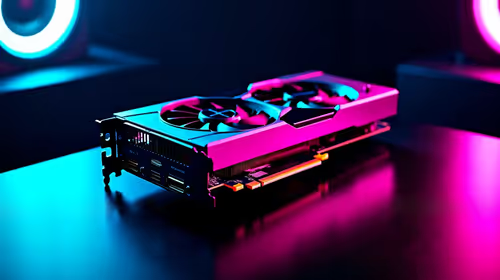
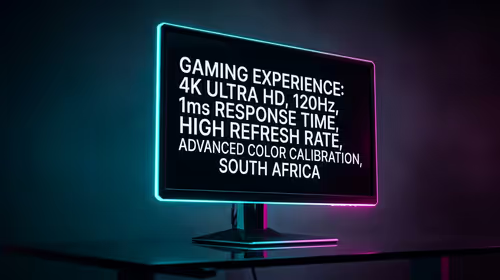
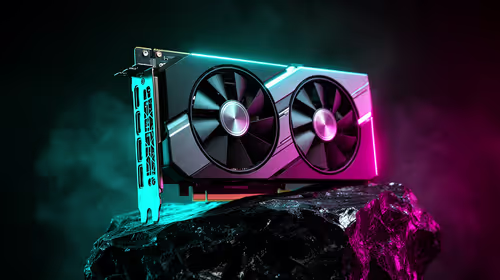
An entry dedicated GPU near R3,500 accelerates Photoshop and Lightroom GPU filters and smooths panning on high-resolution images. Beyond that, invest in a colour-accurate IPS panel; an editing PC with a poor screen undermines every retouch. Pair the build with an sRGB-covering 1080p IPS monitor for trustworthy results.
FAQ
How much RAM do I need for photo editing?
32GB DDR5 is the practical minimum for comfortable RAW and layered work. It is the key upgrade over an office build and prevents the slowdowns 16GB hits on large projects.
Do I need a dedicated GPU for retouching?
An entry card around R3,500 helps; it accelerates GPU filters and smooths panning on high-resolution images. You do not need a gaming flagship, but a modest dedicated GPU beats integrated for editing.
What monitor suits photo editing on a budget?
A 1080p IPS panel with full sRGB coverage. Colour accuracy matters more than resolution at this tier, so prioritise an accurate screen over a sharper but inaccurate one.
Invest in RAM and an accurate screen. Build a R12,000 photo-editing PC at Evetech with 32GB DDR5 and an sRGB IPS panel for trustworthy retouching.