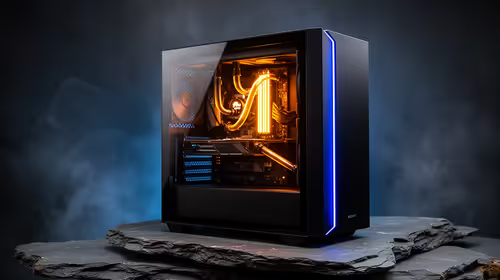
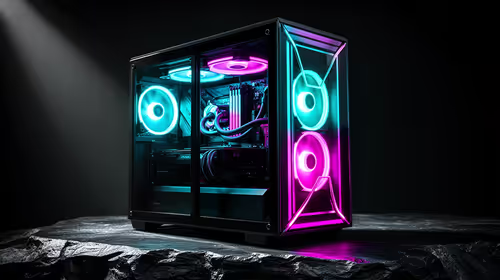
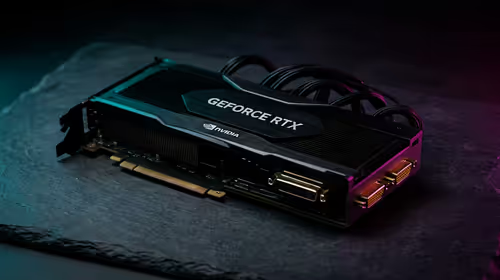
Pair an AI upscaling rig with a suitable display, fast project storage, enough memory and a power supply chosen for the exact graphics card. Expensive peripherals cannot compensate for a weak viewing chain or slow media drive. Start with the final output resolution and software workflow.
Balance the supporting components
Check how much graphics memory and system memory the upscaling model uses on a representative job. Keep active media on an SSD with healthy free space and store originals in a separate backup. Choose a monitor that can display the required resolution and connection without adapters that limit the mode.
The AOC U27G42 27-inch 4K monitor is listed at R4,819. The WD Blue SN5000 1TB NVMe SSD is listed at R998. The Corsair RM850e 850W power supply is listed at R1,900. Verify monitor colour requirements, motherboard SSD support, GPU power connectors, case clearance and total system load before combining these parts.
Use a calibrated review process when image accuracy matters. Keep model files and applications separate from irreplaceable originals, and test a full restore. Run one complete upscale and export while monitoring temperatures, memory and storage activity.
A balanced rig finishes the actual job consistently. Add components only where the test reveals a limit, then repeat the same sample for comparison.
Balancing an AI image workstation? > Compare Evetech monitors, SSDs and power supplies by compatibility and workload.